Knowing how to track symptoms for your doctor is mostly about consistency: write down a small set of the same details every time something happens, keep the entries dated, and bring the timeline to your appointment. A paper notebook, a notes app, or a spreadsheet all work, and you can start tonight. Ten focused minutes of logging usually tells a clinician more than ten minutes of recollection.
This guide is general information for adults in the US preparing for a visit. It does not diagnose anything and it is not medical advice. What counts as a warning sign depends on your own health, so confirm thresholds with your doctor, pharmacist, or a nurse line.
The reason tracking matters is simple: a standard primary care appointment is often shorter than you expect, and memory is unreliable when you have been unwell. A written record turns “it has been happening for a while” into a start date, a frequency, and a list of what you already tried.
Table of Contents
- What You Need
- Step-by-Step
- How to choose a tracking method
- Record the basics of each symptom
- Add context without overinterpreting it
- Review the log before your appointment
- How to Track Symptoms for Your Doctor Between Visits
- Common Mistakes
- Tips for a Useful Symptom Record
- Frequently Asked Questions
- What is the best way to track symptoms for a doctor appointment?
- How detailed should my symptom log be?
- Should I track symptoms that seem minor or only the ones that worry me?
- Can I use my phone to track symptoms instead of paper?
- What if I cannot remember exactly when a symptom started?
- When should I stop tracking symptoms and contact a doctor?
- Conclusion
What You Need
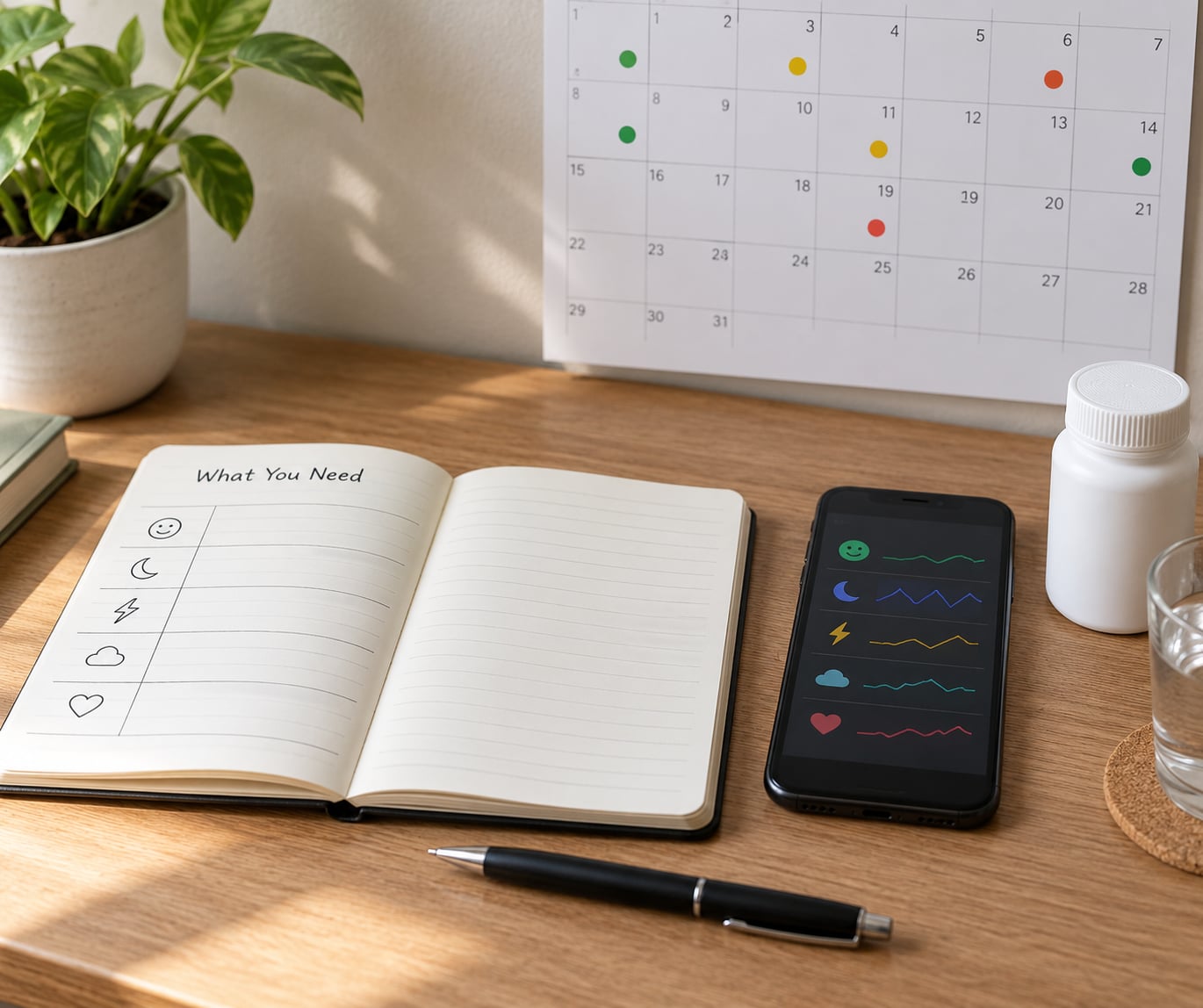
You need less than most people expect. Gather these five things and you can build a usable record without buying anything.
- A dated log. A notebook with one day per section, or a notes app with one entry per symptom episode.
- A fixed set of fields. Decide your columns once and never change them, so entries stay comparable.
- A calendar or phone date. This catches the number of days between episodes, which is often the detail that changes what gets ordered.
- A current medication and supplement list. Include doses and anything you started or stopped in the last three months, even over-the-counter products.
- Relevant records. Recent lab results, imaging reports, discharge paperwork, and notes from any other clinician who has seen the problem.
This is the printable symptom log template. Copy the header row into a notebook, a spreadsheet, or a note, then fill in one row per episode:
Date | Time started | Symptom and where | Severity 0-10 | Duration | What I was doing | What made it worse | What I took and the effect | Notes
-----|--------------|-------------------|--------------|----------|-----------------|---------------------|-------------------------|------
     |              |                   |              |          |                 |                     |                         |
A worked example looks like this: March 4, started 7:15am, dull ache across the lower right jaw, 6 out of 10, roughly 90 minutes, on my third coffee and after a night of poor sleep, worse when chewing, took ibuprofen and it dropped to about 3 within 40 minutes, noticed the same spot was tender to touch. That one row is worth more at an appointment than a page of “my jaw has been hurting.”
Step-by-Step
How to choose a tracking method
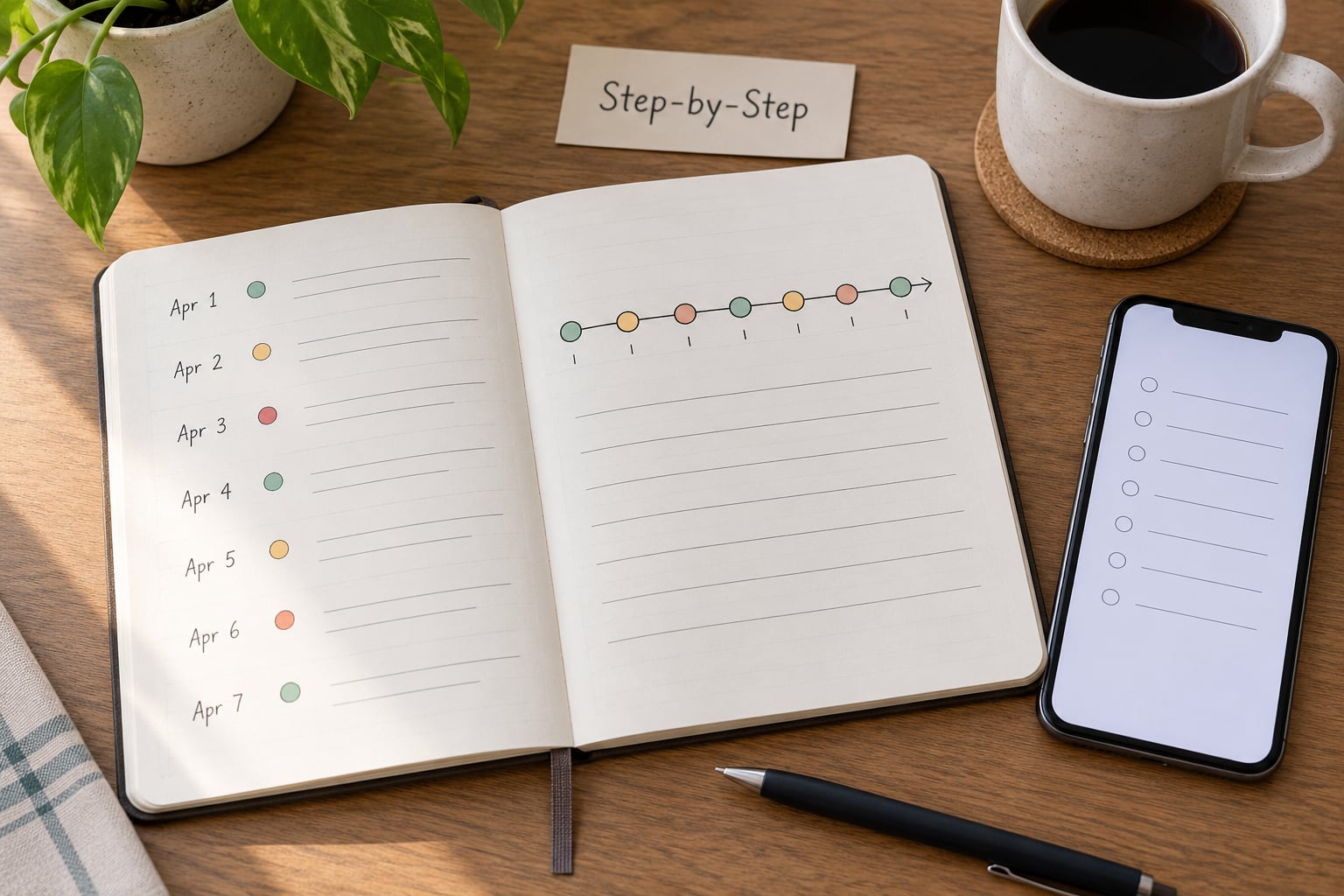
Pick the format you will still be using on a bad day, because the best method is the one that survives a flare. Here is how the main options compare.
| Method | Cost | Effort per entry | Pattern detection | Sharing | Privacy |
|---|---|---|---|---|---|
| Paper notebook | None beyond a pen | Highest, you write everything by hand | Slow, you read it yourself | Easy, hand it over or photocopy it | Stays with you |
| Phone notes | None | Low, a few taps | Basic search only | Good, paste or screenshot into a portal message | Depends on your phone lock and cloud settings |
| Spreadsheet | None | Low once the columns exist | Strong, you can sort and chart dates and severity | Strong, export a PDF or a single sheet | Strong if you keep it on your own device |
| Dedicated tracker app | Varies, some free tiers | Low, often one-tap entry | Strong, reminders and trend charts | Good, many export a summary | Check what leaves your device before you commit |
| Wearable device | Often the main outlay | None, it records in the background | Strong for heart rate, sleep, and activity | Partial, you decide what to hand over | Usually the least private option |
You will know you chose well if you can look at the record on the morning of the appointment and say what happened, in order. If a method needs a login, a subscription, or ten minutes of tapping, most people abandon it by week two.
Record the basics of each symptom
Clinicians often use the OLDCARTS checklist as a mental prompt: onset, location, duration, characteristics, aggravating factors, relieving factors, timing, and severity. In plain language, that means writing down when it started, where you feel it, how long it lasts, what it feels like, what makes it worse, what makes it better, how often it happens, and how strong it is on a 0 to 10 scale.
Add two fields most people skip. Functional impact: what the symptom stopped you doing, whether that is sleeping, eating, walking, working, or caring for someone else. Associated symptoms: what came alongside it, such as nausea with a headache or a rash with a new medication. Those two lines often carry more weight at the visit than the intensity number.
Check that each entry answers six questions: what, where, when, how bad, what changed it, and what you did about it. If an entry misses two or more, the episode needs a second pass.
Add context without overinterpreting it
Context turns isolated episodes into a pattern a clinician can use. Note sleep the night before, what you ate in the last day, your stress level, exercise or activity, any illness you caught, and every medication or supplement change with the date you made it.
Write what happened, not what you think it means. “Two coffees before it started” is a fact. “Caffeine causes my arrhythmia” is a conclusion, and if it goes in your chart in those words it shapes the conversation before the clinician has met you. Keep the observation and the question separate, and save the theory for the appointment.
Review the log before your appointment
Set aside fifteen minutes the night before or the morning of. Read through and pull out four things: the date it started, how often it has happened since, the two things you already tried and what they did, and the symptom that bothers you most day to day.
Turn those into a one-paragraph summary you can say out loud in the room. People on patient forums describe the appointment as a 10 to 15 minute window where a long printed log gets skimmed, which is why leading with the timeline beats handing over forty pages and hoping.
Bring questions in writing. Three is plenty, and they should be specific enough to answer, such as whether the pattern you have logged points to anything specific, or what to do if it gets worse before the next visit.
How to Track Symptoms for Your Doctor Between Visits
Keep the log running rather than treating the appointment as the finish line. A steady rhythm beats a perfect one: two minutes a day for mild things, a full entry for anything that stops your normal activity. Update the log after a phone call or portal message too, since those conversations are easy to misremember later.
For a follow-up you can share a short summary instead of the raw record. Say how long it has been going, the frequency, what changed since the last visit, and whether anything helped. Ask for the summary to be added to your medical record so the next clinician sees it without you repeating the story.
Some symptoms should end the log immediately. Seek urgent or emergency care rather than tracking further if you develop chest pain or pressure, trouble breathing, sudden weakness or numbness on one side, difficulty speaking, severe bleeding, a rapidly spreading rash with fever, severe abdominal pain, thoughts of harming yourself, or any symptom that is escalating quickly. These are general warning signs, and your own clinician may give you a different list for your condition.
If you cannot reach your doctor and a symptom is worrying you, an urgent care clinic or a nurse advice line is a reasonable next step.
Common Mistakes
Here are the errors that weaken a record, with a fix for each.
- Vague entries. “Bad day” tells nobody anything. Fix: use the fixed fields every time, same wording, same order.
- Only recording the worst day. Averages hide patterns and the good days matter too. Fix: log every episode, including mild ones, so frequency is real.
- Changing several things at once. Start a new supplement, change your sleep schedule, and alter your diet in the same week and you will never know which mattered. Fix: one change at a time, dated.
- Filling entries from memory later. Backfilled notes are guesses, and a guess in your chart is hard to walk back. Fix: write at the time, and if you do backfill, label it “reconstructed” and say so out loud.
- Turning observations into a diagnosis. Fix: describe and let the clinician interpret. “Both ankles swollen by 2pm” is usable; “kidney failure” is not.
- Dumping the whole log at the end of the visit. Fix: lead with the summary, keep the detailed log in hand in case they want to look.
Tips for a Useful Symptom Record
Estimate rather than guess precisely. “About 20 minutes” and “around 4 out of 10” are far more useful than a false exact figure, and reviewers of chronic illness tracking on Reddit and other forums consistently say the same thing: a rough honest record beats a precise invented one.
Mark anything you are unsure about with a question mark so you know to say “I think” in the room instead of presenting it as fact.
Think about privacy before you choose a tool. A shared family tablet, a cloud-synced note someone else can open, or a tracker that sends your data to an advertiser’s servers all change what you can safely write down. If that worries you, keep the log on paper or on your own device.
Hand over copies rather than your only original. A photocopy or an exported PDF keeps your copy intact, and you keep tracking after the visit. It also lets you write notes on it during the appointment.
Use the two-minute version when you are exhausted. Pick the one or two symptoms that affect your life most, note the date, severity, and duration, and stop. Minimal consistent tracking beats a detailed log you abandon.
Frequently Asked Questions
What is the best way to track symptoms for a doctor appointment?
A dated log with the same fixed fields every time works best: onset, location, duration, what the symptom feels like, severity 0 to 10, what makes it worse or better, and what you took. Keep it on paper, in a notes app, or in a spreadsheet. The format matters less than the consistency, and the record matters more than any particular tool.
How detailed should my symptom log be?
Detailed enough that a stranger could picture what happened without asking you questions. That usually means one row per episode with a date, time, location, intensity, duration, triggers, and treatment tried. Skip anything that did not change, but keep mild episodes, because frequency is often the detail that guides what gets ordered.
Should I track symptoms that seem minor or only the ones that worry me?
Track the minor ones too. Symptoms that seem unrelated on their own can turn out to be a useful pattern, and clinicians often ask about things you did not think mattered. The effort is small when entries stay to a few lines. If you are too unwell to log anything, record the basics only rather than skipping the day.
Can I use my phone to track symptoms instead of paper?
Yes, and most people find it faster than paper because the entry happens where the symptom happens. Notes apps, spreadsheets, and dedicated trackers all work. Check whether the tool syncs to a cloud account you share, whether it needs a subscription, and whether it can export a summary you can paste into a patient portal message.
What if I cannot remember exactly when a symptom started?
Give the best estimate you can and say it is an estimate. Write the earliest day you are confident about, then add the range around it, such as early-to-mid February. A clinician can work with a two-week range. Label anything you are reconstructing, because an honest approximation is far more useful than a precise date you are not sure of.
When should I stop tracking symptoms and contact a doctor?
Stop tracking and seek care now for warning signs such as chest pain or pressure, trouble breathing, sudden weakness or numbness on one side, difficulty speaking, severe bleeding, a rapidly spreading rash with fever, severe abdominal pain, or thoughts of harming yourself. Also contact a clinician if symptoms are escalating quickly or interfering with sleep, eating, or work. Your own doctor can give you a symptom-specific list.
Conclusion
Start tonight with a dated entry using the template above, and keep the fields identical from day to day. Before the appointment, pull out the start date, the frequency, what you tried, and the symptom that affects your life most, then bring those four points to the room. If symptoms are escalating quickly or any warning sign appears, stop logging and get medical care instead.