
To help someone leave an abusive relationship safely, your job is not to make the decision for them. It is to stay reachable, protect their privacy, help them build a safety plan, and connect them with a trained advocate. If anyone is in immediate danger, call 911 first. In the United States, the National Domestic Violence Hotline is 1-800-799-7233, with live chat and text (START to 88788) available 24/7.
I have talked with a lot of friends who found themselves in this exact spot, usually after a phone call that felt like a code red. Almost none of them needed more opinions. What they needed was a place to stay for three weeks, a ride to a courthouse, and someone who did not flinch when the story got ugly.
This guide walks through the process in the order that keeps people safest: recognizing immediate danger, having the conversation in a setting where they can speak freely, letting them decide what your help means, building a confidential safety plan, protecting their digital privacy, connecting them with advocates, supporting a safe departure, and staying useful afterward.
A note on scope. This is general information, not legal advice, and it is not a substitute for a safety plan built with a local advocate. Custody, protective orders, and immigration consequences vary by state and country, so anyone facing a court decision needs a lawyer or a legal aid clinic rather than a blog.
Table of Contents
- What You Need Before You Start
- Step-by-Step: How to Help Someone Leave an Abusive Relationship Safely
- 1. Check Whether They Are in Immediate Danger
- 2. Ask Open Questions in a Safe Place
- 3. Let Them Decide What Help Means
- 4. Help Build a Confidential Safety Plan
- 5. Protect Digital Privacy and Communications
- 6. Connect Them With Trained Support
- 7. Support a Safe Departure or Temporary Stay
- 8. Make a Plan for After the Relationship Ends
- Why You Cannot Force Someone to Leave
- Common Mistakes Supporters Make
- Frequently Asked Questions
- Should I call the police if I know my friend is in an abusive relationship?
- What if the person does not want to leave the relationship?
- How can I help someone leave an abusive relationship without making the situation worse?
- What should I do if children or pets may be in danger?
- Is it safe to text or use a shared phone to help?
- How long should I offer support after the person leaves?
- Conclusion
What You Need Before You Start
The most useful thing you can prepare is not information. It is a private way to talk and a few practical items that stay out of sight.
- A private channel. A phone call from a public place, a walk with no known route, or a meeting somewhere they can leave whenever they want. Not their home, not yours if your address might be found.
- A safe device and location. Their own phone with a passcode they control, charged, ideally one that is not on a shared family or work plan.
- Transportation. A plan that does not depend on the person driving themselves somewhere at 2 a.m.
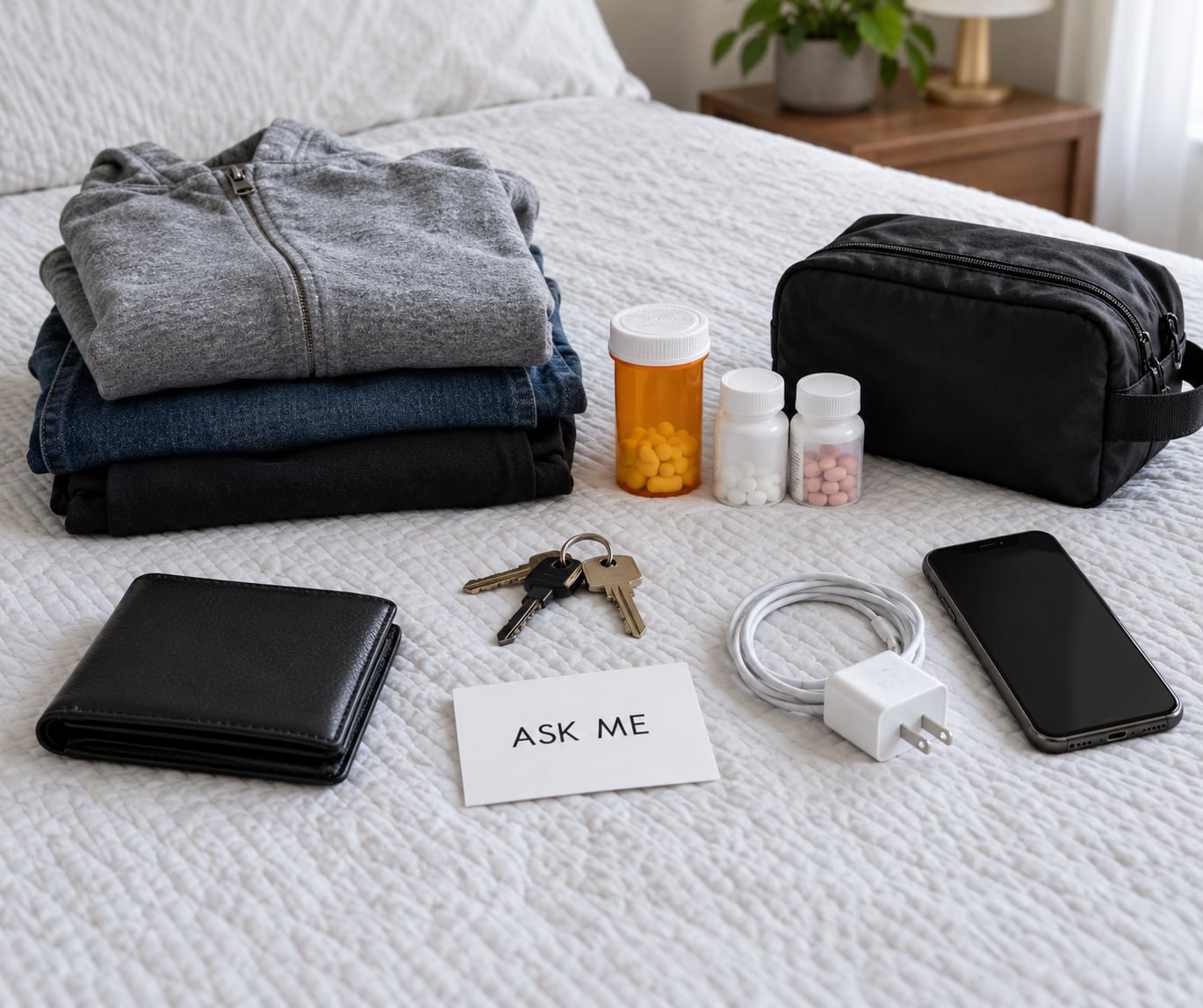
- Documents and money, if you have any to spare. Identification, a birth certificate, a social security card, medication, a few hundred in cash. Handle these as loans or gifts, not as leverage.
- A support person who will keep their mouth shut. Someone outside their social circle, because isolation is one of the main tools of abuse.
- Current local resources. The hotline number saved in their phone, a shelter line for their area, and a legal aid number. Save these before the conversation, not during it.
Store anything you gather somewhere an abuser cannot discover it: a locked drawer, a sealed envelope at work, a storage unit, a trusted relative’s safe. Search history and shared photo albums have undone more escape plans than anyone admits to publicly.

Step-by-Step: How to Help Someone Leave an Abusive Relationship Safely
The sequence below is deliberate. Skipping ahead to packing a bag can put someone in more danger than doing nothing, because a half-built plan often ends in a fight.
1. Check Whether They Are in Immediate Danger
Some situations need emergency help before any conversation. Strangulation is a medical emergency and one of the strongest predictors of later lethal violence, and it often leaves marks too faint to notice. Threats to kill, threats to children or pets, weapons in the home, stalking, escalating physical violence, and someone being monitored or blocked from leaving all belong in this category.
You will know something is wrong even when the person minimizes it. In that case, call 911 or the National Domestic Violence Hotline at 1-800-799-7233 yourself, from your own phone, and ask for guidance about a specific situation. Do not confront the suspected abuser. Do not tell them you called anyone.
How you know it is working: an advocate or officer has been contacted, the person has a plan for the next 24 hours, and you are not carrying the fear alone anymore.
2. Ask Open Questions in a Safe Place
Pick a time and a place where they can speak without being overheard and can walk out mid-sentence. Offer something low-stakes: a coffee, a drive, a walk at the far end of a park. Let them choose the format. Some people say far more in writing than in person.
Lead with what you have observed rather than what you have concluded. “You have cancelled plans four times this month and flinched when your phone rang” lands very differently from “your boyfriend is abusing you.” Then ask questions that keep the steering wheel in their hands: What do you want to talk about? What would help right now? What would need to be true for you to feel safe? Do you feel afraid of what happens if you consider leaving?
Say less than feels comfortable. Survivors on survivor-run forums describe the same pattern repeatedly, that what helped most was a friend who stayed in contact and listened without an agenda, often years before anything happened.
How you know it is working: they tell you something true, however small, and they do not feel attacked for saying it.
3. Let Them Decide What Help Means
This is where most well-intentioned friends cause damage. Pressure produces defensiveness, defensiveness produces distance, and distance removes the only relationship the person has outside the abuse. People often leave and come back several times before they go for good, which is why your job is not a single conversation but a years-long one.
Offer choices instead of ultimatums. You could say: I can drive you anywhere you need to go this week. I can make phone calls with you while you are sitting next to me. My couch is open if you need two weeks. I can sit with you while you call the hotline. You tell me which of those is useful.
Support is not pressure, and it is not control either. If they say no to an offer, take it at face value and ask again later. Help you insist on becomes help they avoid.
How you know it is working: they start naming which kind of help they want, rather than only describing what is wrong.
4. Help Build a Confidential Safety Plan
A safety plan is a document a person keeps somewhere an abuser will not find it, and an advocate helps build it. womenshealth.gov offers printable worksheets for this. You can help type it, print it, or hold it for them. Never keep it on a shared device or a shared cloud account.
A working plan usually covers more than a bag. It names two or three places to go, including one out of town. It lists transportation for each one, with a backup if the first falls through. It includes the phone numbers of an advocate, a trusted person, and the hotline. It notes medications and prescriptions. It accounts for identification, keys, money, work or school obligations, childcare, and pets. It covers what to do if the person changes their mind halfway through.
One more item most guides skip: a code word. Agree on a word or phrase that means call me and a phrase that means drop what you are doing. Practice it once so it does not have to be improvised under stress.
Printable prompt for your conversation: Where could they go tonight? Where could they go for a month? Who would not ask questions? What do they need every day, like medication or insulin? What would make leaving impossible this week, and what could remove that obstacle?
How you know it is working: the plan exists in writing, lives somewhere safe, and includes at least one option the person actually believes they could reach.
5. Protect Digital Privacy and Communications
Digital abuse is common and under-recognized. Abusive partners use shared cloud accounts, family plans, shared passwords, location sharing, and vehicle tracking to know where someone goes. Before any plan takes shape, help them look at what they are actually signed into.
Concrete steps you can assist with: a new passcode nobody else has seen; signing out of shared photo albums and family-sharing groups; checking whether location sharing is on for family and friends; reviewing which devices are logged into their main accounts; and asking an advocate about a device check if there is any suspicion of tracking software.
Careful with workplace devices and work email. If the suspected abuser works at the same employer, using a company account can expose both of you. For the same reason, keep the conversation off social media, off group chats the partner may be able to read, and out of any shared family messaging thread.
No single app or technique makes communication safe, and any tool can fail. Treat every method as a risk to weigh, not a guarantee.
How you know it is working: they have their own passcode, their own account recovery, and at least two ways to reach you that do not run through a monitored channel.
6. Connect Them With Trained Support
You are a friend, not a caseworker. Connecting someone to an advocate, shelter, counselor, or legal aid clinic is the single most valuable thing most supporters can do, because advocates walk people through protective orders, custody, housing, and safety planning in ways no well-meaning friend can.
In the United States, the National Domestic Violence Hotline at 1-800-799-7233 answers 24 hours a day, with live chat on thehotline.org and text by sending START to 88788. Love Is Respect offers chat and phone support for young people and anyone questioning a relationship, and state domestic violence programs can connect someone with a nearby shelter and an advocate. Legal services organizations such as the Legal Services Corporation help with protective orders and custody paperwork.
Outside the United States, help is available in over 150 countries through local women’s organizations, shelters, and police. The US-based hotline can often still help you locate a service in another country.
You can make the call together or on their behalf, but make clear you are not signing them up for anything they have not agreed to. Shelter space, eligibility, and rules vary, and no one can promise an outcome on someone else’s behalf.
How you know it is working: the person has spoken to a real advocate or counselor and knows a name and a number they can call again.
7. Support a Safe Departure or Temporary Stay
When someone is ready, help turns into logistics. Offer a ride that does not leave a paper trail through the suspected abuser, a couch or spare room, cash, a change of clothes, medication refills, help with identification, childcare, and a phone of their own.
Check the destination before the person arrives. A shelter, a friend’s house, or a motel can be safer or far more dangerous depending on who can trace them there. Ask an advocate to review the destination, particularly in cases involving stalking, weapons, or children.
Change the locks if it is your home, tell your household not to share their location, and expect that the person may need a place to stay once, twice, or several times. Say clearly when and how that offer works: a spare room for two weeks, no questions asked. Boundaries protect the arrangement, and the arrangement is what makes people willing to accept help.
How you know it is working: they got somewhere safe, they arrived without being followed, and they still have their medication and identification.
8. Make a Plan for After the Relationship Ends
Departure is often the most dangerous period, because the abuse loses its control. Watch for stalking, threats to report them to immigration or child services, financial monitoring of shared accounts, and sudden efforts to cut off money or housing. A protective order can help, but it is not a wall, and it does not predict behavior.
Help with the boring parts: a new address that is not shared publicly, a PO box instead of a street address on mail, a new phone number, notifying an employer about unwanted contact, and a plan for if custody matters come up. Those questions need a lawyer, and a legal aid clinic is a good first stop.
Plan for emotional weather too. Depression, shame, guilt, grief for the relationship, and poor sleep are common after leaving, because the nervous system has been in survival mode for a long time. Normalize it and encourage counseling. People on survivor forums often describe feeling worse before feeling better, and supporters who expected a grateful, cheerful friend can take that personally and pull back at the worst moment.
Agree on a check-in rhythm you can actually keep. Once a week beats an ambiguous standing offer.
How you know it is working: the person has an advocate, a safe contact method, and a next appointment or check-in on the calendar.
Why You Cannot Force Someone to Leave
It is the question supporters ask most, and the answer is uncomfortable: pushing usually backfires. Abuse works through power and control, built on isolation, fear, financial dependency, eroded self-worth, and intermittent affection. Add real obstacles, shared housing, custody concerns, immigration status, workplace contact, nowhere to sleep, and the cost of leaving, and you can see why staying looks like the lower-risk option from inside.
The survivor consensus you will hear on forums and in advocates’ offices is consistent. People tend to leave when they are ready to leave, and a friend who keeps demanding a decision can lose the friendship at the exact moment it matters most. Your leverage is not pressure. It is availability, practical help, and time.
Money and a safe place to sleep are the two levers most supporters actually control. Offer both, plainly and without conditions, and you will do more than any conversation.
Common Mistakes Supporters Make
Most damage comes from a small set of mistakes, and all of them have straightforward corrections.
- Confronting the abuser. You do not know what they have access to or what they will do. Correction: never do this yourself. If a legal route exists, an advocate or lawyer raises it.
- Saying just leave. It is victim-blaming in two words, because it skips straight past every reason the person is still there. Correction: ask what would have to change for leaving to feel survivable.
- Promising complete safety. You cannot promise it. Correction: say what you can control, which is a place to sleep tonight and a call at 8 a.m.
- Keeping secrets in an unsafe shared environment. If they live together, texts and notes are discoverable. Correction: use a private channel and assume nothing written down is private.
- Giving advice that was not requested. Correction: offer options and let them pick.
- Posting their story online. It exposes them to the abuser and to strangers, and it can cost them a job. Correction: nobody’s story is content.
- Overlooking children, pets, transportation, or money. These are the reasons people stay. Correction: treat each one as a real barrier worth solving.
- Burning out and disappearing. Compassion fatigue is real, and survivors name abandoned friends as one of the worst parts. Correction: shrink your promise instead of breaking it.
What to say and what to skip, in plain terms:
- Try: I am here and I am not going anywhere. Try not: You need to leave him.
- Try: Whatever you decide, I want to help. Try not: I know you better than you know yourself.
- Try: Here is the hotline number, saved in your phone. Try not: I told you this would happen.
- Try: I can drive you Sunday. Try not: If you do not take my offer, do not call me.
Two safety reminders. Never meet secretly in a location the person cannot leave safely, because a monitored phone or an abuser waiting at the door turns a support meeting into a trap. And watch your own risk: a person who retaliates often goes after the friend who helped first, so keep your address quiet and let advocates advise on that too.
Frequently Asked Questions
Should I call the police if I know my friend is in an abusive relationship?
It depends on the danger. If there is an immediate threat to life, strangulation, weapons, or violence happening now, call 911. For everything else, calling police without your friend’s consent can expose them and make things worse, and it is not a substitute for a safety plan. Calling the National Domestic Violence Hotline at 1-800-799-7233 first, with your friend present if possible, helps you weigh your specific situation before anyone arrives.
What if the person does not want to leave the relationship?
Then they do not leave, and your job changes rather than ends. Say clearly that you are not going anywhere and that the offer stands. Expect a timeline of months or years, with leaving and returning more than once. Ask once, calmly, what would need to be different for them to consider it. Pushy friends lose the friendship right when it matters most, and the people who helped survivors most were the ones who stayed without an agenda.
How can I help someone leave an abusive relationship without making the situation worse?
Helping someone leave an abusive relationship safely means removing barriers rather than issuing instructions. Offer specific help: a ride, a room for two weeks, cash, childcare, or sitting with them while they make a call. Never confront the abuser, never promise safety, and never tell anyone else their story. Connect them with a trained advocate through the National Domestic Violence Hotline at 1-800-799-7233, and keep your role supportive rather than directive.
What should I do if children or pets may be in danger?
Say it directly to the person and to an advocate, because children and animals are frequently used as leverage to keep someone in place. Ask an advocate to look at custody exposure, since threats to report a parent or take a child are common and follow different legal rules in every state. For pets, ask local shelters about safe boarding and about whether pets can go into a domestic violence shelter, since many do not accept animals.
Is it safe to text or use a shared phone to help?
Only if the phone truly belongs to them alone. Phones on a family or employer plan, accounts sharing a cloud or photo album, and location sharing with family all give another person visibility. Assume any device in a shared home can be checked. Agree on a code word, get them a device they control with a passcode nobody else knows, and use a phone number that is not tied to a shared account. No single app makes any of this safe.
How long should I offer support after the person leaves?
Longer than most friends plan for. Set a specific rhythm you can keep, such as a check-in call every Sunday evening, because survivors describe abandoned friends as one of the worst parts of the aftermath. The first month is often the hardest, with depression, shame, guilt, and grief surfacing together. Ongoing support usually means months to years, and an ongoing advocate is more useful than occasional advice from you.
Conclusion
Three things matter most, and none of them are convincing anyone of anything. Do not confront the suspected abuser. Ask privately, in a place they can leave, what kind of support they want. And connect them with a trained advocate, starting with the National Domestic Violence Hotline at 1-800-799-7233, live chat at thehotline.org, or text START to 88788.
If anyone is in immediate danger, call 911 now. Otherwise, the safest next step depends entirely on the person’s circumstances, which is exactly why they get to choose it. Stay in contact, offer the practical help you can actually deliver, and let your relationship outlast the timeline.