Teaching your teen about traffic stops takes about an hour and a driveway, not a scare tactic. The goal is a short rehearsed routine: pull over safely, keep your hands visible, answer briefly and politely, stay in the car until you’re told otherwise, and know which requests you can decline. Practice it while it’s still boring, because a real stop is not boring.
Most parents put this conversation off. I get it. It feels heavy, and there is no single right version of it. But a traffic stop is short, ordinary, and mostly procedural, and a teen who has rehearsed one has already removed most of the risk from it.
There is a second reason to do it early. At the permit stage, your teen is driving with you in the passenger seat, which means you get to coach the pull-over itself. The first time they do it alone should not also be the first time they’ve ever done it.
Table of Contents
- What You Need to Teach Your Teen About Traffic Stops
- Step-by-Step: Teaching the Plan in Seven Moves
- 1. Explain why traffic stops happen
- 2. Set a clear plan for the vehicle and the driver
- 3. Teach the initial interaction
- 4. Explain questions, requests, and commands
- 5. Prepare for a possible search or detention
- 6. Discuss what happens after the stop
- 7. Rehearse realistic scenarios
- Common Mistakes When You Teach This
- Frequently Asked Questions
- What are the 7 steps of a traffic stop?
- What if my teen is too nervous to handle a traffic stop calmly?
- Should my teen record a traffic stop with a phone or dashcam?
- What should my teen do if an officer asks to search the car?
- When should I contact a lawyer after my teen gets pulled over?
- Should my teen call me right after being pulled over?
- Conclusion
What You Need to Teach Your Teen About Traffic Stops
You need far less than most people expect: four documents, one familiar car, and a plan for the twenty seconds after everything ends.
- A document envelope. License or learner permit, registration, and proof of insurance together in one sleeve, stored where the driver can name its location without hunting for it. Most cars keep this in the glove box.
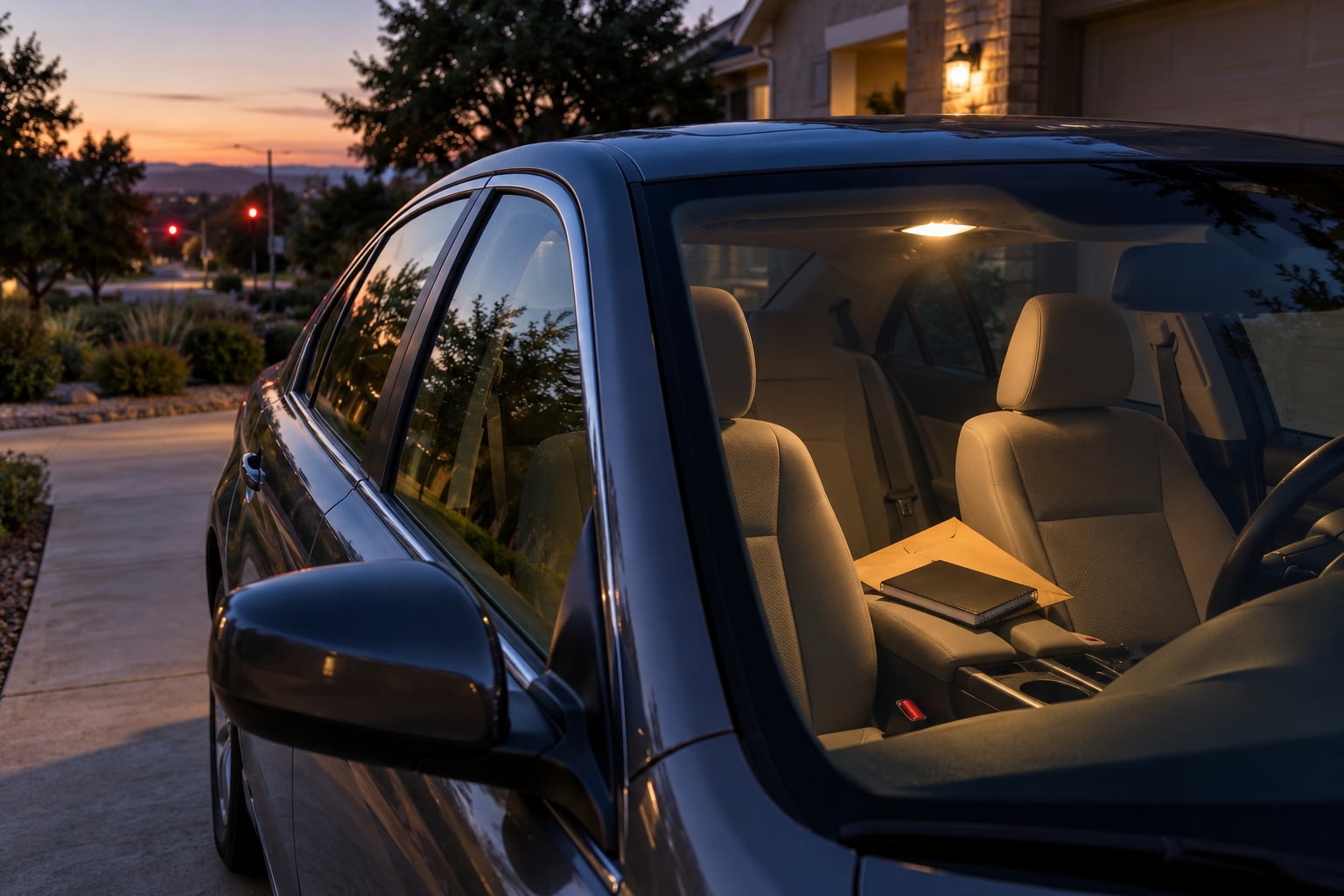
- Familiarity with the car’s controls. Your teen should be able to find the dome light in the dark without looking down, turn on the hazard lights, and lower the window without a fumbling hunt. Do this in the driveway at night once.
- A charged phone, mounted and out of reach. It should be able to record audio, and it should not be somewhere a sudden movement sends it to the floor. A pinned contact for you and a second for a family attorney matter.
- A short written script. Three or four sentences your teen can recall under pressure beats a page of advice. Write the sentences on an index card and let them memorize it.
- A place and a person. Agree on when they should keep driving to a well-lit, populated location instead of stopping immediately if something feels off, and agree that they call you as soon as it is safe to do so.
One note before you go further: required documents, move-over rules, and what an officer may request differ from state to state. Check your state DMV’s driver handbook rather than trusting a general internet summary, including this one.
Step-by-Step: Teaching the Plan in Seven Moves
Below is the sequence I’d walk a 15 or 16 year old through, in this order. Each step is short enough to rehearse in a single sitting, and the whole lesson fits into one evening.
1. Explain why traffic stops happen
Start with the ordinary reasons, because a teen who expects disaster on every block will tense up at a turn signal. The common triggers are speeding, a broken taillight or registration problem, a lane change that looks abrupt, running a stop sign, suspected impairment, a phone in a hand, and plain officer discretion about anything that looks out of place.
Most stops end with a warning or a citation and go home. Saying that plainly is not the same as saying stops are harmless, and it is not the same as saying a stop is always lawful. Both things can be true, and your teen needs to hear both from you.
2. Set a clear plan for the vehicle and the driver
Pull over as soon as it is safe and as far to the side as possible. Signal, ease off the gas, and avoid braking hard or swerving late. Put the car in park, keep the engine running unless asked otherwise, and turn on your hazard lights so the officer behind you knows you saw them.
Roll the window down only partway at first. Keep both hands on the steering wheel at ten and two where they can be seen plainly. If it is dark, the dome light on makes the interior visible and everyone calmer.
3. Teach the initial interaction
The sequence your teen should be able to recite: stay calm, greet the officer, keep your hands visible, hand over identification when asked, answer questions briefly, and follow instructions without sudden movement.
Three sentences do most of the work. “Good evening, officer.” “Sure, I can get that for you.” “Just let me know what you need me to do.” Warm, brief, and unremarkable. If the officer is plainclothes, ask for identification before deciding anything, which is ordinary practice rather than an act of defiance.
4. Explain questions, requests, and commands
Teach your teen to listen to the whole sentence before reacting, because people often hear a question as an order. A polite way to sort that out: “Just to be clear, are you asking me or telling me to do that?”
Compliant and respectful is not the same as agreeing. Your teen can be warm and still decline to answer questions about other people, hand over anything, or consent to a search. Saying “I’d rather wait and talk to my mom or my lawyer” is calm, not confrontational.
5. Prepare for a possible search or detention
Nobody, including a parent, should promise a specific outcome in a specific state. What you can give your teen is the general shape: they can decline to consent to a search, they can ask whether they may speak with a parent, guardian, or attorney, and they should never physically resist, argue, or reach for anything.
Consent matters because an officer who searches without consent needs a reason under the Fourth Amendment, and a refusal can be the whole case. If an officer says they can search anyway and appears about to do it, the plan is not to stop them. It is to stay still, stay polite, note the time and the officer’s description, and call an attorney once everyone is safely home.
6. Discuss what happens after the stop
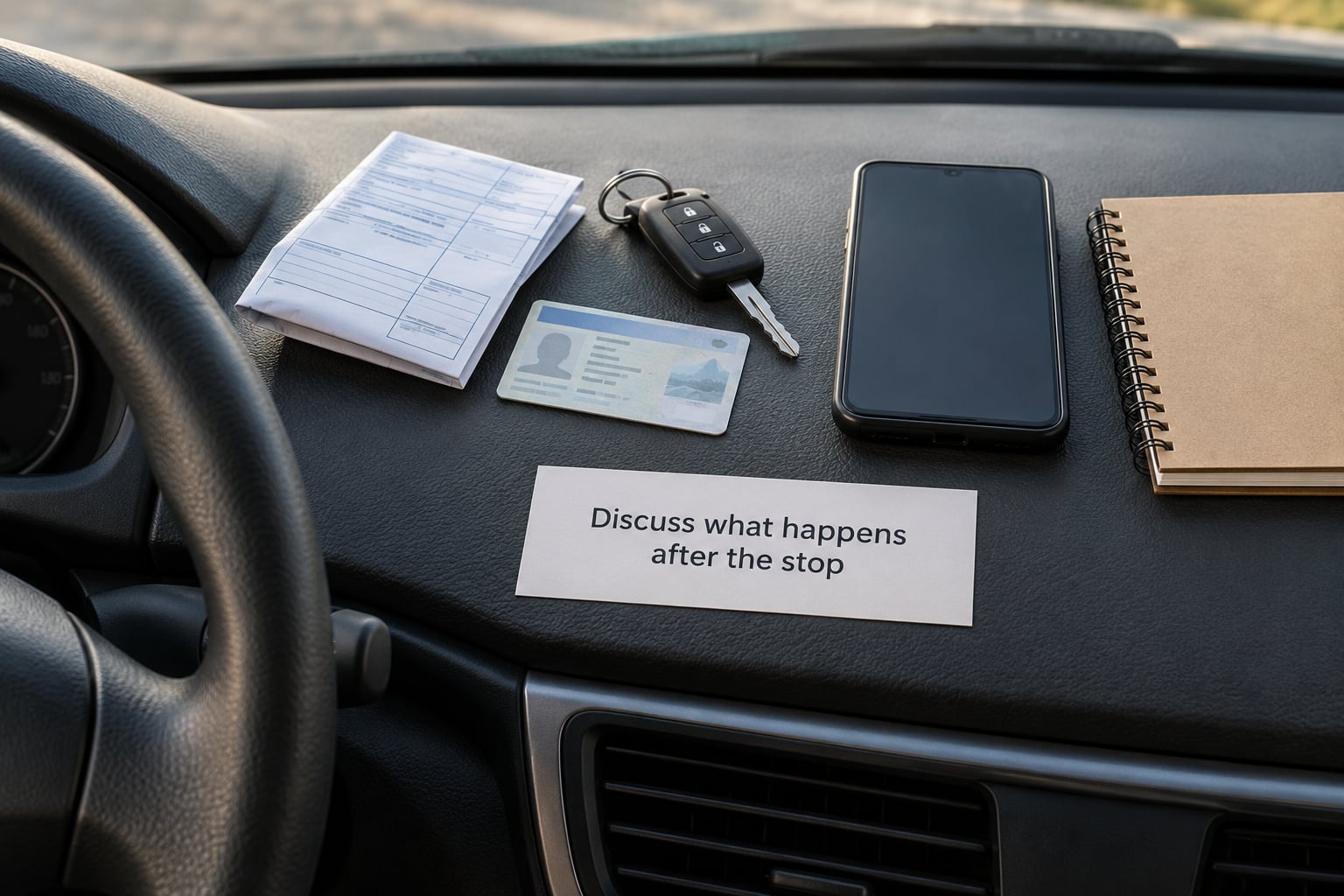
Most stops end with a citation or a warning. Your teen should photograph the citation before driving away, put it somewhere safe, and note the response deadline printed on it, because ignoring it can mean a default judgment, added fees, or a license problem.
Then check how it affects insurance, because insurers notice moving violations and not all of them are equal. If the citation looks wrong, a call to an attorney is usually cheaper than the fee for ignoring it. Let your teen vent first, then help them write down what happened while it’s still fresh.
7. Rehearse realistic scenarios
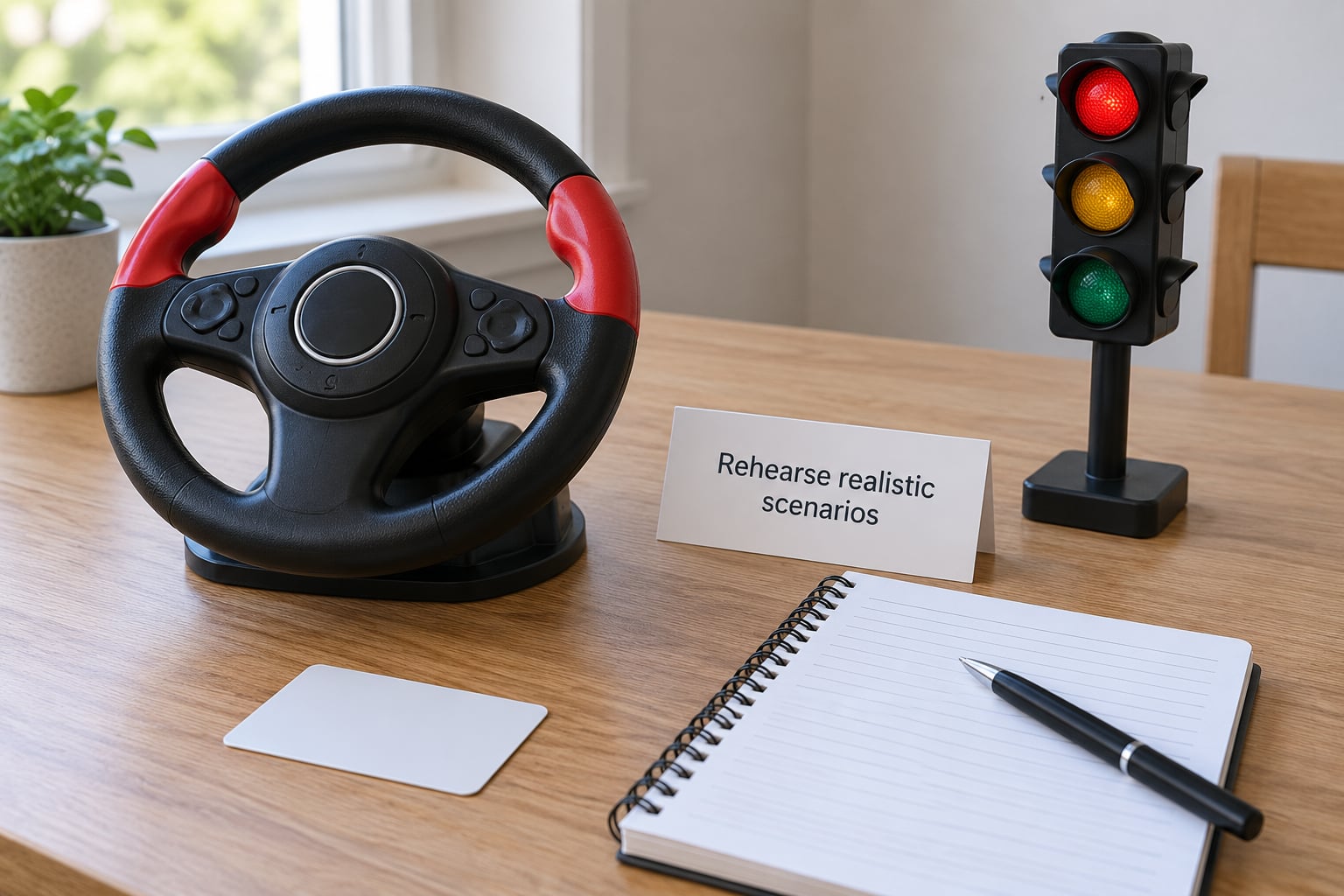
Reading about this is not the same as being able to do it under adrenaline. Run it as a game in the driveway: you play the officer and your teen plays the driver, or trade roles so each of you feels the awkwardness of the other seat.
Work through at least four scenes. A routine daytime stop. A nighttime stop where they have to find the dome light. A request to step out of the car with passengers aboard. And one confusing scene, such as an officer asking about a friend in the car, where the right answer is to answer only what was asked and say nothing more.
Finish by rehearsing the phone call afterward. Fifteen seconds of reporting where they are, what happened, and whether they are safe is plenty.
Common Mistakes When You Teach This
Lecturing instead of practicing. A three-hour talk fades in a day; two minutes of role-play in the driveway holds. Fix: one script, one drill, one repetition a month until the license is earned.
Teaching that every officer is dangerous. Teens who hear only fear either freeze or brace for a fight. Teach the plan as a plan for everyone, then talk honestly and separately about the fact that some stops are biased and some officers are rude.
Practicing physical resistance. Never rehearse this, even as a joke. If a teenager believes it is expected, it will come out at the worst possible moment. Fix: rehearse the opposite, stillness and low voice, until it is automatic.
Forgetting the documents. A stop that turns into five minutes of searching the back seat teaches the wrong lesson. Fix: one envelope, one location, named out loud before the drive.
Confusing state law with general advice. What is required at a stop varies, and a confident wrong answer from a parent is worse than no answer. Fix: point to the state DMV handbook and, for anything serious, an attorney in your state.
Ignoring the emotional aftermath. Some teens come home angry, some apologetic to the point of blaming themselves for something they did not do. Let them say it without correcting the feeling first, then handle the paperwork.
Not including Black and brown teens specifically. The baseline plan is sound advice for every driver, and parents of color often add one more step: choose well-lit, populated spots, and have a plan for the moments when compliance alone does not end the encounter. Say plainly that this is real, and then give your teen the behaviors that still improve their odds.
Frequently Asked Questions
What are the 7 steps of a traffic stop?
Pull over safely and as far to the side as you can. Put the car in park and turn on your hazard lights. Keep both hands visible on the steering wheel and roll the window down partway. Turn on the dome light if it is dark. Greet the officer politely and hand over your license, registration, and insurance when asked. Answer questions briefly and stay in the car unless told otherwise. After the stop, photograph the citation and check the response deadline.
What if my teen is too nervous to handle a traffic stop calmly?
Nervousness is normal, and the fix is rehearsal rather than reassurance. Run the driveway drill a few times, including one at night, until the steps feel automatic. Reassure your teen that shaking hands and a shaky voice will not make an officer less likely to be reasonable. A teen who has practiced can act calmer than they feel, which is exactly what the moment requires.
Should my teen record a traffic stop with a phone or dashcam?
Recording is common now, and a dashcam with audio mounted high on the windshield is the simplest option. A phone left on the seat can record audio without handling it, which matters because handling the phone looks like something else. Your teen should stay hands-visible throughout and never argue about the recording with an officer. Local law on recording conversations varies, so check your state’s rule and mention it when you set up the dashcam.
What should my teen do if an officer asks to search the car?
Your teen can decline. A polite version is: I am not comfortable with that, I would like to talk to my parent or an attorney first. Refusing a consent search does not make the stop illegal, and an officer who has a legal reason may search anyway, so your teen should stay still and stay polite rather than physically interfering. Nothing found can be used against your teen, and nothing about the vehicle should be touched or moved.
When should I contact a lawyer after my teen gets pulled over?
Call an attorney when your teen is detained or arrested rather than simply cited, when the officer searched the vehicle without what your teen understood to be consent, when your teen was asked questions about other people, or when the citation looks factually wrong. Do not wait on the decision about contesting a citation, because response deadlines are short. A free consultation is the usual first step, and many offers of representation are free for a juvenile.
Should my teen call me right after being pulled over?
Yes, once the vehicle is safely parked and the officer has left, or from a safe place if they were detained. Agree on a short script beforehand: where they are, what happened, and whether they are safe. If they are detained and cannot call, the officer will usually contact you. Agree in advance that your teen will not argue with you on the phone in the parking lot of a police station, and that you will wait until they are released before reacting.
Conclusion
Pick a calm evening this week. Show your teen where the license, registration, and insurance live, find the dome light together in the driveway after dark, write three sentences on an index card, and run one realistic stop from start to finish. That single hour is the difference between a teen who freezes and a teen who pulls over, stays calm, and drives home.