
If you are searching how to talk to police as a parent of a teenager, the short version is this: stay calm, keep your voice level, answer only what is asked, and tell the officer plainly that you are your teenager’s parent and want to be present. There is no magic script that fixes every encounter, but there are words that keep the situation from getting worse in the first five minutes.
There are really two conversations here. One is talking to an officer about your teenager while your teenager is being questioned, detained or stopped. The other is the harder one, at the kitchen table, preparing your child for a world where adults with badges decide how long they wait. This guide covers both, plus what to write down afterwards and when a lawyer should be the next call you make.
Rules differ by state and they change, so treat what follows as general information about how encounters usually work in the United States, not as legal advice about your situation. When your teenager has been detained or says anything to an officer, a local juvenile attorney is worth a phone call before you agree to anything.
Table of Contents
- What You Need
- Contacts that answer the phone
- Documents in one folder
- A way to write things down
- The right mindset
- Step-by-Step: How to Talk to Police as a Parent of a Teenager
- 1. Stay Calm and Put Safety First
- 2. Ask What Is Happening
- 3. Be Respectful but Assertive
- 4. Protect Your Teenager’s Rights
- 5. Share Information Selectively
- 6. Document the Encounter
- Common Mistakes
- Frequently Asked Questions
- Can police question my teenager without a parent present?
- What should I say to a police officer who is questioning my child?
- Can I refuse to let police search my teenager’s phone or room?
- What do I do if my teenager is arrested?
- Can police question my child at school without telling me?
- Conclusion
What You Need
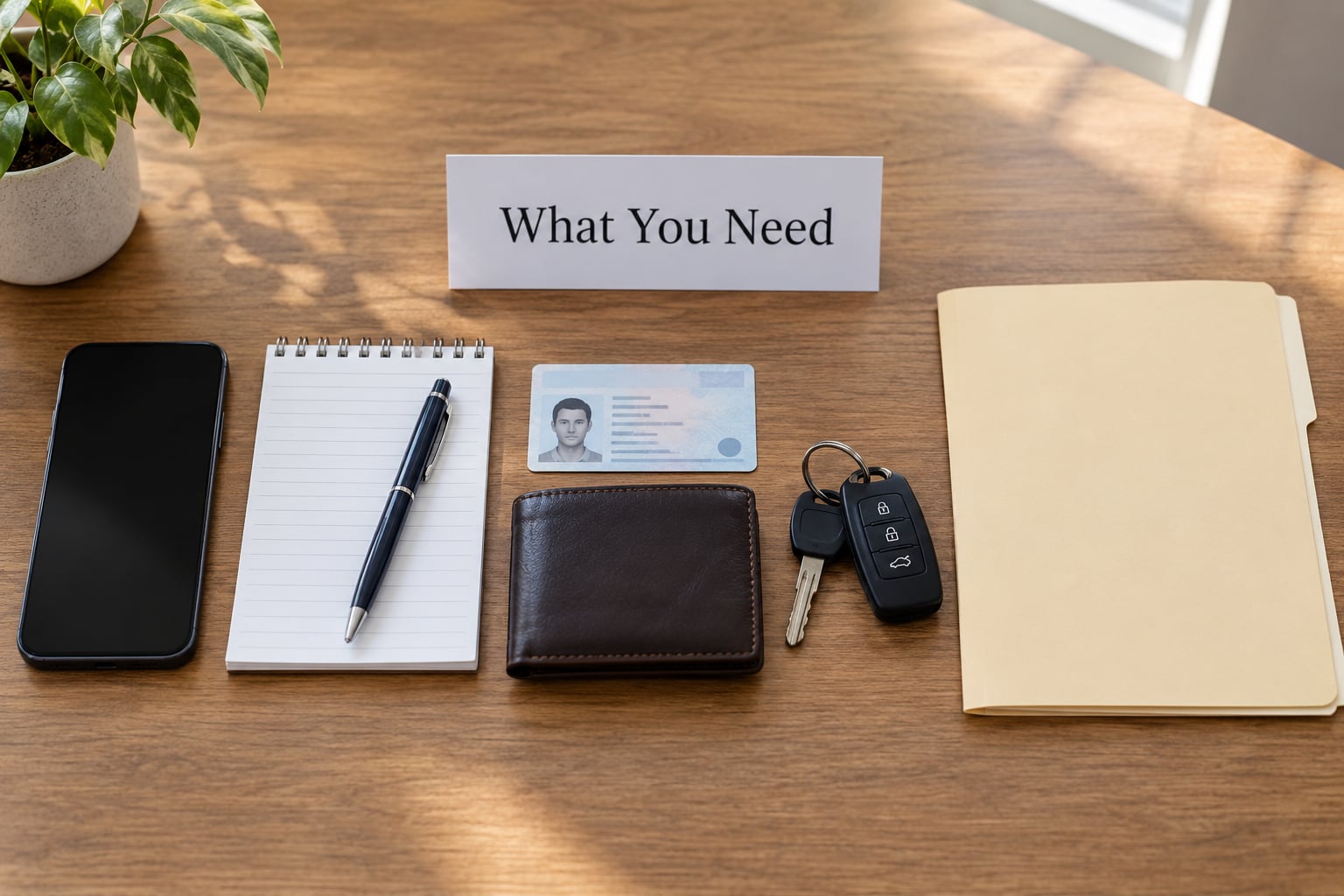
You cannot control how an encounter starts, but you can control how much of it you have to improvise. Before you need any of it, gather three things: names, numbers and paper.
Contacts that answer the phone
A family lawyer or juvenile attorney who handles minor matters, not just traffic tickets. A second adult who can drive your other kids somewhere else, because bringing a whole household to a curb at ten at night helps nobody. And a local legal aid or public defender office number, in case cost is the thing delaying the call you should have made tonight.
Documents in one folder
Your teenager’s birth certificate or other proof of guardianship, any prior court paperwork, insurance information, and your own identification. Officers cannot demand documents, but having them ready turns a twenty-minute search through a glovebox into a thirty-second handoff.
A way to write things down
A phone is fine for notes, but a paper notepad is faster and harder to argue about later. Write the time, the location, names, badge or car numbers, and the words that were said. Memory is unreliable within an hour. Written notes are not.
The right mindset
This is the part families skip. You are not required to volunteer information, you are not required to consent to a search of your teenager’s phone, car or bedroom, and you are not required to have an opinion about guilt in the first thirty seconds. Cooperation is not surrender. A parent who says “I want to help, and I want my lawyer present” is being cooperative, not difficult.
Step-by-Step: How to Talk to Police as a Parent of a Teenager
1. Stay Calm and Put Safety First
Your voice sets the temperature. Speak a little slower and a little quieter than feels natural, keep your hands visible and open, and do not step between your teenager and an officer. Nothing you say will speed up a search that is going to happen anyway, and a lot of what you say can slow down a situation that does not need to escalate.
If the situation turns frightening or confusing, leaving is the correct move. Say “I would like to go home now” or “we are going inside” and actually go. You are not required to stand in a street arguing your teenager’s case to an officer who has already decided what to do next.
Body language counts more than most parents expect. Face the officer, not the car or the phone in your hand. Do not reach for anything in a pocket until you say what you are reaching for. If your teenager is being loud, a hand on their shoulder and a quiet “we are going to be fine” does more than anything an officer can say.
2. Ask What Is Happening
Before anything else, ask the basics. Name, agency, badge or unit number, and the reason for the contact. Every officer is required to identify themselves if you ask, and most will.
Then ask the question nobody asks: “Is my child being detained, arrested, or is this a voluntary conversation?” Those four words change the whole scene. A voluntary conversation is one your teenager can end by standing up and walking out. A detention is not. Knowing which one you are in tells you whether to call a lawyer now or on the way home.
Ask about notification too. If your teenager is being taken somewhere, ask when and where you should go, and ask that notification happen in front of you rather than by phone later.
3. Be Respectful but Assertive
You do not have to choose between polite and firm. Politeness costs nothing and buys you room to make your point clearly. Most parents lose by getting either too aggressive, which the officer now has to manage, or too soft, which gets a vague non-answer.
Wording that works:
- “I am his mother, and I would like to be with him right now.”
- “I want to help. I would like to know what is happening first.”
- “Are you detaining him, or is he free to leave?”
- “I would like to speak with him privately for a few minutes.”
- “My son has asked for a lawyer. I would like to speak with one as well.”
- “Please give me your name and badge number so I can write it down.”
Say your piece once, clearly, then stop talking. Repeating yourself turns a conversation into a confrontation, and officers are trained to treat sustained arguing as an escalation rather than a conversation.
One distinction parents rarely hear clearly: your teenager holds the rights, you hold the relationship. You can insist on being present, on notification, and on not being separated from your child. You cannot invoke your teenager’s right to remain silent for them, and an officer who treats that as a parent “refusing to cooperate” is misstating what happened. Knowing that line in advance makes it much easier to hold.
4. Protect Your Teenager’s Rights
In the United States, a minor can generally be questioned by police without a parent’s permission. That is the single most common misconception among parents, and knowing it changes how you prepare. Your permission is not the gate. Your teenager’s own rights are.
Those rights include the right to remain silent and the right to counsel, and there are special protections for juveniles attached to how a statement’s voluntariness is judged. For a minor, courts look at things like age, intelligence, emotional condition, and prior experience with the justice system. A nervous fifteen-year-old who cannot really understand what is happening may not have given a voluntary statement even if nobody raised a voice.
Two phrases are worth having your teenager memorise until they are bored of them: “I would like my parent here” and “I want my lawyer.” Say them early, clearly, and without drama, because a child who has rehearsed the words can use them. A child who has never mentioned them freezes. Attorneys repeatedly point to “I want my lawyer” as the four words that matter most, and practising the line in advance is what parents on parenting and legal forums describe as the thing that made the difference when the moment actually arrived.
Ask specifically whether a parent or attorney can be present during questioning. An adult who is not a parent or lawyer is sometimes not permitted to sit in, so that request can fail, but asking is always worthwhile because it gets the request on the record. If your teenager is being held, ask about a public defender, and never let anyone coach your teenager what to say. Advice to a suspect about what to say can itself become a problem.
5. Share Information Selectively
Relevant to immediate safety is fine: name, date of birth, who lives at the house, whether there is anyone home, whether anyone is injured. Everything else is optional until you understand why it is being asked.
Do not speculate. If you do not know, “I don’t know” is a complete answer and guessing out loud is not. Do not coach answers. Do not say “he wouldn’t do that” or “he was at my house all night” without certainty, because a protective statement from a parent is exactly the kind of fact that gets tested against phone data and cameras later.
At school, remember that the school resource officer is often the one making the call and the school may have told your child not to tell you. Expect that, and open with the administrator rather than the officer. It changes the pace more than almost anything else you can do.
6. Document the Encounter
Before you leave, gather what will otherwise be gone: officers’ names, ranks, badge or unit numbers, vehicle numbers, the exact time and location, who else was present, what questions were asked, and what was said. Ask for a case or report number. You are allowed to request records of a conversation with an officer, and asking early keeps your memory and the official record aligned.
If something felt wrong, internal affairs or a civilian complaint review board is a real route, and the time limit for filing in most places is short. Complaints are separate from the underlying case, so filing one does not automatically protect your teenager, which is another reason to talk to an attorney before you assume you are done with the matter.
Then, later, with your teenager rather than about them: ask what happened, listen without interrupting, and resist the urge to reconstruct the case. Kids will tell you more once they believe the interview is over.
Common Mistakes
Arguing in the first minute. Parents who lead with accusations hand the officer a reason to treat the interaction as a problem. State your concern once, calmly, and save the detailed version for an attorney and a complaint.
Assuming your teenager is guilty or innocent. Both positions make bad conversational partners. “He didn’t do it” and “he did do it” are conclusions, and conclusions push you into arguments you cannot win on a street corner.
Signing anything without reading it. Paperwork handed over at a scene can include a consent to search, a statement, or a release you did not know was in the stack. Ask what each page is, or say you will read it at home with a lawyer. That is a normal request, not a refusal.
Answering questions on your teenager’s behalf. Adults often fill the silence that a nervous kid cannot fill. That silence is often a kid exercising a right. Answer what is asked of you and let your teenager handle their own questions.
Posting online before the facts are known. A few angry paragraphs the night of an encounter can follow your family into school, a job application, or a future hearing. Say nothing publicly until you know what actually happened and have talked to a lawyer.
Treating every encounter as a court proceeding. Citing case law at a traffic stop does nothing for you. The useful moves in the moment are small ones: ask who the officer is, ask whether this is detention, ask for privacy, and write it down.
Frequently Asked Questions
Can police question my teenager without a parent present?
Generally yes. In the United States a minor can usually be questioned without a parent’s permission, because the right to remain silent belongs to the teenager, not to you. What you can do is insist on being present, ask whether the conversation is voluntary or custodial, ask for a case number, and make sure your teenager knows to ask for a parent and a lawyer. Rules differ by state and by school policy, so ask the school directly what they do when police request a student.
What should I say to a police officer who is questioning my child?
Say three things, calmly and once each: I am the parent, I would like to be present, and I would like to speak with a lawyer before my child answers further questions. Then stop. Do not argue, do not coach your teenager’s answers, and do not volunteer details nobody asked for. If you are unsure what is happening, ask directly whether the conversation is voluntary and whether your child is free to leave.
Can I refuse to let police search my teenager’s phone or room?
Yes. A parent generally cannot consent to a search of a minor’s private property, and consent has to come from the person with the right to the property. Saying no is safe and legal. Police can still search with a warrant, or without one in specific exceptions such as exigent circumstances, and an officer may try to get a teenager to consent instead, which is why your teenager should be told in advance to ask for a lawyer before agreeing to any search of a device.
What do I do if my teenager is arrested?
Stay with the process and keep the family informed. Ask where your teenager is being held, ask for a case number, and go to that location. Ask about a public defender or call a juvenile attorney yourself. Do not discuss the facts with your teenager, in person or on the phone, until a lawyer is present, because a well-meant question from you can become a statement attributed to your teenager.
Can police question my child at school without telling me?
In many places, yes. School resource officers and school administrators can often question a student on school grounds, and some schools require students to answer without a parent present. State law and district policy both vary, and some states require a reasonable effort to contact a parent. Call the school office and ask for the policy in writing, and arrange in advance that your child knows to ask for a parent or lawyer before answering anything.
Conclusion
Here is what to do first, in order. Stay calm and keep your hands open. Ask the officer’s name and the reason for contact. Ask the question that reframes everything: is my teenager being detained, arrested, or is this voluntary? Tell the officer you are the parent and that you want to be present. Give short, honest answers and nothing you are guessing at. Write down names, numbers, times and words before you leave.
None of that requires you to become a lawyer or to pretend the encounter is not frightening. It requires you to slow the moment down by about ten seconds, which is usually enough to stop a bad decision from becoming a worse one. Then, when your teenager is safe and the paperwork exists, talk to a juvenile attorney about what happens next, and talk to your teenager about how it felt.