The fastest way to find low cost clinics without insurance is to search the HRSA Find a Health Center tool with your ZIP code, then call your county health department as a backup. Both point you to providers that see uninsured patients and charge on an income-based sliding scale rather than billing insurance. It takes about an hour to build a short list of three or four places worth calling.
Here is the part that usually goes wrong: people wait for coverage to come back instead of booking care today. Coverage gaps stretch for months, and the conditions people put off during that time get more expensive to treat. Nearly 26 million US adults under 65 were uninsured in the most recent KFF estimates, so you are in a large crowd, and the safety net for it is real and mostly local.
This guide covers how to find those places, what to say when you call, and how to keep a self-pay visit from turning into a surprise bill. Rules and eligibility change by state and by clinic, so treat everything below as a starting point for 2026, not a guarantee.
Table of Contents
- What You Need Before You Start Searching
- Step-by-Step: Finding, Comparing, and Booking Low Cost Care
- Search for Federally Qualified Health Centers and Community Clinics
- Use State and Local Health Department Directories
- Call Clinics and Ask About Fees Before Scheduling
- Check Pharmacies, Urgent Care, and Mobile Health Services
- Compare Total Costs, Not Just the Visit Fee
- Prepare for the Visit and Ask for Lower-Cost Options
- Common Mistakes and How to Fix Them
- Frequently Asked Questions
- What is the cheapest way to see a doctor without insurance?
- Where is the best place to go if you don’t have health insurance?
- Do community health centers cost money?
- Who qualifies for free clinic services?
- Do free clinics take walk-ins and do I need ID?
- What happens if the clinic cannot help me?
- Conclusion
What You Need Before You Start Searching
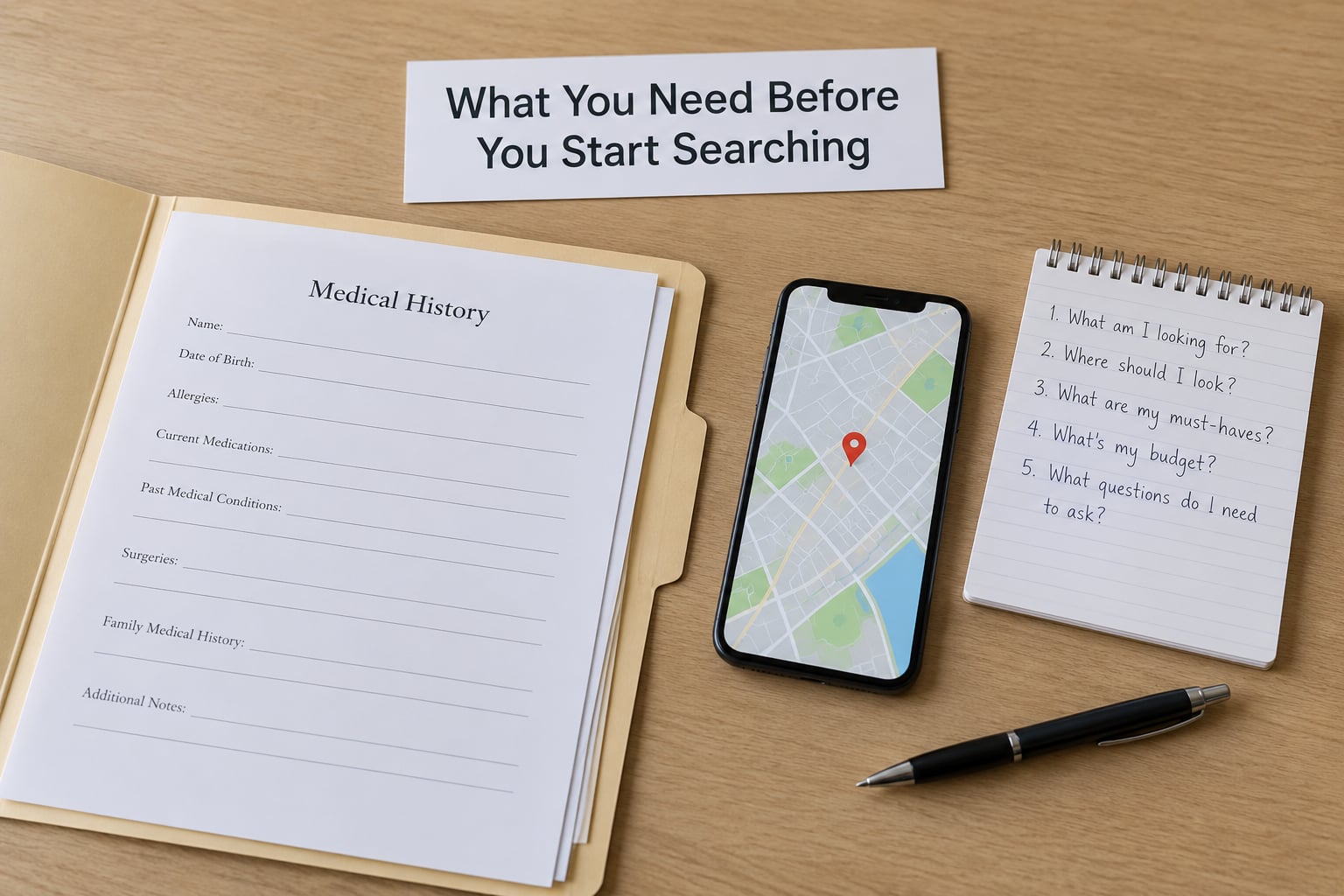
Gather these before you dial, because front-desk staff move fast and you get one or two questions before they move on.
- Photo ID. A driver’s license, state ID, passport, or birth certificate. Some clinics serve people with no documentation at all, but having one removes an argument at the counter.
- Proof of income. A recent pay stub, a benefits letter, or a bank statement. This is what sets your place on a sliding fee scale.
- Proof of address. A lease, utility bill, or a piece of mail. Some public clinics cap how long you can use them based on residency.
- A list of medications. Names and doses, plus any pharmacy you use. Dispensary stock runs out and knowing this saves a second trip.
- Your health history. Conditions, allergies, surgeries, and the names of any clinic that treated you before.
- A written budget. A number you can actually pay today, including a co-pay. It shapes which clinics are realistic.
Write your questions down too. The five that matter most: what is the self-pay price for a new-patient visit, is there a sliding scale and how do I apply, do you take walk-ins, what documents do you need, and do you do dental, mental health, or lab work here.
Step-by-Step: Finding, Comparing, and Booking Low Cost Care
Search for Federally Qualified Health Centers and Community Clinics
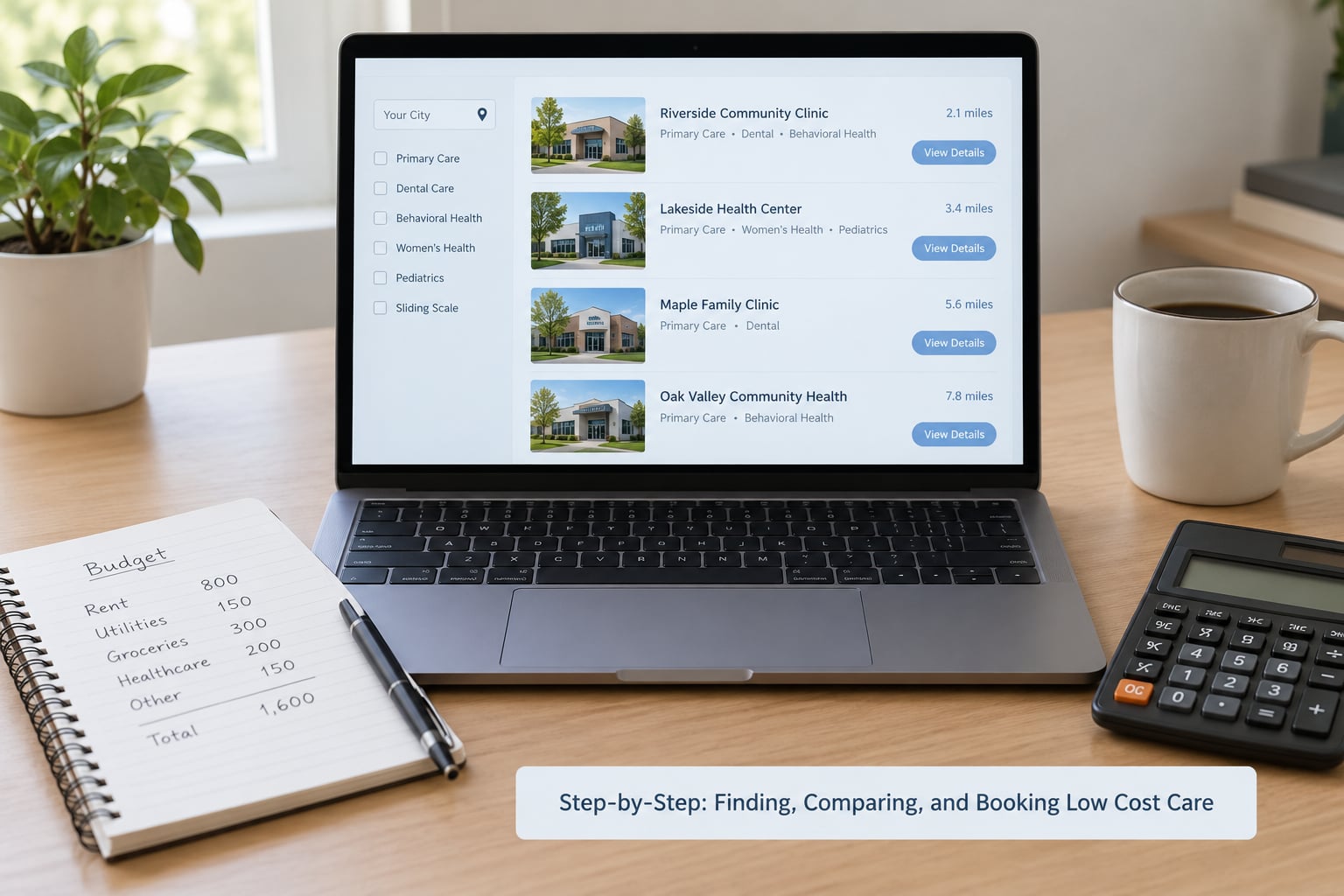
A federally qualified health center, or FQHC, is the best starting point because the government funds it specifically to treat people regardless of ability to pay. Search the HRSA Find a Health Center locator with your ZIP code, then widen the radius if nothing sits nearby. Many sites default to a tight radius, so expand it.
You will know an FQHC worked if you get a named site, an address, and a phone number in one search. Among them are migrant health programs, clinics in public housing, shelters for people experiencing homelessness, and rural health centers. Migrant and agricultural worker programs serve seasonal workers specifically, and they will not ask about immigration status.
Use State and Local Health Department Directories
County and city health departments run public clinics, immunization events, and sometimes walk-in sick care on a fee basis set by local policy. Your state health department usually publishes a directory of county clinics, and the national association of local county health officials keeps a searchable list by state.
These are worth calling even after you find an FQHC, because public clinics often hold slots that private practices do not and they handle communicable disease testing and immunizations that health centers scale back. You will know it worked if the department gives you a clinic name with a sliding scale and same-week availability.
Call Clinics and Ask About Fees Before Scheduling
Phone is faster than the online booking form, and the person answering can give you a real number. Say the self-pay version out loud: “I don’t have insurance. What is your cash price for a new-patient visit, and do I qualify for a sliding scale?” Then ask whether the discount is automatic from your income or whether there is a form to fill out.
Keep going. Ask about the deposit, whether they bill on a payment plan, which services are discounted, whether lab work sent out is billed at cost or marked up, and whether they will reschedule you cheaply if the first visit is not the right fit.
Call three clinics before booking one. The range between a good clinic and a bad fit can be wide enough that it changes which appointment you take.
Check Pharmacies, Urgent Care, and Mobile Health Services
Not everything needs a doctor’s office. Pharmacies in many states give flu and shingles shots, blood pressure checks, and sometimes screening tests. Mobile and pop-up clinics show up at churches, schools, food banks, and festivals, and they usually advertise walk-in access with no appointment.
Urgent care is the middle tier: faster than a primary care appointment and cheaper than an emergency room, with self-pay rates often published. Know the gap before you go. People in a coverage gap, earning too much for Medicaid and too little for affordable premiums, are usually too sick to wait, and they are exactly who these clinics serve.
Compare Total Costs, Not Just the Visit Fee
A low consultation fee tells you very little. The total is what matters, and it is where self-pay patients get caught. Ask what else gets billed: labs drawn in house, labs sent to an outside lab, imaging, supplies, injections, and the follow-up visit.
Then ask who sets that price. Some clinics negotiate a flat rate with their lab or place the fee at their own cost, which is why one community clinic’s routine bloodwork ran about thirteen dollars for one patient while another clinic’s lab line item cost far more. Ask whether the discount applies to the labs or only the office visit, because the answer changes your real total by a lot.
Ask for an estimate in writing before the visit if the bill will be large. You can also ask what the lowest-cost option is, and providers frequently have a cheaper test that answers the same question.
Prepare for the Visit and Ask for Lower-Cost Options
Say your situation plainly at check-in: “I’m self-pay and this is what I can pay today.” Staff run the fee scale against income, and patients who state it get the discount applied reliably instead of after a collections call weeks later. If a charge looks wrong at the desk, ask for the fee scale to be recalculated before you leave.
Bring a payment method even when the fee is low, and ask whether they take payment plans on the balance. Before you go, confirm hours, walk-in availability, and whether the location offers the service you need, because many sites provide primary care but refer out for dental, behavioral health, and imaging.
Common Mistakes and How to Fix Them
Assuming every low cost clinic does everything. Primary care, dental, mental health, and obstetrics often live in different places. Ask for a service list before you travel.
Booking online and staying silent about being uninsured. Booking forms assume insurance and route you to the wrong price. Call instead and say the self-pay sentence out loud.
Waiting for capacity instead of asking for workarounds. Establishing as a new patient at a health center can take months. Ask for the cancellation list, ask about walk-in hours, and ask whether a sister location in a neighboring county has space.
Assuming you will be turned away without ID or money. Many clinics treat patients regardless of ability to pay. Fear of refusal keeps people from asking, which is its own cost.
Comparing clinic types in ways that do not match. A volunteer free clinic may run two evenings a month and have no labs. A health center charges on a scale but sees you next week. Match the clinic to the urgency, not to the label.
Skipping the clinic because your county feels thin on options. Cities differ enormously, and patients describe very different experiences depending on where they live. Where the safety net is strong, people can name specific clinics. Where it is thin, there is little to go on. Expand your search radius and check the state directory rather than assuming.
Forgetting that ordinary private offices take self-pay patients. Most doctors and clinics will see you without insurance if you ask and are upfront about paying cash. Ask for the office cash price, and ask for an estimate before the visit.
A few other things worth knowing. Safety-net teaching hospitals have financial assistance departments and charity care policies that apply at the hospital level, and that help often extends beyond the hospital itself. And ask whether your bill went to collections before your first follow-up; a goodwill adjustment is far easier when the account is still young.
Frequently Asked Questions
What is the cheapest way to see a doctor without insurance?
Start with a federally qualified health center or free and charitable clinic, because both charge a reduced or waived fee based on income rather than billing insurance. Ask for the sliding scale on the same call as your first appointment. Avoid the emergency room for anything routine: it costs far more than an urgent care visit, which in turn costs more than a community clinic.
Where is the best place to go if you don’t have health insurance?
Your best starting point is a federally qualified health center found through the HRSA locator, or your county health department if none sits near you. Both see uninsured patients on a regular basis. If the need is immediate and serious, go to the nearest emergency department: federal law requires a screening exam and stabilizing treatment regardless of your ability to pay.
Do community health centers cost money?
Most do, and that is fine. The fee is set on a sliding scale tied to income and family size, so the same visit costs one person a nominal amount and another person more, based on where their income falls against the federal poverty guidelines. Ask how the scale is calculated and whether the discount is automatic or requires an application.
Who qualifies for free clinic services?
Eligibility varies by provider and there is no single national rule. Free and charitable clinics funded by the National Association of Free and Charitable Clinics commonly serve the uninsured and underinsured, and many set an income ceiling. Some require residency proof, some do not ask for documents at all, and volunteer clinics are open to anyone who shows up during their hours.
Do free clinics take walk-ins and do I need ID?
Many do offer walk-in hours, and that matters more than it sounds: patients repeatedly name walk-in availability as the deciding factor when choosing a clinic. Many community health centers schedule by appointment instead, so ask. Proof of income is what sets your fee, and some providers serve people with no documents whatsoever, so ask about that too.
What happens if the clinic cannot help me?
Ask to be referred inside the same network, since health centers often have partner specialists charging the same reduced rates. If the need is urgent but not an emergency, urgent care and telehealth both publish self-pay pricing. For prescriptions, patient assistance programs and discount cards from manufacturers and pharmacies can cut costs dramatically, and public clinics often dispense on site.
Conclusion
Pick one action and do it today: open the HRSA Find a Health Center search, type in your ZIP code, and write down the first three locations with a phone number. Then call all three with the self-pay question ready. Finding low cost clinics without insurance usually means contacting several local providers, because hours, services, and capacity vary more than any website suggests.
This guide is informational and not medical advice. Eligibility rules, fees, and program details change by state and by provider, so confirm anything that matters with the clinic itself, and ask a doctor or pharmacist about anything specific to your health.