To take better photos of people respectfully, you ask first in plain words, explain what you are about to do, direct with simple physical cues instead of abstract ones, and treat showing or posting the photo as a separate permission from taking it. Most of the work is conversational, and it takes about five minutes of talking for every ten of shooting.
Plenty of people find being photographed uncomfortable, so the skills that make a good picture — comfortable light, a clear frame, a subject who is not posing under pressure — are the same skills that keep a session respectful. Both halves belong in the same guide. That is the part almost every tutorial leaves out.
You do not need a good camera. You need a way to ask, and a plan for what happens after you press the shutter.
Table of Contents
- What You Need
- How to Take Better Photos of People Respectfully: Step-by-Step
- How to take better photos of people respectfully by preparing the interaction
- How to take better photos of people respectfully by choosing a comfortable setting
- How to take better photos of people respectfully by directing without controlling
- How to take better photos of people respectfully by managing light and composition
- Common Mistakes
- A 30-second practice drill
- Frequently Asked Questions
- Do I need permission to photograph someone in public?
- How should I take photos of children or teenagers respectfully?
- What if I want to photograph a stranger?
- How can I help a person feel comfortable in front of the camera?
- Is it respectful to edit someone’s face or body?
- How can I avoid making portraits look staged or awkward?
- Conclusion
What You Need
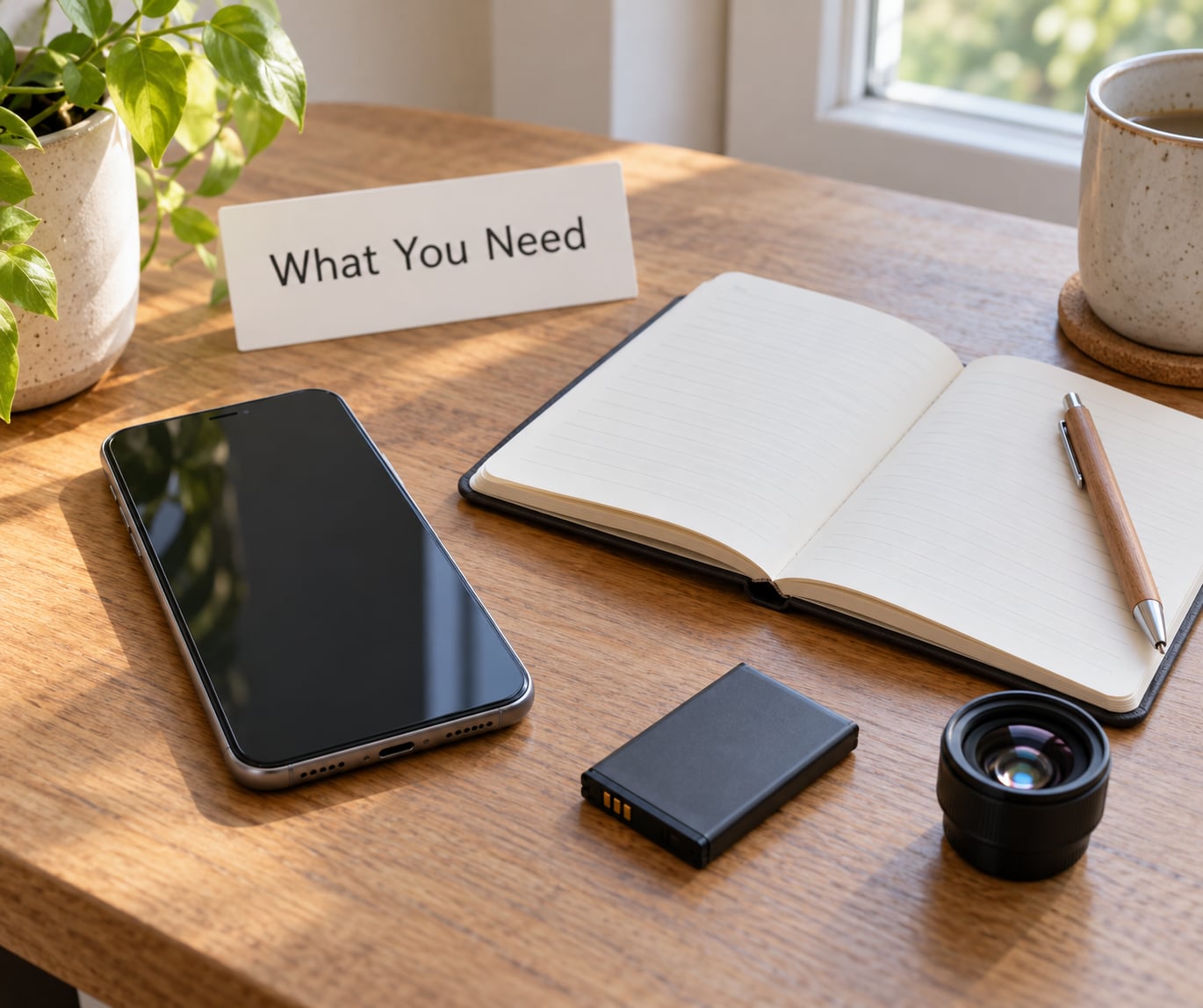
A phone covers almost everything on this list. The three things that actually change the outcome are knowing how to set basic exposure and focus on your device, having somewhere comfortable to stand, and knowing in advance what you intend to do with the images.
- A camera or phone. Know where the front camera or screen-facing indicator is, and turn on the grid or rule-of-thirds lines if your device has them. They help with placement more than any lens will.
- Familiarity with three settings. Focus, exposure and burst or quick-shot mode. That is enough. You do not need manual mode to make a good portrait.
- A short plan for the session. One location, ten minutes, and a rough idea of the shots you want. People relax faster when a session has an obvious end.
- A consent plan. Decide before you lift the camera what you will say, what you will not photograph, and what you will do with the images afterwards.
- Light you can get out of the way. Window light, open shade, or a plain wall. Bright sun overhead is the hardest light to work with and the easiest to avoid.
- Something to write on. A name, a contact, and any restrictions the person tells you about. Verbal agreements get forgotten; notes do not.
If you only add one thing, add the consent plan. It costs nothing and it changes how people hold themselves in front of the lens.
How to Take Better Photos of People Respectfully: Step-by-Step
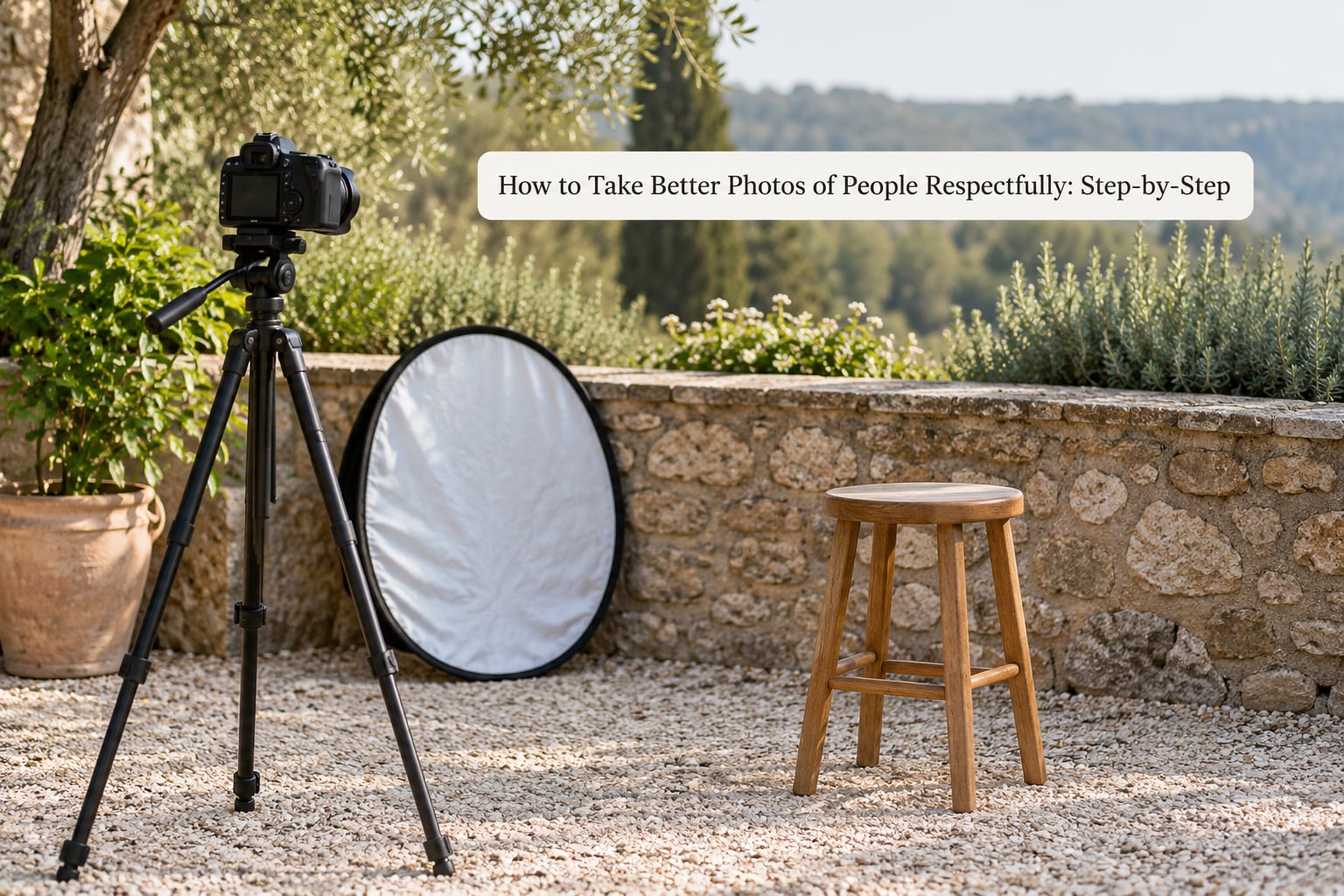
Respectful practice moves in a fixed order, and the order matters more than the gear. Start the conversation before you raise the camera, keep it short and warm while you shoot, then ask again before anything leaves your device.
How to take better photos of people respectfully by preparing the interaction
Introduce yourself, say what you are doing, and ask — before anything else happens. Two sentences are enough: who you are, what you would like to photograph, and why.
Then ask about the details that change the picture. Are you being photographed for a website, a newsletter or yourself? Are there angles, sides or expressions they would rather avoid? Do they want to see the results? People rarely refuse the first ask, but they answer these questions honestly.
Make saying no easy and painless. Nobody should feel they need a reason, and if you sense hesitation, treat it as a no. The interaction is not symmetric: you can leave at any point, and they cannot. Forum photographers report the same thing over and over — the feared reaction is far rarer than the fear, and asking usually makes the photo better rather than worse.
Say what you will do with the pictures too. “I will send you a copy and I will not post it anywhere” is a complete answer. “I will probably put one on my site” gets a very different reply, and the person should get to choose which version they are agreeing to.
How to take better photos of people respectfully by choosing a comfortable setting
Pick somewhere with soft directional light, enough room to step back, and a background that is not cluttered. Open shade at the edge of a building usually beats direct sun in the middle of an open space, because squinting is the fastest way to make a portrait look tense.
Position the person near the light with the light coming from the side or slightly in front. Light from directly overhead drops shadows into the eye sockets and under the chin. Light from the front flattens everything. Side light gives a face shape.
Give people somewhere to put their hands and somewhere to look that is not the lens. A chair back, a wall edge, or a spot on the horizon a few feet away all work. Open space is uncomfortable for most people.
Keep the session short and have an easy exit. Ten focused minutes produces more usable frames than an hour of drifting. Offer the photo before you leave so the session has a clear finish.
How to take better photos of people respectfully by directing without controlling
Physical direction beats abstract direction. “Turn your head slightly to the left and bring your chin forward a touch” is something a person can actually do. “Imagine you are under the sea” is not.
A few cues cover most portrait sessions: angle at eye level so nobody is looking down or up at you; turn the body about 45 degrees off the camera and let the face come back toward it; bring the chin slightly forward and down to open the jaw; ask for the hands to be relaxed rather than posed.
Do not chase a smile. Say something mildly amusing, keep talking between shots, and photograph the interaction rather than the pose — hands adjusting a collar, someone turning to a friend mid-sentence. Those frames usually beat the ones where everyone is holding still.
Keep shooting and keep talking. Per-shot performance pressure is what makes people freeze, so take a short burst and return to conversation. Check in every few minutes: how is this feeling, does anything need changing, are you warm enough.
How to take better photos of people respectfully by managing light and composition
Put the sharpest focus where it matters most, which is the nearer eye. Tap the face on a phone screen and check that the focus box landed on an eye, not on a shoulder behind it.
Move closer rather than zooming. Zooming in from across a room gives a narrow, compressed, unflattering look, and stepping closer fills the frame with a normal perspective. If you need distance, that is what a longer lens is for.
Leave room in the frame in the direction the person is looking or moving. A person framed with space on the right side of the shot reads as looking into the picture rather than at the edge of it.
Watch the background. A pole growing out of the back of someone’s head is the most common problem in a snapshot, and stepping half a step sideways fixes it more often than anything else. Check behind them for bright windows, signage, other people’s faces and reflections.
Do not shoot so much that the session becomes a production. Two or three settings with several frames each is plenty, and it keeps the interaction human.
Common Mistakes
Every error below has a straightforward fix, and most of them are social rather than technical.
- Photographing first and asking later. There is no version of this that feels good for the person, and it is the single most common complaint about photographers. Fix: ask before you raise the camera, every time.
- Assuming consent covers everything. Permission to shoot is not permission to post. Fix: treat showing and publishing as separate asks, made on a different day.
- Using low angles that shorten someone. Shooting up at a person from close range changes how the picture reads and how the encounter feels. Fix: shoot at eye level, every time.
- Over-directing until people look managed. Twenty instructions produce a stiff face and a tired subject. Fix: one instruction per frame, then let them settle.
- Shooting hundreds of near-identical frames. It removes their choice from the process and leaves you with nothing usable. Fix: a short burst per idea, then check the screen together.
- Editing that changes what happened. Removing a person, altering a body, or cropping a scene so it reads differently turns a record into something else. Fix: crop for composition only, and say what you changed before you publish.
- Forgetting people who were cropped out. In a group photo, the person on the edge who keeps half a face in the frame feels erased. Fix: frame the whole group or leave the shot out.
- Pushing past a no. Following someone, asking again, or arguing turns an ordinary request into harassment. Fix: a no is a complete sentence, and it ends the interaction.
- Photographing people in vulnerable situations without an exceptional reason. Children, sleeping or unconscious people, people in visible distress, care and medical settings, custody, protests and memorials. Fix: do not shoot unless there is a genuine reason that serves the people involved, and get it in writing where you can.
A 30-second practice drill
Today, ask three people for a photo and note what happened each time. Most will say yes or shrug. One may say no, and that is the useful data: it tells you your pitch needs work, not that you should stop asking.
Frequently Asked Questions
Do I need permission to photograph someone in public?
Usually no, if you are in a genuinely public place and they are doing something in the open — most jurisdictions let you photograph people in public without asking. But being in public does not mean consent was given, and rules differ for private property, workplaces, schools and anywhere the person has an expectation of privacy. Law varies by country and state, so check locally. Ask anyway: it makes better pictures and takes seconds.
How should I take photos of children or teenagers respectfully?
Get a parent or guardian’s explicit permission, every time, even for a quick snapshot — a nod from a passing adult is not enough. Ask what may be published, and default to not publishing. Keep the camera visible, keep the session short, and never photograph a child who is alone, asleep, in distress, or in a medical or care setting. If a child seems uncomfortable, stop immediately.
What if I want to photograph a stranger?
Make eye contact first, smile, gesture to your camera, and ask in plain words: excuse me, may I take your photo? Stay a couple of metres back and keep the camera lowered until they answer. A nod and a smile is enough to signal the request. If they decline, say thanks and move on without comment. Most people are fine with it once asked.
How can I help a person feel comfortable in front of the camera?
Explain what you are about to do before you do it, then keep talking so nobody is holding a pose in silence. Use short physical directions rather than abstract ones, shoot a small burst per idea instead of demanding a perfect single frame, and check in every few minutes. Most importantly, give them a clear finish: offer the photo before you leave, and say when you are done.
Is it respectful to edit someone’s face or body?
Adjusting exposure, contrast and colour is ordinary editing and rarely a problem. Changing someone’s body shape, age, skin or features is different, because it invents something that was not there. Light retouching on a blemish someone asked you to remove is fine. If you change something significant, tell them before the image is published, and never alter an image in a way that changes what it claims to document.
How can I avoid making portraits look staged or awkward?
Stop asking for a pose and photograph the moment instead: the conversation, the hands, the turn toward a friend. Give one physical instruction, take a short burst, then go back to talking. Keep the session under ten minutes and let people move. A portrait of someone who forgets the camera is there almost always beats a technically perfect frame of someone performing.
Conclusion
Ask before you raise the camera. Say who you are, what you want, and what you will do with the pictures. Then keep the session short, direct people with simple physical cues, use soft side light, focus on the nearer eye, and check in as you go.
Start with one comfortable setup this week and leave the technical adjustments for later. How to take better photos of people respectfully is mostly a conversation you finish before you pick up the camera.
If someone says no, thank them and walk away. That part is free.