To learn how to grow vegetables in a small space, match each crop to a container sized for its roots, set that container where it gets the light the crop needs, and keep the potting mix evenly moist. Forget a yard and you can still harvest salad greens, herbs, peppers and cherry tomatoes from a balcony, a stoop or a sunny window.
The trick is that small space vegetable gardening fails for predictable reasons, not mysterious ones. Containers that are too small, mix that dries out by noon, and plants crammed shoulder to shoulder are the usual suspects, and each one has a straightforward fix.
This guide walks through the whole process: what to gather, how to size and place containers, what to fill them with, which crops forgive beginners most, and how to keep everything alive through the season. Most people can have something edible in about a month.
Table of Contents
- What You Need
- The five things worth having
- A five-minute space assessment
- Step-by-Step
- How to Grow Vegetables in a Small Space: Assess Your Light and Layout
- Choose Containers With Drainage
- Use the Right Potting Mix and Fertilizer
- Pick Beginner-Friendly Vegetables
- Plant, Water, and Support Your Crops
- Common Mistakes
- Frequently Asked Questions
- What are the easiest vegetables to grow in a small space?
- What is the 70/30 rule in gardening?
- What month should you start a vegetable garden?
- What is the best layout for a small vegetable garden?
- How much sunlight do vegetables need in containers?
- Can I grow vegetables on a balcony if I am renting?
- Conclusion
What You Need
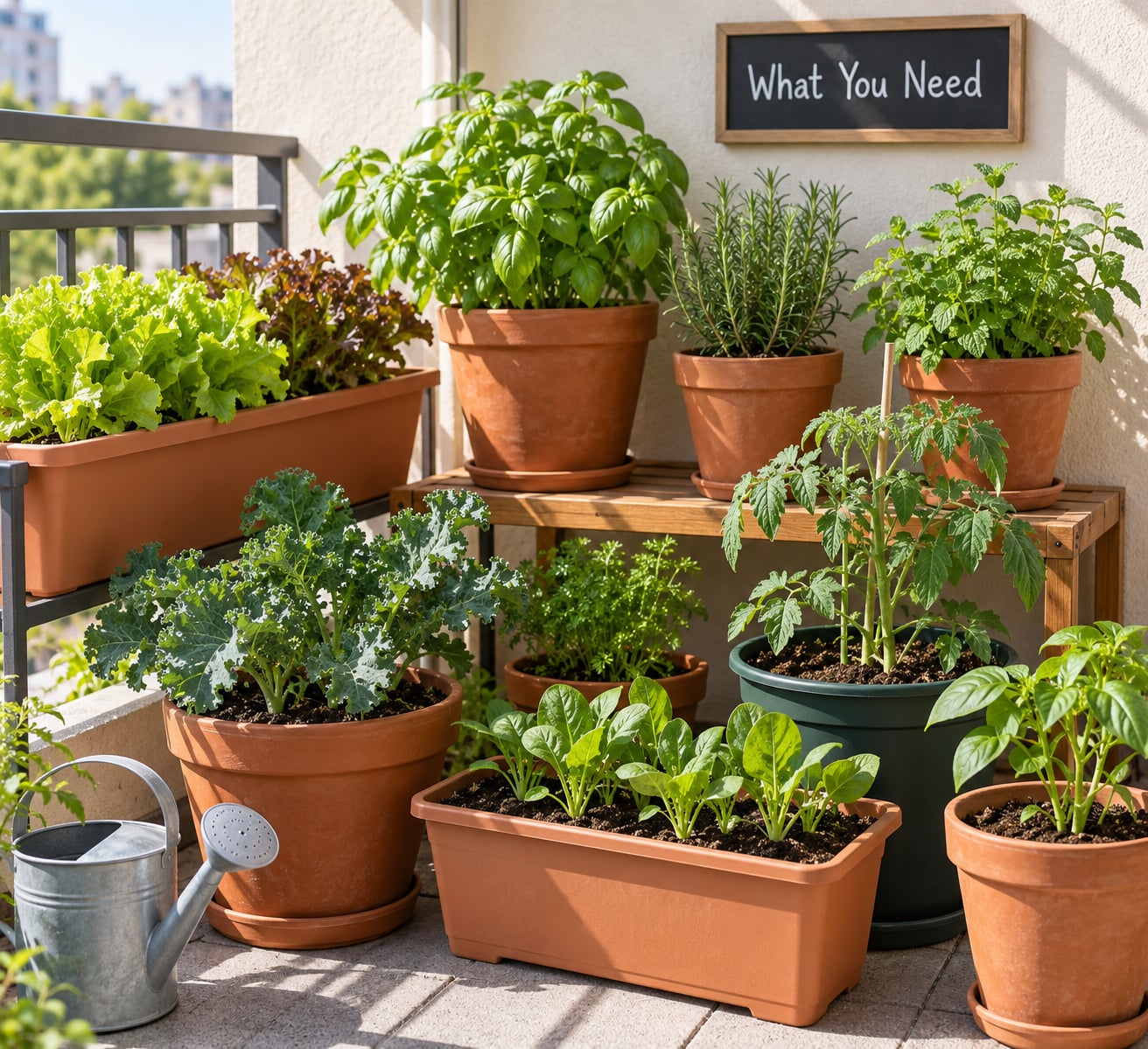
The essentials are unglamorous, and that is good news. You need containers with holes in the bottom, a light potting mix, a watering can with a rose, and one fertilizer you can use on everything.
The five things worth having
- Containers with drainage holes. Pots, window boxes, fabric grow bags, or a shallow raised bed. Drainage is not optional; a pot that holds water at the bottom will rot roots.
- Potting mix, not garden soil. Bagged soilless mix is light and drains well. Heavy yard soil in a pot compacts, holds too much water, and goes sour.
- A watering can or hose attachment. Containers dry far faster than ground beds. In summer a large pot can need water twice a day.
- A balanced fertilizer. A slow-release granular one for a season of feeding, or a liquid one you dilute and apply every couple of weeks.
- A trowel and a pair of scissors. Scissors are for thinning seedlings and cutting lettuce back at the base.
Optional extras earn their place once the basics are working: a trellis or bamboo stakes for climbing crops, a small soil moisture meter if you travel, and a bucket of finished compost to stir into the mix at planting time.
A five-minute space assessment
Before you buy anything, answer four questions and write the answers down. It takes less time than a container you cannot use.
- How many hours of direct sun does the space get? Watch it, do not guess. Most fruiting vegetables want six or more; leafy greens and root crops manage on three to four.
- Where does water drain when you water? On a balcony, runoff from your pots lands on the unit below. Test with a full watering can before you fill twenty containers.
- What is the load limit? Wet potting mix is heavy. A cubic foot of wet mix weighs roughly 40 to 50 pounds, so a couple of large pots add up fast. Check your lease or building rules.
- Is there wind? Above the third floor, wind dries containers and snaps stems. A lattice or bamboo screen fixes most of it.
Step-by-Step
How to Grow Vegetables in a Small Space: Assess Your Light and Layout
Sketch the space before you plan the planting. Draw a rectangle to scale, mark the door or the route to the spigot, and shade in the areas that never see the sun. That shaded strip is where you put the parsley and the mint, not the tomatoes.
Leave working room. A person needs about 18 inches of clear path to tend containers comfortably, and squeezing the pots together makes harvesting awkward and blocks airflow.
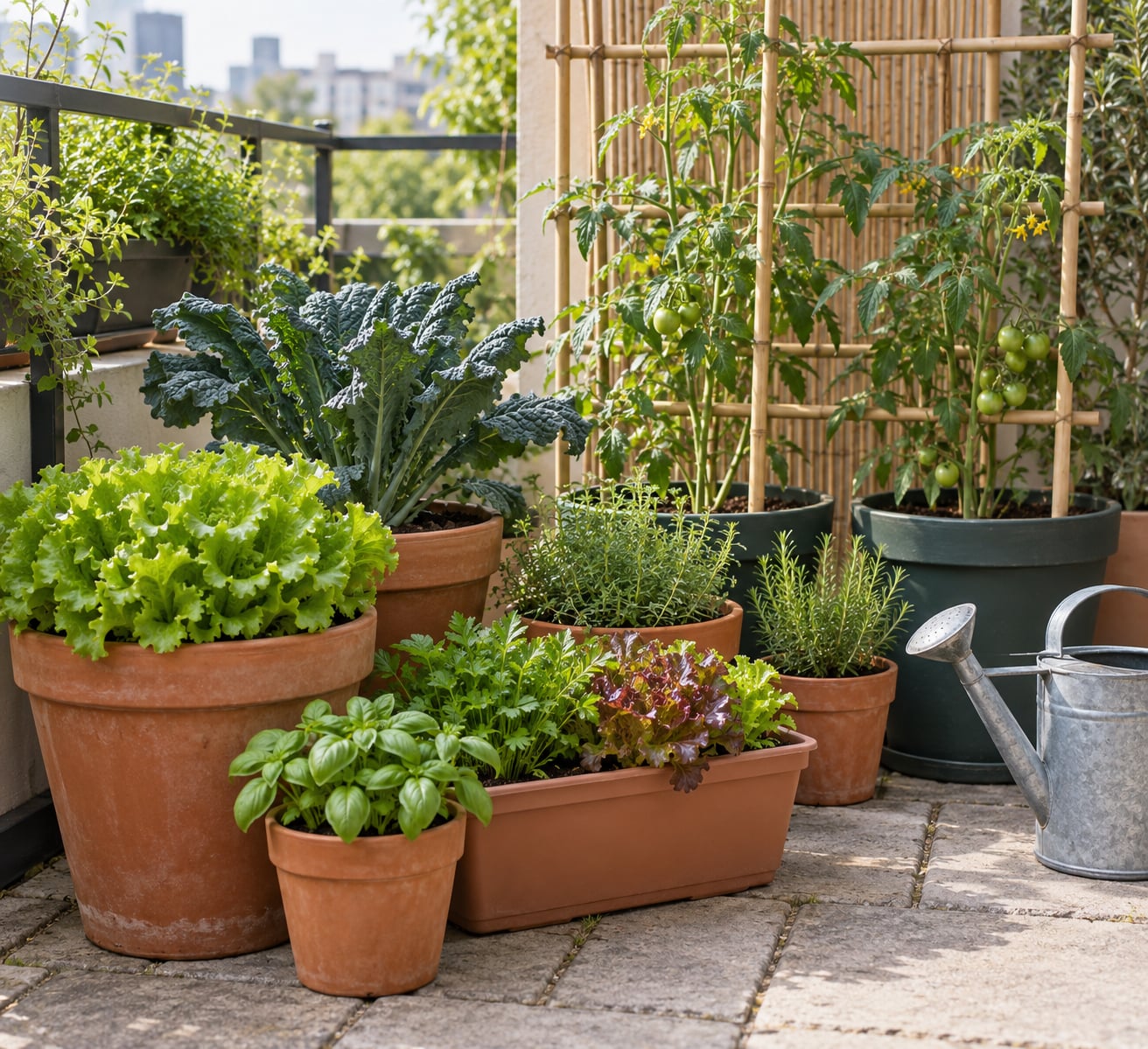
Most small layouts follow one simple rule: tall and trellised crops at the back or on the wall, medium crops in the middle, and low or trailing crops along the edge where you can reach them. Tall plants shade everything behind them, so put them where they shade nothing else.
Choose Containers With Drainage
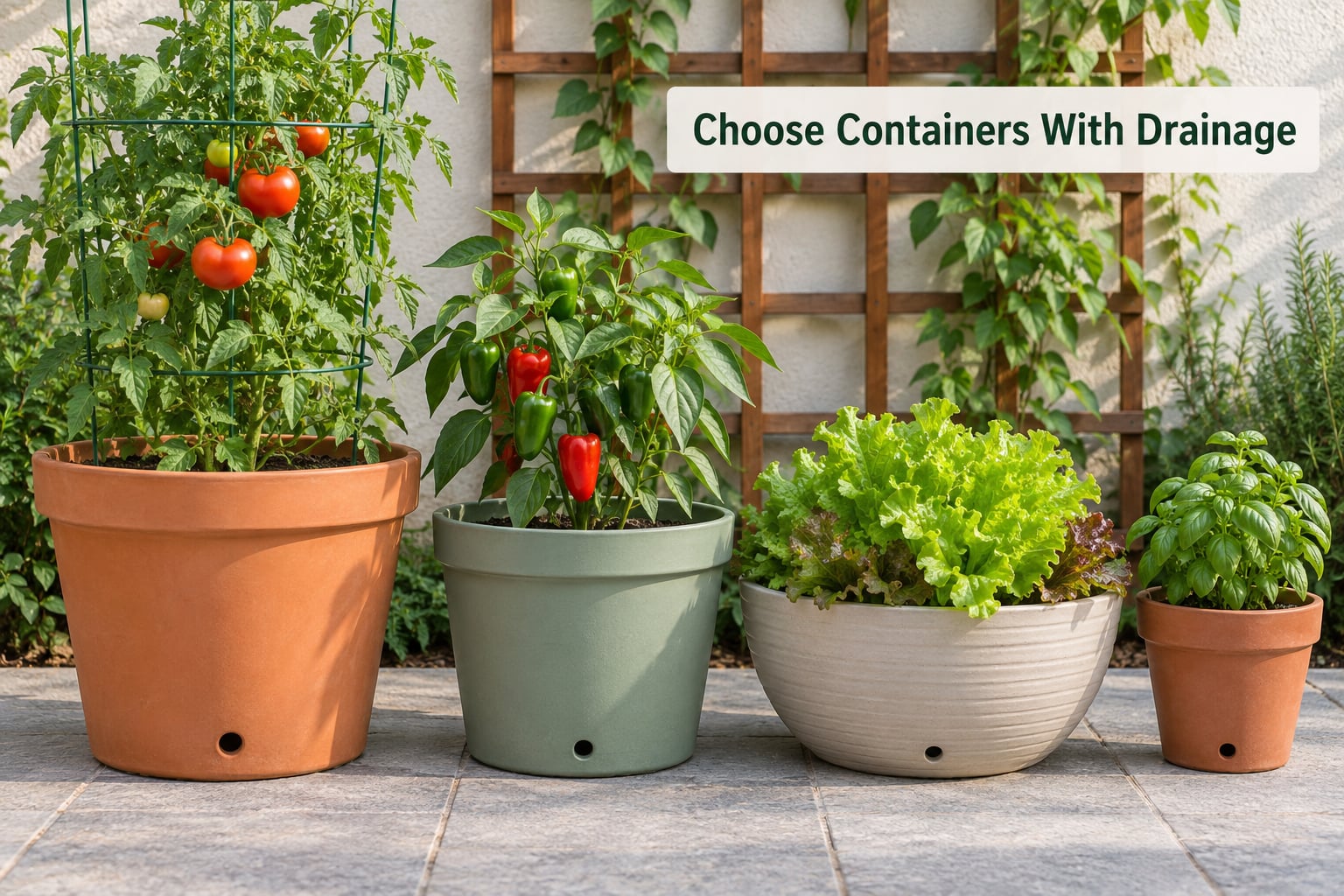
Container size is the decision people get wrong most often. Match the pot to the mature root system, not the seedling, because a root bound plant never recovers fully.
| Crop | Minimum pot diameter | Depth |
|---|---|---|
| Herbs, chives, green onions | 6 inches | 6 inches |
| Lettuce, spinach, kale, radishes | 8 to 10 inches | 8 inches |
| Peppers, compact tomatoes, bush beans | 12 to 14 inches | 12 inches |
| Full-size or indeterminate tomatoes | 18 to 20 inches | 14 to 18 inches |
| Carrots, beets, parsnips | 8 inches, deep | 12 inches |
Fabric grow bags are worth a second look. Gardeners who switch from plastic often report better aeration and fewer root circling problems, and fabric drains so well you may water less often than you expect. Plastic or resin holds moisture longer, which helps in hot weather.
Window boxes hold shallow roots well and suit greens and herbs. Grow bags are the most portable option, useful if you rent. A raised bed is worth it if you have a few square feet of solid ground and no digging, because it holds moisture longer than pots and gives roots more room. Vertical planters multiply your footprint, though they dry out faster than everything else, so they need closer attention.
Check every container before you fill it. Run water through the drainage holes, plug any that leak, and put a coffee cup under the pot so runoff does not stain your floor.
Use the Right Potting Mix and Fertilizer
Potting mix is not soil and does not behave like it. You want a light, porous blend: two parts potting compost or screened topsoil, two parts peat moss or coconut coir, and one part perlite. That ratio holds air and water at the same time, which is what a small root ball needs.
Whatever you buy, check the bag for perlite or vermiculite. A mix without an aeration component compacts within a few weeks and drains badly, especially in the bottom third of a deep pot.
Stir a few handfuls of compost into each container before planting. Then feed on a schedule, because nutrients run out in a closed pot much faster than in a garden.
- Slow-release granular at planting: one application, usually good for six to eight weeks.
- Liquid fertilizer every two to three weeks once plants are actively growing, at half the label strength to start.
- Extra feeding for fruiting crops like tomatoes and peppers once flowers set.
- Stop feeding leafy greens after the first cut. They bolt, and more nitrogen makes that happen sooner.
Pick Beginner-Friendly Vegetables
Start with crops that forgive mistakes and reward you quickly. These five are hard to kill:
- Radishes — ready in 25 to 30 days, and you learn your watering rhythm fast.
- Lettuce — 45 to 60 days, and the same plant gives you several harvests if you cut the outer leaves instead of the whole head.
- Spinach and kale — cool season, cold hardy, slow to give up.
- Bush beans — 50 to 60 days, no trellis needed, and they fix their own nitrogen.
- Herbs — basil, parsley, chives and thyme in a small pot near the door get used daily.
Compact fruiting crops work well too if you have six hours of sun: determinate cherry tomatoes, jalapeño and bell peppers, and compact summer squash or zucchini in a 15-gallon container. All of them want steady water, and drought stress is what makes peppers bitter and tomato skins split.
Give yourself space for the crops that do not travel: melons, full-size corn, sprawling squash and most varieties of eggplant need far more root room than a container can offer. Skip them in year one rather than watching them fail.
Plant, Water, and Support Your Crops
Plant into moist mix, not dry. Dig a hole, set the seedling so the soil line sits where it sat in the nursery pot, firm gently and water it in. Seeds go a quarter inch deep, and you keep the surface damp until they sprout.
Water when the top inch of mix is dry to the touch, then water until you see drainage from the bottom. Check daily in summer and every other day in spring. A layer of straw or shredded bark on top of the mix slows evaporation noticeably in heat.
Thin seedlings to the spacing on the seed packet even when it pains you. Crowded plants stretch, trap humidity, and invite aphids and mildew. Cut the weak ones at the base rather than pulling them, which disturbs the neighbours.
Support climbing and top-heavy plants early. A tomato in a 5-gallon bucket wants a cage or a stake before the fruit sets, and cucumbers, pole beans and trailing nasturtiums need a trellis to climb. Vertical growth is the single biggest space multiplier in a small garden.
Read the plant rather than a schedule. Yellow leaves at the top with dry soil means water. Yellow leaves with wet soil means drainage or rot. Purple leaves and stunted growth usually point to cold soil or exhausted nutrients. Spots on the underside of leaves are pests, and a strong jet of water knocks most of them loose.
Common Mistakes
Almost every small space garden I have seen going wrong shares the same list, and each item has a one-line correction.
- A container that is too small. Move up one or two inches of diameter, or grow a smaller crop in that pot.
- A container with no drainage. Drill holes or switch to a pot that has them; a saucer under a hole-less pot makes it worse.
- Garden soil in a container. Replace it with bagged potting mix, or the roots suffocate by August.
- Too little sun. Move the container rather than buying a bigger one, or switch to greens, roots and herbs that accept four hours.
- Overcrowding. Thin to the packet spacing, and stagger plantings over a few weeks instead of sowing everything at once.
- Watering on a fixed schedule. Check the soil instead; containers go from soaked to dry in a single hot afternoon.
- Feeding nothing after the first month. Add a liquid feed every two to three weeks through the growing season.
- Letting a crop bolt. Harvest greens at the base, water consistently in heat, and choose heat tolerant varieties for late spring.
Frequently Asked Questions
What are the easiest vegetables to grow in a small space?
Radishes, lettuce, spinach, kale, bush beans and herbs are the most forgiving. Radishes harvest in 25 to 30 days, lettuce in 45 to 60, and bush beans in 50 to 60. All three need modest containers and no support structure. Begin with three of them, get your watering rhythm right, and add a fruiting crop once the routine feels normal.
What is the 70/30 rule in gardening?
The 70/30 rule suggests putting about 70 percent of your growing effort into reliable, high-yield crops and 30 percent into experiments or lower-yield varieties. In a small space it is worth adjusting to 80/20, because every square foot counts more when there are only a few of them. The experimental slice still matters, because it is how you find out what your light actually supports.
What month should you start a vegetable garden?
Two to four weeks before your last frost date, which is usually mid-March to early May in most of the northern United States. That is when soil temperature reaches roughly 50 degrees Fahrenheit and seeds will germinate. Warm season crops like tomatoes and peppers wait until after the frost date passes. In the South you can start much earlier, and in the upper Midwest, later. Check your frost date with your local extension office.
What is the best layout for a small vegetable garden?
Put trellised crops at the back or against the sunniest wall, medium sized crops in the middle, and low or trailing plants along the edge you can reach. Leave a clear 18 inch path so you can water and harvest. Keep perennials and sprawling crops such as squash in separate containers rather than letting them run into their neighbours. Group crops with similar watering needs together so you do not overwater one to keep another alive.
How much sunlight do vegetables need in containers?
Fruiting vegetables such as tomatoes, peppers and squash need six or more hours of direct sun. Root crops and most leafy greens do well with three to four hours, and tolerate light afternoon shade in midsummer heat. Below three hours, grow herbs, lettuce, mint and parsley rather than expecting fruit. Containers in shade also dry more slowly, so you can water them on a slightly longer cycle than a full sun pot.
Can I grow vegetables on a balcony if I am renting?
Usually yes, as long as the balcony can carry the weight and your lease does not prohibit it. Wet potting mix weighs roughly 40 to 50 pounds per cubic foot, so a few large containers add up quickly. Fabric grow bags and lightweight plastic pots keep loads lower than terracotta. Planters that hook over a railing work well and leave the floor clear. Ask before drilling, and put a saucer under anything that drains onto the unit below.
Conclusion
Start by spending one afternoon watching your space and measuring the sun. Everything after that follows from what you find out.
Then pick three crops: a quick one like radishes, a repeat-harvest one like lettuce, and one you actually want to eat. Give each a container sized to its mature roots, fill it with a light potting mix, and check the soil daily rather than watering on a schedule.
Space saving garden techniques only matter once the basics hold up. Get drainage, light and watering right, and a balcony, stoop or windowsill will keep producing far longer than you expect.