Knowing how to thank volunteers meaningfully comes down to four things: being specific, being timely, tying it to something real the person did, and asking for nothing in return. It makes someone feel seen rather than managed.
Getting this right matters more than most coordinators expect. People who are recognised keep coming back; people who are not, quietly drift away. Replacing a regular volunteer costs recruiting, scheduling and training hours that most small organisations do not have to spare. A thank-you takes ten minutes and it protects the person you are trying to keep.
What follows is the process I use and the one I recommend to anyone coordinating a volunteer group: gather a few facts, match the gesture to the person, write something concrete, recognise it in a way that fits their consent and comfort, and follow up before the moment passes.
Table of Contents
- What You Need
- Step-by-Step: How to Thank Volunteers Meaningfully
- 1. Learn What the Volunteer Contributed
- 2. Choose a Thank-You That Fits the Person
- 3. Write a Specific Personal Note
- 4. Recognize the Work in a Visible but Appropriate Way
- 5. Offer Something Useful or Enjoyable
- 6. Share the Impact of Their Service
- 7. Make the Thank-You Inclusive Across Shifts, Languages and Abilities
- 8. Deliver It Promptly and Follow Up
- Common Mistakes
- Sending the same note to everyone
- Treating the gift as the thank-you
- Hiding a request inside the thanks
- Recognizing publicly without asking
- Praising in the register of a performance review
- Recognizing only the visible and the available
- Frequently Asked Questions
- What is the best way to thank a volunteer who helped for many hours?
- Should I give volunteers gifts or only write a thank-you note?
- How can I publicly recognize volunteers without making anyone uncomfortable?
- What if I have a very small budget for volunteer appreciation?
- When should I thank volunteers after an event or ongoing project?
- How do I thank volunteers who prefer not to receive public recognition?
What You Need
Before you write a word, you need five things. Without them, any thank-you you send will sound generic, and generic recognition is worse than none because people notice.
- Volunteer records. Dates, shifts, tasks, hours contributed and the specific thing each person did. Most groups already keep this in a sign-up sheet, a rota or a volunteer management system; if yours lives in three different places, this is a good afternoon to consolidate it.
- Contact details and preferred form of address. Their correct name, their pronouns, and the language they actually read. Getting a name wrong in a thank-you note undoes the entire gesture.
- Consent status. Whether you may name them publicly, use their photo, or tag them on social media. If you do not know, treat the answer as no until they tell you yes.
- One real outcome. A number, a story, a specific person helped. Volunteers were not tracking your metrics, and neither were you until you went looking. Thirty minutes of reading your own impact notes pays for itself here.
- A budget, including zero. Recognition competes with programme spending, and most weeks there is nothing in the line. Step five and the low-cost list below work fine at zero, so plan for that case first.
Step-by-Step: How to Thank Volunteers Meaningfully
1. Learn What the Volunteer Contributed
Do not thank someone for being generous. Thank them for a specific act. The difference sounds small and it is not: one sentence about the box sorting they did on a Tuesday is worth a paragraph about how much the organisation values them.
Pull what they did from your records, then add what the work produced. If someone drove a van to deliver 40 meals across three neighbourhoods, you have an hours figure and a delivery figure. If someone translated your intake forms into two languages, you have a number of households that could now register for services in their own language. That second number is the one that lands.
Ask a beneficiary or a frontline colleague for one sentence too. Feedback from the people the work was for carries a weight no coordinator’s summary can match, and it costs one message.
You will know this step worked when you can name what changed, not just how long someone was present.
2. Choose a Thank-You That Fits the Person
Some people want the spotlight. Some want a quiet note and no fuss. Most volunteers have never been asked, and they assume the default branded mug is the only option on the menu.
So ask. A short question when someone signs up or finishes a project gets you most of the way: do you prefer a note, a public mention, or both? Record the answer next to their name. You are building a preference list that makes next year’s thank-you faster and better.
Watch for what someone has done rather than what they have said. The person who takes the early shift every week and says nothing about it usually wants quiet appreciation. The person who introduces themselves to everyone at the meeting probably wants to be named in the meeting.
The test is simple. Would they be themselves in this moment? If you cannot answer that, choose the quieter option, because a private note never embarrasses anyone and a public one occasionally does.
3. Write a Specific Personal Note
A powerful appreciation message is short, names one act, states what it changed, and asks for nothing. Twenty-five words beats two hundred when the two hundred are padding.
Here is a working example, written to a volunteer who called families for three afternoons before a winter shelter opened. It is annotated because the structure is what you copy, not the words:
Dear Sam,
You made 62 calls on Tuesday and Thursday and reached 21 families, 14 of whom had no other route to a warm bed that week. Because you kept going past the fourth voicemail, six of them were still taking calls by the end of the hour.
We will hold the phones on Sunday mornings as long as you want to hold them. No reply needed on this one.
With real thanks,
[Your name]
[Title]
Three things are doing the work there. The number is checkable and it is specific to that afternoon. The paragraph names a behaviour nobody else would have noticed. And the last line says what happens next without turning the note into a recruitment pitch.
Handwritten notes on card stock still outperform email for anyone who has been with you more than a few months. They take longer, and that is rather the point. For a first-time or one-off volunteer, a short personal email is fine and nobody will feel shortchanged.
4. Recognize the Work in a Visible but Appropriate Way
Visibility helps recognition land, but only when it suits the person. Public options include a mention at a team meeting, a line in a newsletter, a name on a plaque or a named honour such as a garden or a bench, a certificate, and a public thank-you in your annual report.
Private options do the same work with less exposure: a personal note, a phone call from a leader or founder, a quiet word from their direct supervisor, a one-to-one check-in, or a small private gift.
Ask before you announce, photograph or tag. Volunteers include people who are undocumented, out of housing, in recovery, working a job they cannot be publicly linked to, or simply do not want their name online. Publishing a name without asking can expose someone and end the relationship, and it will not be obvious to you that you caused it.
Make recognition equitable across shifts too. Night-shift and rural volunteers are routinely thanked less than the office-based volunteers who appear in photographs. Put the evening crew and the volunteers who cannot drive to the site on the same list as everyone else, and check that they actually received something.
Community discussion on volunteer recognition keeps returning to this: consistency is what people remember. Volunteers talk to each other, and they notice who was thanked and who was quietly skipped.
5. Offer Something Useful or Enjoyable
Gift only when you know what the person will actually use, and keep the pressure off. A gift that implies obligation is a small tax on someone who already gave you their time.
- Food and drink for the team. A proper lunch after a work day, ordered in, is the most reliable low-cost thank-you I know. One volunteer manager described the ritual of closing the day with everyone eating together, and it costs less than a thermos per head.
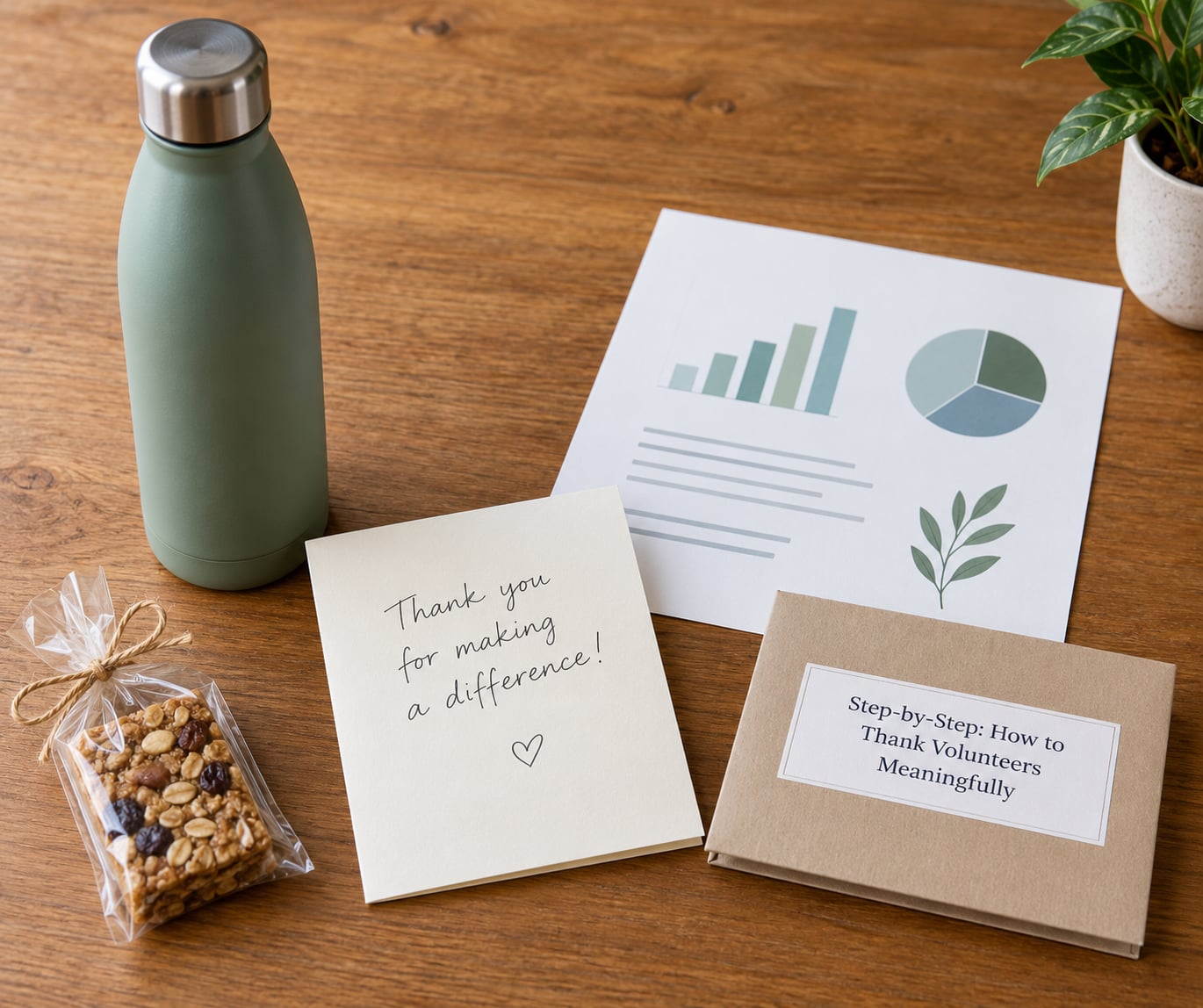
- Reusable water bottle or travel mug. Useful, cheap, and it shows up at every future shift.
- Transit support. A gas card or bus pass for someone who drove a long way is often worth more than anything else on this list.
- Learning or access. A course fee covered, a conference ticket, a professional membership, access to a training they wanted.
- Wellness. Nothing here needs to be wellness. A massage or gym pass for someone who does physical work is a reasonable read of their role, but ask rather than assume.
- A gift they chose. The strongest option on the list. Offer it in place of the default and let the person pick.
- A donation in their name. To a cause they care about, if you have budget and they have told you what it is.
Not everyone wants a gift. Some people dislike receiving things, and one coordinator has to send the thank-you without it. A note, a call and a debrief work fine on their own, and you can say so directly: no obligation, no explanation needed.
6. Share the Impact of Their Service
The strongest thank-you connects a person’s hours to something a human being felt. Numbers are good. A face is better.
Send a one-page impact summary after a project: hours contributed, people served, the specific gap that closed. Then add one short story, ideally something a volunteer helped produce themselves. Reading how their work landed, from the person it landed on, is a form of recognition most groups never send.
Two details do more than you would expect. One, invite the volunteer to tell you what they noticed that your data missed. Their observation is impact data you do not have anywhere else. Two, quote the beneficiary, with permission, in their own words. That sentence travels further inside a small organisation than any plaque.
Never fabricate a story to fill the template. If the number is small, say it is small. A thank-you that oversells the work is the one people quietly distrust and do not repeat to their friends.
7. Make the Thank-You Inclusive Across Shifts, Languages and Abilities
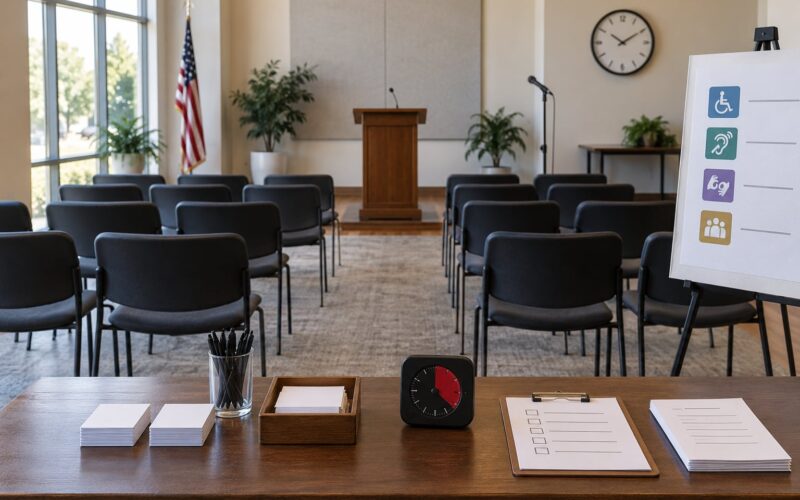
Inclusive appreciation is mostly logistics. Send the note in the language the volunteer reads, not just the one your staff writes in. Check that it works in a screen reader if you send a PDF. Offer it aloud or by phone to volunteers who do not read comfortably or use email rarely.
Handle dietary restrictions before the appreciation meal, not during it. Offer a choice of dates and times so that the volunteer with a second job or a childcare schedule can actually attend. Provide interpreting or a virtual option for the ceremony.
And plan for the volunteer who does not want public recognition. Give the same depth of thanks privately, in a way that matches the significance of their contribution. Their hours count the same as anyone else’s, and private gratitude is not lesser gratitude.
8. Deliver It Promptly and Follow Up
Timing is the part that gets skipped, and skipping it wastes a good note. The pattern that works: say thank you out loud before people leave the session, send the written follow-up within 48 hours, mark real milestones as they happen, and run the bigger moments on the calendar people actually observe.
For big cohorts there are named windows. National Volunteer Week and Volunteer Appreciation Month in the spring, National Days of Service in the fall, and your own year-end round. Use those as the anchor for the large gesture, and keep the small specific ones unscheduled so that regulars still hear their name in an ordinary week.
Two or four business days is the workable written standard for anything formal. For a work day, the same evening. Once the note is out, close the loop: a short check-in a few weeks later, an invitation to the next thing as an offer rather than an expectation, and a note about what changed because they were there.
One last move worth doing: ask whether it landed. Three questions are enough. Did this feel like thanks, like a form, or neither? Was there anything you wanted to be told and I did not say? Anything you want less of next time? Small groups get honest answers. That feedback is how the next thank-you gets better, and nobody else in your organisation is collecting it.
Common Mistakes
Recognition fails in predictable ways, and most of them come from treating appreciation as a task to be completed rather than a relationship to be maintained.
Sending the same note to everyone
A copy-paste with one name swapped in is the fastest way to be read as invisible. People compare notes. One volunteer put it plainly in community discussion: the mass generic note reads as proof that nobody saw them at all. Fix it by writing one true sentence per person and letting that carry the message, even if the note itself is an identical template around it.
Treating the gift as the thank-you
A branded item handed over without a word is administration, not gratitude. If the only thing that happens is a handover of merchandise, what was recognised was the shift, not the person. Fix it by putting one sentence in front of the item, every time: what they did and what it changed.
Hiding a request inside the thanks
Thanking someone and then asking for two more Saturdays in the same message turns gratitude into a transaction. This is the most repeated frustration in volunteer forums and it is easy to fix: the thanks gets its own message, and any ask goes in a separate one later, when they have had time to say no. If your appreciation routinely produces an immediate commitment, you are not thanking, you are recruiting.
Recognizing publicly without asking
The announcement feels generous from the inside. From the outside, it can expose a person whose circumstances make visibility costly. Fix it with one standing question at onboarding, recorded and respected: how would you like to be recognised – publicly, privately, or both?
Praising in the register of a performance review
Management language lands badly with people who were never on the payroll. You value your initiative and your attention to detail is exceptional stops sounding like care and starts sounding like an appraisal. Fix it by writing like a person to a person. Use their name. Mention the day.
Recognizing only the visible and the available
The volunteers in the annual report are the ones who were already comfortable. The night shift, the rural route, the remote volunteers and the people whose names nobody remembers get nothing. Fix it by checking your list against the rota rather than against last year’s thank-you email.
Frequently Asked Questions
What is the best way to thank a volunteer who helped for many hours?
Write to them specifically, not to the role. Name the largest single thing they carried – the shift they covered when nobody else could, the route they drove, the person they coached through a hard month – and connect it to one outcome you can point at. Then add something for the length of service specifically, such as a named honour or a milestone mention. Long-tenure volunteers rarely want more praise; they want proof that someone was paying attention to the whole span.
Should I give volunteers gifts or only write a thank-you note?
The note comes first in every case. A gift is an optional addition, and it works best when the recipient picked it or at least consented to it. People who dislike receiving things will tell you so, and a handwritten note on its own is a complete thank-you rather than a placeholder. Many groups have quietly retired branded gifts and replaced them with a shared meal, and the response has been better than the swag ever was.
How can I publicly recognize volunteers without making anyone uncomfortable?
Ask at onboarding and record the answer, then treat it as permanent unless they change it. Offer three tiers – public, private, or share with me only – rather than a yes or no. Publish names with consent obtained, not assumed, and check that any photograph shows only what the person agreed to show. Include the volunteers who never appear in photographs, so the public list is not just the people who like visibility.
What if I have a very small budget for volunteer appreciation?
Most of the strongest options cost nothing: saying thank you before people leave the room, closing the work session by eating together, a phone call from a leader, a personal note naming the specific task, and a follow-up within 48 hours with the impact of their work. If you have a small amount, put it into one thing people share – a meal, or a transit pass for whoever drove furthest. Consistency matters more than the amount.
When should I thank volunteers after an event or ongoing project?
Three moments. Say thank you out loud before people leave the session, because that is where the feeling of the day is still live. Send the written note within 48 hours, while the details are fresh and the impact number is still in your head. Then follow up a few weeks later with what changed, or an offer for next time phrased as an offer. Larger recognition moments belong on the calendar people already observe, such as Volunteer Appreciation Month or National Volunteer Week.
How do I thank volunteers who prefer not to receive public recognition?
Give them the same depth of thanks privately, in writing and in person, without hinting that the privacy is unusual or that you would prefer otherwise. A personal note, a phone call from a leader, and a one-to-one conversation about their contribution cover it completely. Record the preference so that no one repeats the question or talks them into a spotlight later. Their hours carry the same weight as anyone else’s on the rota.
If you take one thing from this, start here. On Monday, list every volunteer who served in the last month and cross out anyone you have already thanked personally this year. Then write four lines for the next one on the list, naming the task and the day, and send it before your inbox wins.
Do the same for the person who nobody has thanked yet, usually because they work a shift that ends after everyone has gone home. That single note is the fastest retention move available to you, and you already have everything you need to write it.