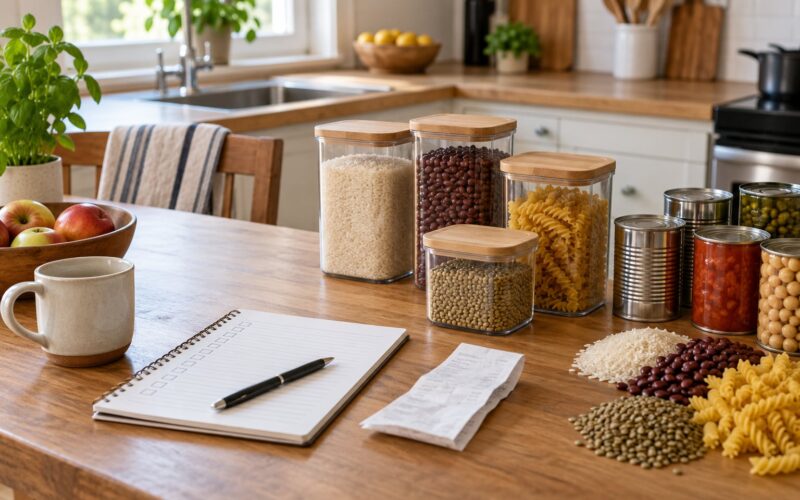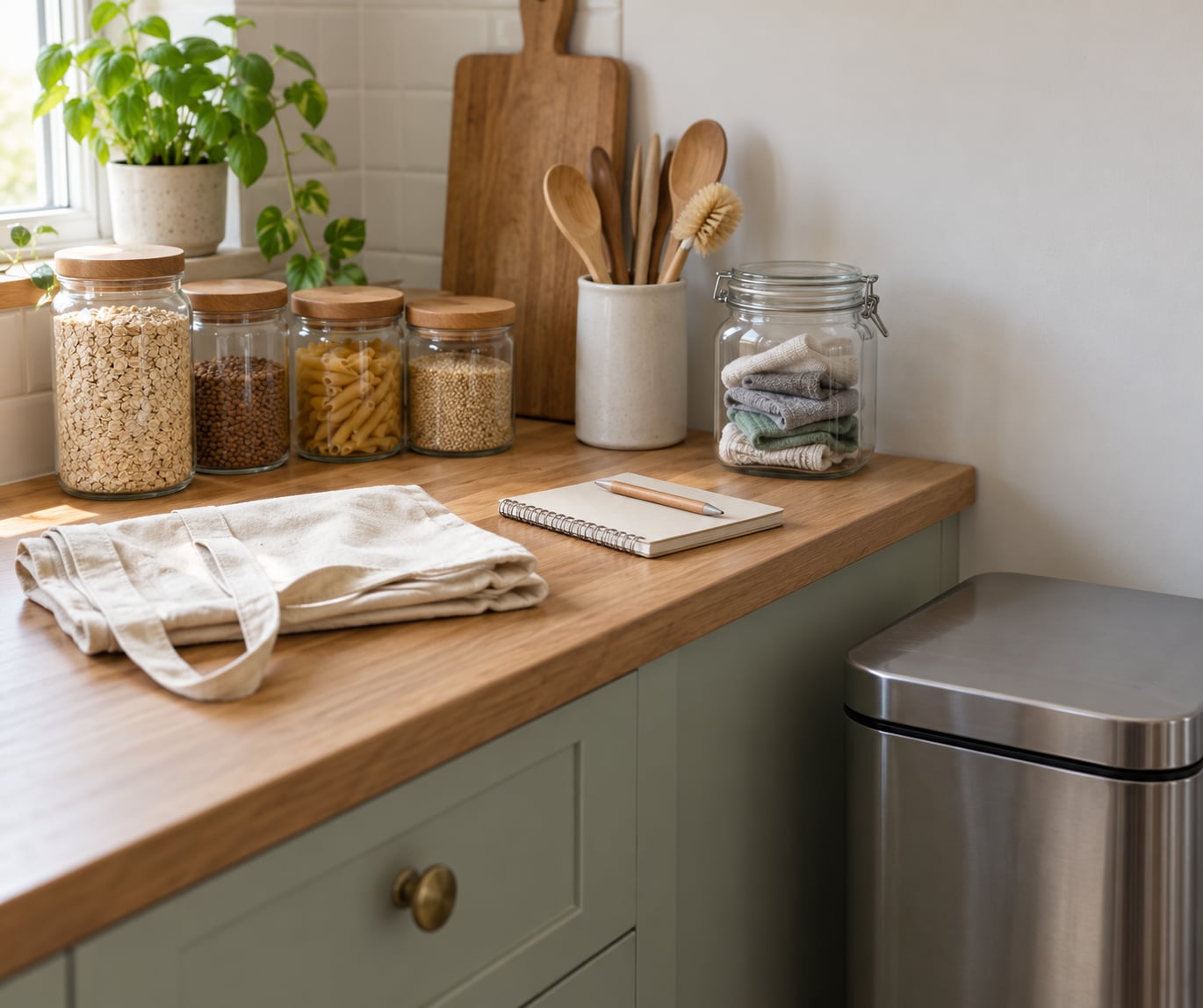
You can reduce household waste without spending money by refusing single-use items at the counter, using up what you already own before buying anything, and planning food purchases so less spoils. Every step below runs on jars, tubs, rags and scraps you are already holding, and the first one takes a single week of watching.
It takes about fifteen minutes a week to keep this going, and nothing in it requires a special product. If you have ever felt that low-waste advice assumes you can afford a starter kit, this is the version that assumes you own almost nothing spare.
Table of Contents
- What You Need
- Step-by-Step: How to Reduce Household Waste Without Spending Money
- 1. Find Out What You Throw Away
- 2. Buy Less to Reduce Household Waste Without Spending More
- 3. Prevent Food Waste Before You Shop
- 4. Reuse, Repair and Share Before Replacing
- 5. Make the Trash and Recycling Setup Easier
- 6. Track Results and Keep What Works
- The 7 Rs of Waste Reduction, in Order
- Free Fixes by Waste Stream at a Glance
- Common Mistakes
- Frequently Asked Questions
- How can I reduce household waste when I have very little money?
- What is the cheapest way to reduce household waste?
- How do I stop wasting food without buying storage containers?
- What household items can I reuse instead of buying new ones?
- Is it better to buy reusable products or continue using disposable ones?
- How long does it take to see less household trash?
What You Need
The short answer is nothing new. Here is what most households already have sitting in a cupboard somewhere:
- Containers: glass jars, takeout tubs, deli containers with lids, mugs, and one bowl with a plate that fits on top of it.
- Bags: any tote, canvas shopping bag, backpack, or even a sturdy pillowcase works. Reuse beats buying a nicer one.
- Rags: worn t-shirts, old towels, and pillowcases cut up make serviceable cloths for spills and counters.
- A list that lives somewhere: a notes app on your phone or a scrap of paper by the door. Paper is fine.
- A box for outgoing things: an empty shoebox works. Damaged, unused, or surplus items go in it rather than the bin.
- Cleaning basics: most kitchens already hold baking soda, white vinegar, dish soap, and sometimes hydrogen peroxide. You do not need a specialty cleaner.
- Your local collection rules: your city or county website, or your hauler’s page, tells you what is actually accepted. Bookmark it once.
What you deliberately do not need right now: a set of cloth napkins, silicone food bags, bamboo utensils, a countertop compost bin, or a stack of organizers. Those can wait until you have used up what you own.
Renters and small apartments can do all of this without any outdoor space. Buckets, bins, and lidded boxes take up less floor area than a bin you fill twice as fast.
Two free local services are worth finding before you start. Almost every city or county runs a household hazardous waste drop-off day, usually a weekend each month or quarter, and takes paint, solvents, batteries, old fluorescent bulbs, and expired cleaners at no charge. Many also run yard and organics drop sites. Your county website is the fastest route to both. If your area has no curbside recycling at all, that same page usually lists a transfer station or a volunteer-run group, and asking at a library reference desk often works faster than searching.
Step-by-Step: How to Reduce Household Waste Without Spending Money
1. Find Out What You Throw Away
Pick one normal week. Not a bad week, not a week where you hosted people. After each bin change, glance at what is in the bag and jot a word next to three categories: food, packaging, paper.
That note is the whole audit. You are not grading yourself, you are finding out which category is actually driving the volume. Most households are surprised, usually because food wins by a wide margin and packaging is second.
You will know step one worked when you can name your three biggest categories without guessing.
2. Buy Less to Reduce Household Waste Without Spending More
Before any trip to the shop, open the pantry, the fridge, and the cleaning cupboard and list what is missing, not what is nice to have. Write the list on the phone or on paper. Add nothing to it while standing in an aisle.
Then shop less often. One planned trip beats four unplanned ones, because every unplanned trip is where the unopened snack, the second bag, and the impulse purchase of the week come from. On the rare extra trip, take the list only.
Compare sizes by use rather than by sticker. A large package is only cheaper if you will genuinely finish it before the contents spoil or go stale. For a household of one or two, smaller packages used up are the cheaper option even when the per-unit number looks higher.
Two habits cut packaging without changing what you buy. Ask for produce bare rather than bagged, or set the wrapping aside and use it later for cheese or herbs. And when the shop sells something loose, buy into a jar you brought rather than into a new bag. Most shops are fine with it if you ask.
Buying less also fixes the waste people rarely count. Impulse purchases are bigger than trash, because most of them never reach the bin. They sit in a cupboard and then go out in a skip. A 24-hour wait before anything over about the price of a coffee costs nothing and catches most of it.
At the till, say no to bags, straws, cutlery, and printed receipts. That is the easiest money you will ever not spend, and it takes no equipment. You will know this step worked when your bin is still half full at the end of the week.
3. Prevent Food Waste Before You Shop
Food is where most households lose the most, and the fixes are mostly sequencing. Check what you have before you buy, plan two meals around whatever is oldest, and shop for that plan rather than for ideas.
Freeze instead of forgetting. Bread going stale, a half-used bag of rice, and leftover cooked grains all freeze fine in a container you already own. Thaw overnight in the fridge.
Make the oldest food visible. A clear box at eye level in the fridge holding what is about to go is more effective than any clever storage method, and it costs a reuse of a container you have. Put soft fruits and herbs at the front, back of the shelf for the rest.
Save the trimmings. Onion ends, carrot peels, celery leaves, and mushroom stems go into a jar in the freezer for soup broth. Coffee grounds and eggshells go to a compost program if your area has one. Many towns and campuses run free drop-off sites for garden and food waste, which is worth ten minutes of searching.
For surplus groceries, check whether a local shelter, community fridge, or food rescue program near you takes them. Rules vary, and some do not accept anything homemade or anything already opened.
You will know step three worked when the produce shelf empties before the next shop.
4. Reuse, Repair and Share Before Replacing
A garment with a small hole is a mending job, not a replacement. Needle and thread, safety pins, patches, or a strip of tape from an old shirt handle hems, popped seams, and loose buttons. Most shoe and coat repair shops in city centres do small fixes cheaply, and many libraries lend a sewing machine or an air pump for nothing.
Before buying, ask three questions. Can I borrow it? Can I find it used? Do I actually need it? Libraries of things, tool libraries, freecycle groups, and neighbourhood buy-nothing groups answer the first two for free. Searching your area for a library of things usually turns up more than you expect.
Donating has one annoying side effect worth planning for. Reuse creates more containers, and more containers create a second-order waste problem. Keep a small jar labelled for anything you are waiting to use, and set a date when it gets emptied or passed on.
Check what a charity actually takes before you fill a car. Many do not accept loose items, cosmetics, or anything with a battery, and asking costs one phone call.
Cleaning products are the easiest thing to make at home, and the recipe takes five minutes. A vinegar and water solution in a spray bottle handles counters and most hard surfaces. Baking soda on a damp cloth covers sinks, stovetops, and the inside of the fridge. Hydrogen peroxide takes care of grout and mould in a bathroom, and washing soda lifts laundry that has started to smell. You use these up, so unlike a reusable purchase they stop creating packaging.
Rethinking what counts as waste also helps here. A cloth rag is not a replacement product you had to buy; it is a t-shirt that already lost its purpose. Clothes mending into dish cloths, and scrap fabric becoming patches, means the same material does two jobs instead of ending in the bin.
This is the least glamorous step and it is where the money is. A single wardrobe where nothing gets thrown out, household items repaired instead of swapped, and borrowing before buying adds up quietly over a year. The general advice in most zero-waste guides is to buy a set of reusables first. The order is backwards: reuse what you own, then buy only the specific thing that keeps failing on you.
5. Make the Trash and Recycling Setup Easier
Contamination is the quiet way a good recycling habit fails. Read your local accepted-materials list once and keep the ones you are unsure about out of the recycling bin entirely. Rules differ in every municipality, and recycling labels on packaging are often wrong.
Then make the right thing the easy thing. Put a box where you already stand, label bins with a strip of masking tape, and give recycling one container rather than five. Keep anything you reuse for leftovers, jars, or hardware in a dedicated spot so it does not drift back to the bin.
For takeout, the free version of a container scheme is a neighbour or a building group chat. Leave clean containers in a designated spot with a note, and take a few when you order. A freezer in a shared space can do the same job for community meals.
You will know step five worked when recycling no longer gives you pause at the door.
6. Track Results and Keep What Works
Count bags, not opinions. Note how many bin bags go out each week for a month, then compare with the first week you measured. In a household of three, one fewer bag a week is a meaningful signal that something changed.
Keep the two or three habits that stuck and drop the rest without drama. If a rule does not survive a busy week, it was not a realistic rule for your life, and it was never going to work anyway.
If your area has no curbside recycling or compost at all, work the free layers instead: food planning, refusing disposables, borrowing and swapping. Those work without any infrastructure behind them, which is exactly why they work for everyone.
The 7 Rs of Waste Reduction, in Order
The 7 Rs are a ranking, not a slogan. Each R stands for something you do before the next one, and doing them out of order means handling a problem you could have avoided.
- Refuse. Say no to bags, cutlery, straws, receipts, flyers, freebies, and promotions. Nothing enters your house, so nothing needs dealing with.
- Reduce. Buy less, shop from a list, and choose the amount you will actually finish before it spoils.
- Reuse. Jars, tubs, rags, and bags get a second job before they are considered rubbish.
- Repair. Mend clothes, tighten handles, patch leaks. A repair keeps an object out of the discard pile.
- Refurbish. Clean, sand, and re-finish something that still works but looks tired, rather than replacing it.
- Rethink. Question the habit itself. Do you need this item at all, or is it solving a problem you created earlier?
- Recycle. Last, and only for what you truly cannot avoid. Recycling is the most expensive and least reliable layer, so everything above it matters more.
The classic 5 Rs are the same ladder with two rungs trimmed: refuse, reduce, reuse, repair, recycle. Compost, often called Rot, sits just above recycling because food waste breaks down rather than lasting in a landfill.
Free Fixes by Waste Stream at a Glance
| Waste stream | Free fix using what you already own | What it cuts |
|---|---|---|
| Food | Plan two meals around the oldest items; freeze bread and grains; freeze trimmings for soup broth | The largest share of household trash |
| Packaging | Refuse bags, cutlery, straws, and receipts at the till; jar shop where the shop allows it | Plastics and paper entering the bin |
| Paper | Switch to paperless billing; use both sides; shred only what your local service accepts | Mail and mixed paper |
| Textiles | Mend, patch, and cut worn items into rags; swap before buying | Clothing thrown out after a small tear |
| Bathroom | Refill or decant what you already own; bar soap in place of liquid; wash cloths instead of disposable pads | Single-use plastic containers |
| Cleaning | Make a vinegar and water spray; use baking soda on a cloth; use old towels as rags | Bottles, tubs, and paper towels |
| Hard to recycle | Free municipal hazardous waste drop-off days for paint, batteries, solvents, and bulbs | Items that never go in the recycling bin |
Savings are rough and depend entirely on your household and prices, so treat the middle column as the useful part. The habits that show up fastest in a bin are food planning and refusing packaging.
Common Mistakes
Buying the replacement first. A drawer full of bamboo utensils you never use is still waste, and it cost real money. Keep using what you have until it fails, then decide whether the thing you replace it with replaces something you were already using daily.
Trying to recycle everything. Good intentions in a bin full of one plastic type can get a whole load rejected. When you are not sure, keep it out. Recycling correctly beats recycling eagerly.
Storing food badly. Overstuffed fridges hide the food you forget, and damp sealed plastic encourages mould. Clear space, keep food visible, and freeze rather than discard. Storage products are a later step, not a first one.
Overbuying household supplies. Advice to buy in bulk breaks a tight budget in three places at once: the purchase, the storage space, and the risk that half of it sits unused until it is useless.
Treating perfection as the goal. One bad week does not erase a good habit, and people who quit over a lapse are the ones who never see the savings compound. Aim for fewer trips to the bin, not a spotless one.
Skipping the local rules. Recycling lists change. Check yours once a year rather than guessing from packaging labels.
Three things to start with if you do nothing else: write a list before shopping, refuse bags and receipts, and cook whatever is oldest first. Add a fourth when those feel automatic.
Frequently Asked Questions
How can I reduce household waste when I have very little money?
Start with the actions that cost nothing: refuse bags, straws, cutlery and receipts, shop less often from a written list, cook the oldest food first, and use jars and containers you already own. Borrowing and swapping replace buying, and free municipal compost and hazardous waste drop-off days handle items you cannot avoid. None of this needs a purchase before you begin.
What is the cheapest way to reduce household waste?
Cooking what you already bought and buying less are the two cheapest methods, because both stop waste from being created rather than trying to handle it afterwards. Using up the tail of a bag of rice or a freezer full of bread costs nothing and removes food. Everything else, including repair, borrowing, and refusing freebies, follows the same logic.
How do I stop wasting food without buying storage containers?
Visible storage does most of the work: move what is about to spoil to the front of the fridge at eye level, keep a box for older items, and freeze anything you will not eat within a few days. A clear jar or a repurposed tub in the freezer is usually enough. The problem is forgetting food, not lacking a lid.
What household items can I reuse instead of buying new ones?
Old towels and t-shirts become cleaning rags, jars and deli containers hold leftovers and dry goods, large detergent bottles can be cut down into drawer dividers or small bin liners, and worn sheets make drop cloths. Empty containers from takeout can go back to the same restaurant or to a neighbour. All of it uses materials already in your home.
Is it better to buy reusable products or continue using disposable ones?
If you already own a working reusable item, use it. Buying a replacement before the current one fails costs money and adds to your storage. For disposables you have no alternative to, a free swap such as refusing bags and cutlery, using a tote, and skipping printed receipts delivers most of the benefit at no cost.
How long does it take to see less household trash?
Packaging habits usually show within two to four weeks because they change on the next shop. Food waste takes a little longer, since you need a full cycle of planning and cooking to judge it. Count bags rather than judging by memory. Most households see the first clear change within a month of tracking.
If you take one thing from this guide, take the first week of watching. Most people who ask how to reduce household waste without spending money already have the containers, the bags, and the rags. They are throwing away things they own while buying replacements for things they also own.
So write a list, cook the oldest food first, say no at the till, and count bags for a month. Nothing to buy, nothing to install, and the results show up in your own bin.