Figuring out how to stay safe during a winter storm comes down to three things you handle before the first flake falls: an official alert you actually understand, a house that can keep heat and water for days, and a travel plan that assumes you may get stuck.
Most winter weather injuries happen after the storm has started, usually because a decision was made an hour too late. The work here takes about an hour spread over a day or two, and it removes most of the panic later. As we head into 2026, the same routine applies to every region that gets ice.
Winter storms rarely arrive as one clean event. Ice crusts over fresh snow, wind chill makes a ten-minute walk dangerous, and the power often fails at night when a tree limb takes a line down. Treat the storm as three problems: what happens before it hits, what happens while it lasts, and what you do if you end up stuck somewhere.
Table of Contents
- What You Need
- Step-by-Step: How to Stay Safe During a Winter Storm
- 1. Monitor Weather Alerts and Travel Warnings
- 2. Make a Plan and Tell Someone Your Route
- 3. Prepare Your Home Before Conditions Worsen
- 4. Dress for Cold, Wind, and Wet Conditions
- 5. Drive Only When Roads Are Safe
- 6. Stay Safe If You Must Be Outdoors
- 7. Handle a Power Outage Safely
- 8. Respond Safely If Your Car Is Stranded in a Winter Storm
- Common Mistakes
- Frequently Asked Questions
- How long can you stay in a car during a winter storm?
- Is it safe to run a car while stuck in a snowstorm?
- What should I do if I find someone suffering from hypothermia?
- When should I call 911 during a winter storm?
- How do I keep my pipes from freezing during a power outage?
- Conclusion: What to Do First
What You Need
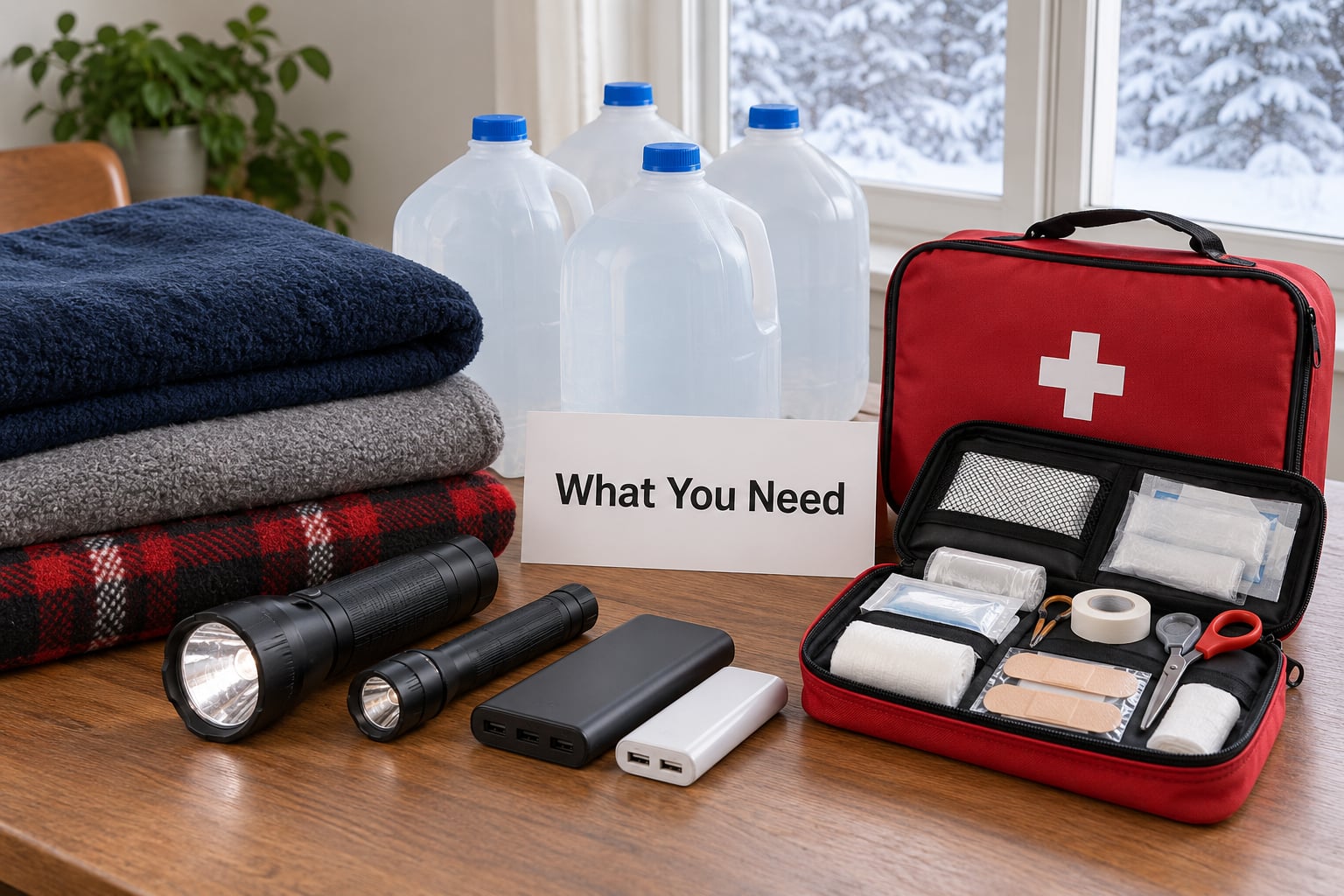
A winter storm emergency kit is less about buying a lot than about having the right things already in the room where you will look for them. Most families have flashlights and a first-aid kit somewhere. Very few have three days of water next to the toilet.
- Light and power: two flashlights per person plus spare batteries, a battery-powered or hand-crank radio, and power banks charged to full the night before. Keep the batteries in the flashlight, not in a drawer.
- Water and food: at least one gallon of drinking water per person per day for three days. If you have a water heater, that is roughly 50 gallons of usable reserve once drained safely. Keep food that needs no cooking and no refrigerator, and open the refrigerator as little as possible during an outage.
- Warmth: blankets, sleeping bags, wool socks, chemical hand warmers, and a hat for every household member. Warmth stored in a closet only counts if someone knows it is there.
- Health: a full first-aid kit, seven days of prescription medications, glasses, and any refrigerated medication with a plan for keeping it cold. Adults with medical conditions and anyone who depends on powered equipment needs a backup power plan before the forecast turns.
- Documents and money: insurance policy details, identification, medication lists, and a small amount of cash. Card readers and cash machines are the first things that fail when power goes down.
- Communication: a charged phone, a spare phone if you have one, and a written list of two or three contacts written on paper. Phone batteries drain fast in cold weather, so carry a car charger.
- Vehicle kit: a scraper, a shovel, a tow strap, a blanket, a first-aid kit, a flashlight, an ice scraper for the windshield, traction material such as sand or cat litter, and a gallon of water for the radiator if your vehicle needs one.
Add pet supplies to the same list if you have animals: dry food that will last several days, fresh water, a towel, and a plan for a carrier indoors. Outdoor water bowls freeze solid within hours.
Step-by-Step: How to Stay Safe During a Winter Storm
1. Monitor Weather Alerts and Travel Warnings
Check official National Weather Service alerts for your area rather than scrolling through social feeds. A winter storm watch means severe winter weather is possible in your area within the next several days, and it is your trigger to begin preparing. A winter storm warning means one or more of these conditions is expected within the next 36 hours in a specific area.
You will also see a winter weather advisory for winter weather that is expected to cause significant inconveniences and could become dangerous if you are not prepared, an ice storm warning for significant ice accumulation that can bring dangerous conditions, and a blizzard warning for sustained winds or frequent gusts with considerable visibility. Read the difference carefully.
Pay attention to the forecast language about timing. The National Weather Service is explicit that forecast changes quickly during a storm event, so check back often. Road conditions, utility outage maps, and state emergency management pages are more useful than a single forecast image taken yesterday.
2. Make a Plan and Tell Someone Your Route
Decide your thresholds before you are stressed: what road condition makes you cancel a trip, and who you call when you cancel it. Many people cancel too late because they judge conditions by the window instead of by the road. If travel is not essential and conditions are forecast to be poor, do not go.
Choose a primary route and a backup route that does not depend on the same bridges and overpasses. Bridges and elevated ramps freeze before the road surface does. Text your route, destination, and expected arrival time to one person outside the area, and check in when you arrive.
Build a neighbor plan. Pick two neighbors who can reach each other and agree on a daily check by phone or a knock at a set time. A lot of serious winter emergencies start with one person not answering a door that a neighbor could have reached in four minutes.
3. Prepare Your Home Before Conditions Worsen
Protecting pipes takes an hour and is easier on a mild day. Open cabinet doors under sinks on exterior walls, keep the thermostat at a steady temperature, and do not use a space heater to warm an exterior wall. If you plan to leave the house for several days, set the thermostat to at least 55 degrees Fahrenheit rather than turning it off.
Shut off and drain the outdoor water supply line if you have one. Do the same for a water heater if a prolonged outage is forecast, following the manufacturer’s instructions and never touching a gas control valve you are not certain about.
Fill a bathtub with water before the storm. Water towers serve far more homes than one faucet, and several taps may run dry when many households start drawing water at the same time after an outage. A filled bathtub gives you enough for drinking, cooking, and flushing when the supply is unreliable. Keep it covered and do not add cleaning products to it.
Outside, move vehicles off the street if parking bans are announced, bring in planters and furniture that wind can throw, cover the outdoor HVAC unit with a table without blocking airflow, and treat the sidewalk and steps with salt and sand before ice forms rather than after.
Check that your smoke and carbon monoxide detectors work. Clear exits and make sure everyone in the house knows the plan if a fire starts with blocked doors. Most of how to stay safe during a winter storm happens in this hour, not during the storm.
4. Dress for Cold, Wind, and Wet Conditions
Layering works by trapping air, not by adding weight. Start with a base layer of moisture-wicking fabric, add a mid layer of wool or synthetic insulation, then finish with a windproof and waterproof outer shell. Cotton against the skin traps sweat, and wet clothing pulls heat out of you far faster than cold air does.
Cover the places where heat escapes fastest: head, hands, neck, ankles. Insulated waterproof boots beat sneakers every time. If your clothing gets soaked, that is an emergency, not an inconvenience.
Wind chill depends on how quickly the air is moving, so a cold day with no wind is much less dangerous than a moderately cold day with high wind. Light-colored or reflective outerwear matters when you are near a road at dusk.
5. Drive Only When Roads Are Safe
Keep at least half a tank of fuel. That reserve keeps the engine and fuel delivery from gelling in deep cold, and it gives you a cushion if roads near home are closed.
Before you leave, clear every window, the mirrors, the lights, and the license plate. Snow and ice on a roof can slide onto the windshield or into the roadway when you brake, and that is both a fine and a danger to the car behind you. Clear around and behind the wheels before backing out.
On the road, slow down well below the posted limit, leave far more stopping distance than you think you need, and use gentle braking and steering inputs. Accelerate slowly on ice, since sudden throttle pressure breaks traction first.
Black ice is a transparent layer, most common on bridges, shaded stretches, ramps, and in tire ruts. Look for pavement that looks darker and wetter than the road around it. If you hit ice, ease off the accelerator, keep the wheel straight, and brake in a straight line. Never slam on brakes or swerve suddenly. In a whiteout with visibility near zero, pull completely off the road, stop, and wait it out rather than crawling forward.
6. Stay Safe If You Must Be Outdoors
Shorten the time you are out and keep moving gently rather than standing still. Shivering is your body working properly; when shivering stops and you feel confused, that is the alarm.
Hypothermia signs progress from shivering and clumsiness to slurred speech, confusion, drowsiness, and a very slow or irregular heartbeat. Frostbite shows up first on the nose, ears, fingers, and toes as white or pale skin that is numb and hard, or skin that looks waxy and blistered. Get a person with either condition indoors immediately and call 911 if symptoms are moderate or severe, or if you cannot warm the person safely yourself.
If you must shelter outdoors, get out of the wind, insulate the ground beneath you with any material available such as newspapers, a backpack, or a closed umbrella, bundle up, and cover exposed skin. Keep dry above all else.
7. Handle a Power Outage Safely
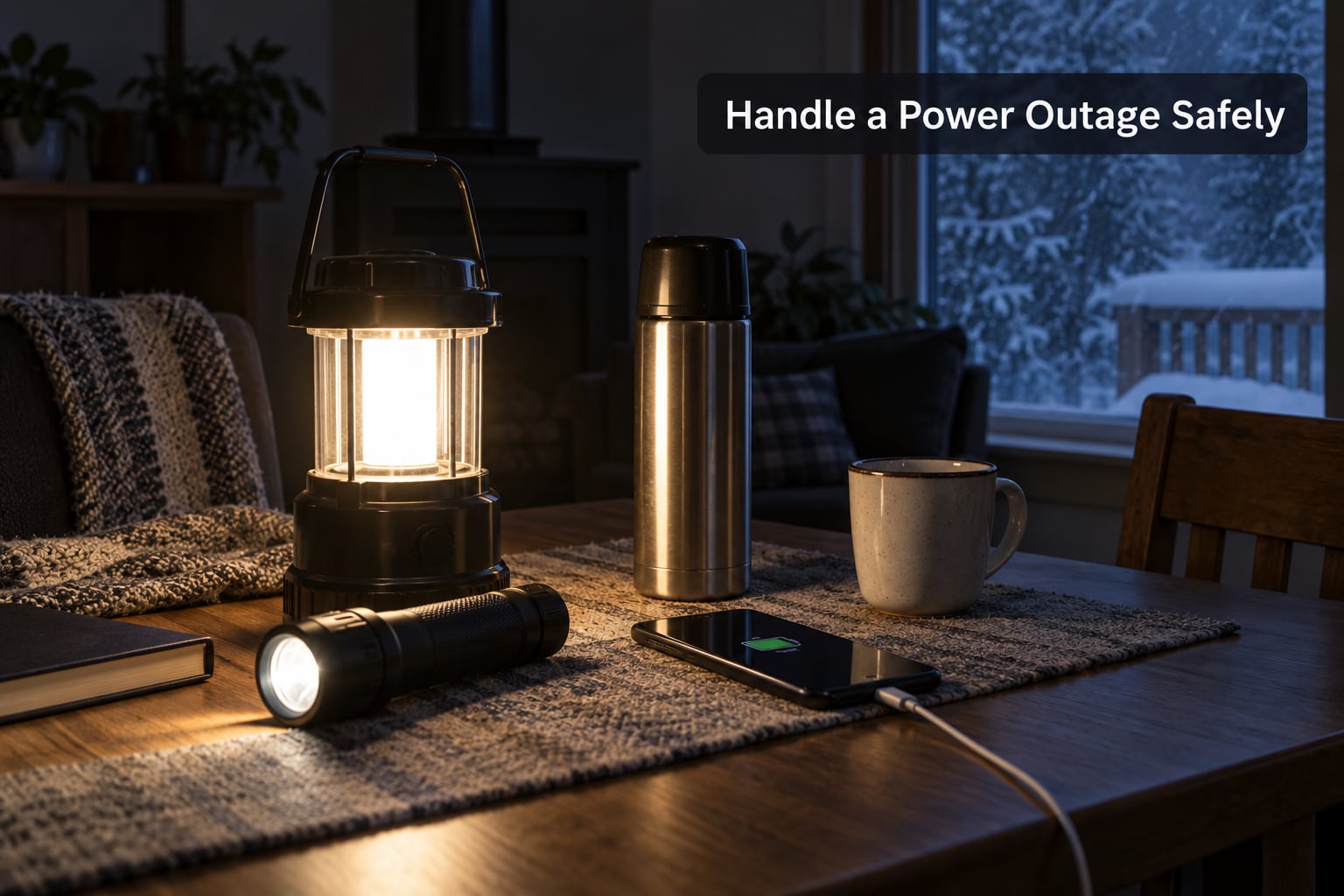
The first rule is to never run a generator, grill, propane heater, or vehicle engine indoors or in a garage. Run generators outdoors at least 20 feet from doors, windows, and vents, and plug appliances directly into the unit rather than a wall outlet. A working carbon monoxide detector on every level of the home gives you early warning.
Use flashlights instead of candles whenever you can. If you must have a flame, it belongs in a clear, open fireproof area and never unattended. Keep one phone charged and use it for calls and text only, so the battery lasts. Set the thermostat low rather than high, and close doors to keep warm air in the rooms you are using.
For food safety, an unopened refrigerator keeps food cold for about four hours. A full freezer holds for roughly 48 hours, and a half-full freezer about 24 hours. Freeze what you can ahead of the storm so the timer starts higher. Discard refrigerated meat, fish, dairy, and leftovers when they sit above 40 degrees for more than two hours. Let ice in the freezer melt naturally to keep the compartment cold.
Keep a pipe from freezing by keeping the home above 50 degrees, opening cabinet doors under sinks on exterior walls, and running a slow drip through faucets if a wall is against an unheated space. Never use a hair dryer, heat gun, or open flame to thaw a frozen pipe; find where the metal pipe stops feeling cold and warm the surrounding drywall gently, then call a plumber.
If the home was cold for a long time before you return, be careful about carbon monoxide residue from fireplaces, furnaces, and chimneys that can vent back into a cold house. Run the system and open doors first, and if anyone feels dizzy or headachey, get everyone outside and call 911.
8. Respond Safely If Your Car Is Stranded in a Winter Storm
Stay with your vehicle. A car is a shelter with walls, a roof, and it is more visible from the road than a person walking through a whiteout.
Turn on your hazard lights and the interior light, and run the engine about 10 minutes at a time, then shut it off for the majority of the next half hour to conserve fuel. Do not leave the engine idling continuously. For ventilation, crack a window an inch or two rather than opening it fully, which lets in cold air and snow and lets carbon monoxide build up. Never run the engine if the exhaust pipe is buried in snow, and do not sit in the front of the car with the engine running; the exhaust can collect at the rear.
Consolidate everyone into the passenger compartment, huddle together, and use blankets, coats, and any insulating material you have, including newspapers, maps, or floor mats. Keep still to preserve heat. Make the car visible by switching on all lights periodically, tying a bright fabric to the antenna, or placing a marker outside at a safe distance.
If you have to leave the vehicle to find help, wait for a break in visibility, walk away from the road only if you can clearly identify where you are, and leave a written note on the windshield. Check the weather service website on your phone when you have signal rather than pushing through worsening conditions.
Common Mistakes
Ignoring a watch until it becomes a warning. A watch is the preparation window. By the time a warning posts, the roads are already busy and the supply shelves are picked over.
Running a generator, grill, or space heater indoors. Carbon monoxide is odorless and kills without warning. Generators go outside, 20 feet from the house, every time.
Walking on ice-covered pavement without traction. Falls on ice cause more winter injuries than cold exposure in many years. Boots with good tread and handrails or a walking stick help, and crossing a parking lot at speed does not.
Parking where a tow ban will hit. Cars left in the street during a storm ban can be towed, and an abandoned car on an unplowed road slows the plow that was coming for your street.
Assuming the first outage is the whole outage. Utilities often restore power, then lose it again when a second storm band arrives. Keep supplies where you left them rather than putting everything back in a cupboard.
Relying on one phone with no backup. A dead phone is the single most common reason people cannot call for help. Keep a battery-powered radio, a paper contact list, and one charged handset in a known spot.
Shoveling cold, snowed-in snow. Take a stretch break before you lift, push with your legs rather than your back, and stop for chest pain, shortness of breath, or unusual fatigue. People who are not physically active are at higher risk than those who are.
Frequently Asked Questions
How long can you stay in a car during a winter storm?
In an unheated car with no heat from the engine, survival time is commonly described as a few hours, often closer to three, depending on conditions. Running the engine briefly improves this but burns fuel fast. Insulate the passengers together, cover windows from drafts, and treat the car as a short-term shelter while you wait for conditions to improve, rather than a place to spend a night.
Is it safe to run a car while stuck in a snowstorm?
You can run a car in a snowstorm, but only in short cycles of about 10 minutes and only if the exhaust pipe is clear of snow. Crack the window an inch or two to let fresh air in, and stay out of the vehicle when the tailpipe is blocked. Carbon monoxide is odorless, and parked cars can be deadlier than the storm itself.
What should I do if I find someone suffering from hypothermia?
Move them out of the wind and remove wet clothing without stripping the clothes underneath, then wrap them loosely in blankets, sleeping bags, or coats. Handle them gently and give them warm, sweet, non-alcoholic drinks if they are fully alert. Call 911 right away for confusion, slurred speech, drowsiness, or a slow pulse, since real hypothermia is a medical emergency.
When should I call 911 during a winter storm?
Call 911 for chest pain, severe breathing trouble, confusion or extreme drowsiness, unresponsiveness, uncontrolled bleeding, a fall with a possible head or spine injury, or signs of carbon monoxide poisoning such as headache, dizziness, and nausea with no other cause. Also call if someone cannot be kept warm or fed and emergency responders are the only way to reach them.
How do I keep my pipes from freezing during a power outage?
Keep the house above 50 degrees Fahrenheit, open cabinet doors under sinks against exterior walls, and open interior doors so warm air moves through the home. A slow drip from a faucet protects vulnerable pipes. Do not use a hair dryer, heat gun, or open flame to thaw a frozen pipe, and remember that the damage from thawing often appears after the water is back on.
Conclusion: What to Do First
If you do nothing else, do these four things. Check your official weather alerts and decide whether a warning is coming. Delay any travel that is not essential, because the window between safe travel and a closed road closes faster than most people expect. Confirm that your emergency kit is where you can reach it, that your water is filled, and that your heating source will not put carbon monoxide into the house.
Then check on the person next door who lives alone. Blizzards are survivable for a prepared household and dangerous for an unprepared one, and the difference is almost always a phone call made a day early. That is how to stay safe during a winter storm: decide early, prepare once, and keep your phone charged.