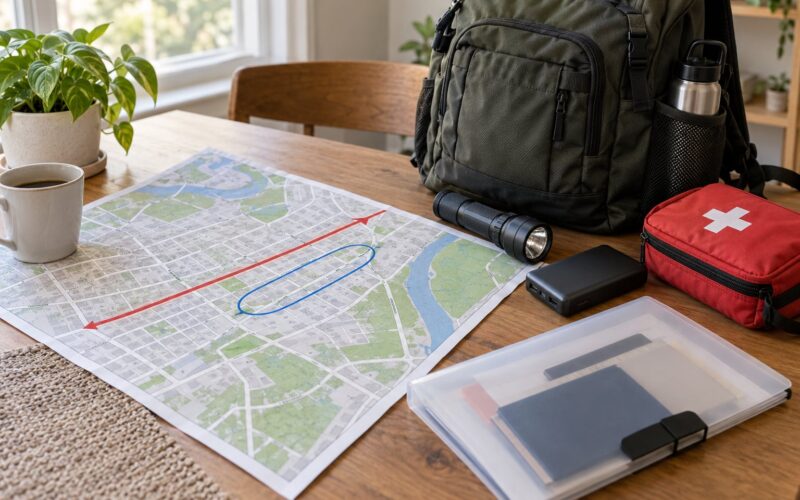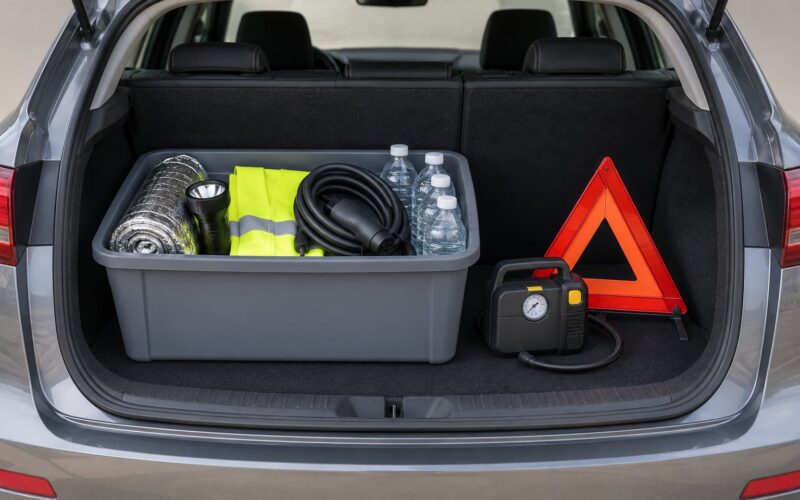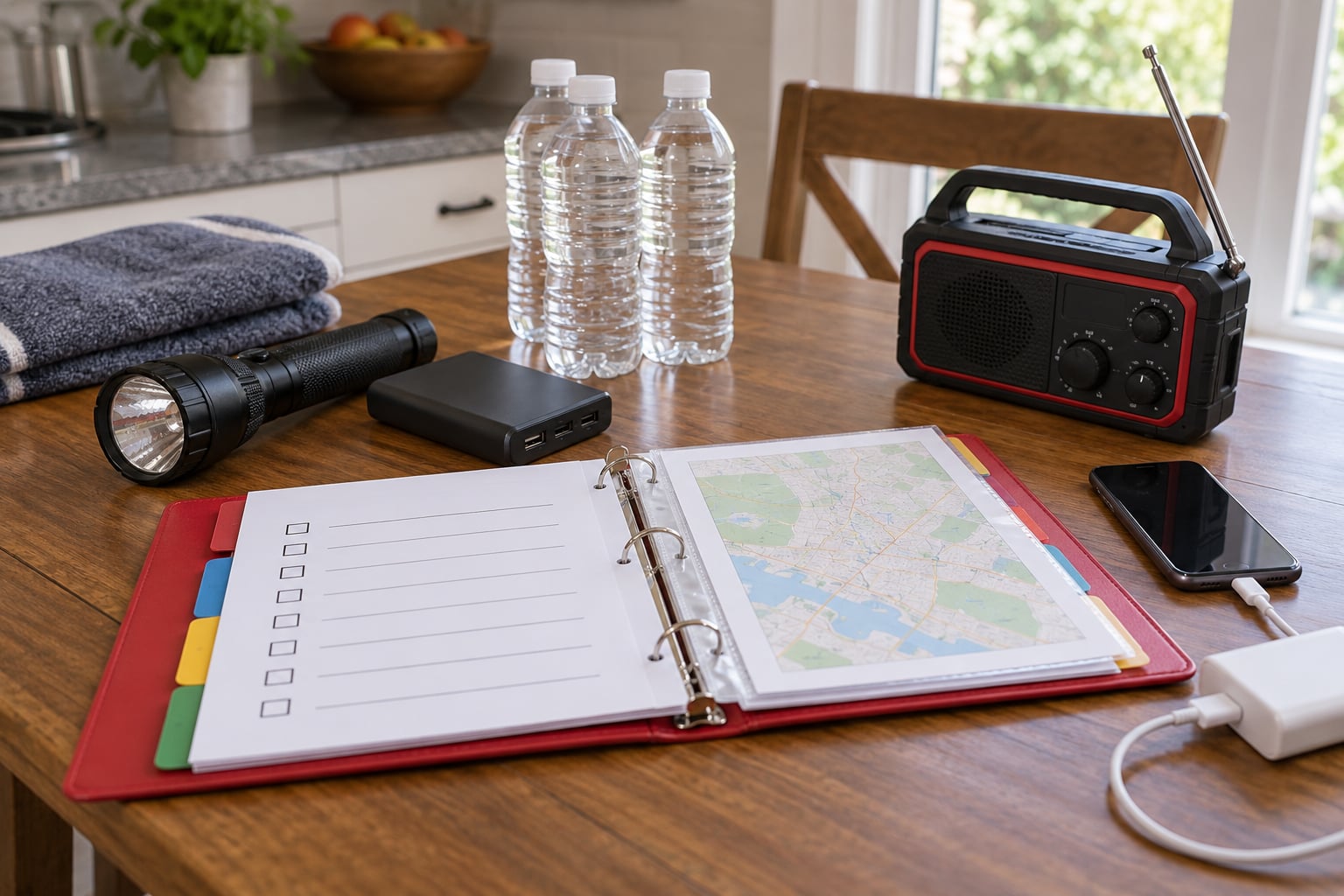
To prepare your household for a power outage, you need three things in place before the lights go out: at least 72 hours of water and food that needs no cooking, battery-powered lighting and a radio, and a written plan for medical devices, heating, sanitation and communication. Most families build that in a single weekend.
The part most people skip is the boring part. A garage full of gear you never rotate through helps you far less than one labeled bin of water you actually drink every month.
Outages from storms, ice, wildfire, grid failures and summer heat routinely run for days rather than hours, and they take out heat, cooling, refrigeration, water pumps, cooking and card readers all at once. Ready.gov and FEMA both frame preparedness around the same target: enough to get through three days without utility power.
Table of Contents
- What You Need to Prepare Your Household for a Power Outage
- Step-by-Step
- 1. Know Your Risks, Utility Information and Local Alerts
- 2. Build a Three-Day Supply Kit
- 3. Protect Food, Water and Medication
- 4. Plan for Lighting, Communication and Power
- 5. Make a Household Communication and Evacuation Plan
- 6. Prepare the Home Before the Outage
- How to Prepare Your Household for a Power Outage During the Event
- Common Mistakes
- Quick Safety Tips
- Frequently Asked Questions
- How long should a household prepare for a power outage?
- How should I keep food safe when the refrigerator loses power?
- How much drinking water should each person have for an outage?
- Can I use a portable generator during a power outage?
- What should I do if someone in my home depends on an electrically powered medical device?
- How do I safely care for pets during a power outage?
- Conclusion
What You Need to Prepare Your Household for a Power Outage
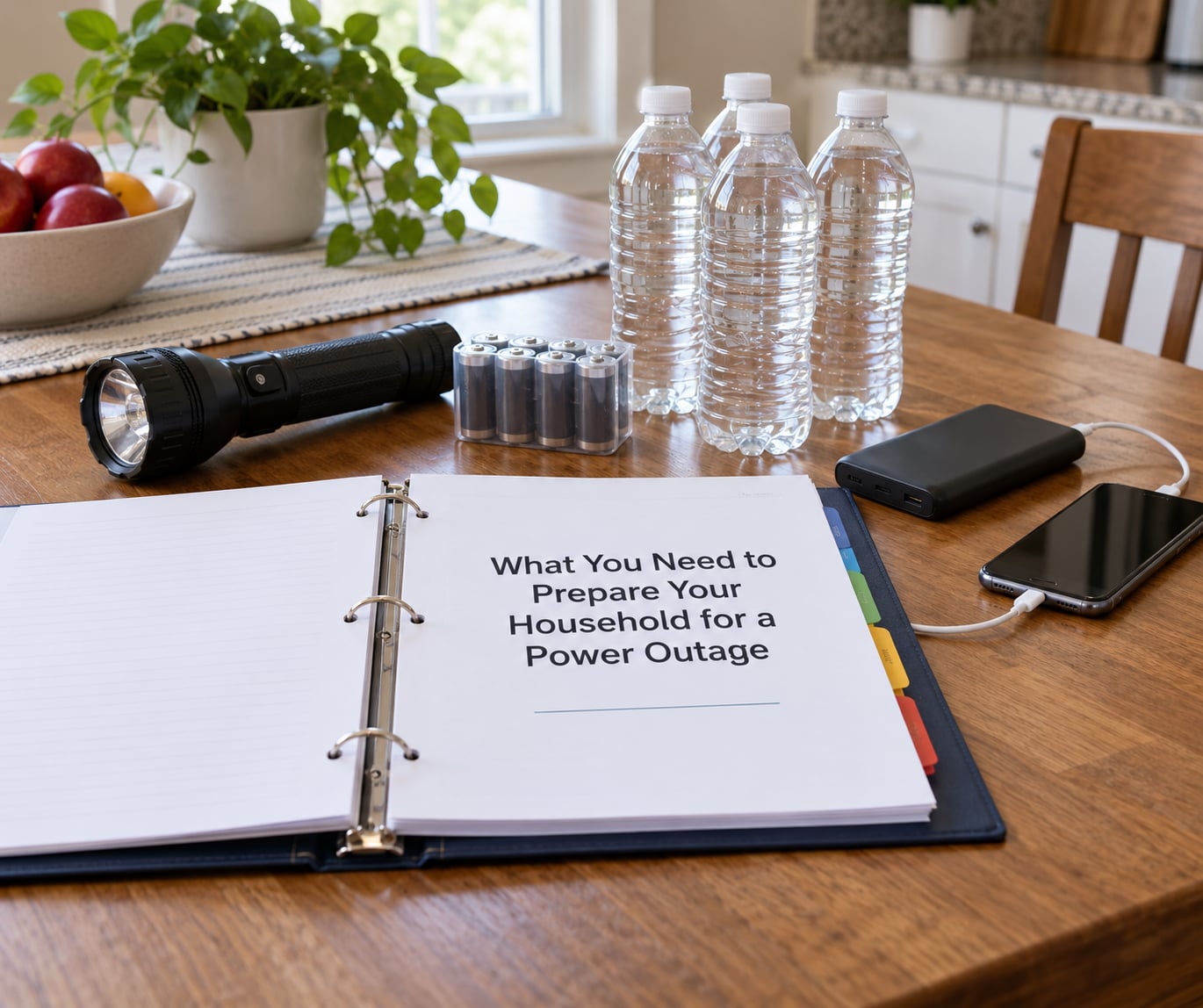
The full kit breaks into eight groups. Pull yours together in one sitting, then label everything with a date.
- Documents and contact details: ID, insurance policies, a medication list for each household member, your utility account number, and the utility’s outage line written on paper.
- Water: one gallon per person per day for drinking and cooking, plus extra for pets, infants and anyone with fluid restrictions.
- Food that needs no power: shelf-stable cans, jars, nut butters, crackers, dried fruit, granola bars, ready-to-eat meals and a manual can opener.
- Light and communication: a flashlight per person, LED headlamps, a battery or hand-crank NOAA radio, and power banks already charged.
- First aid and hygiene: a stocked first-aid kit, hand sanitizer, toothbrushes, toothpaste, soap, feminine supplies, garbage bags and moist wipes.
- Backup power: charged power banks, a car with a working battery, and, if it fits your situation, a portable generator or battery station.
- Medical gear: refrigerated medication, oxygen concentrator supplies, mobility device batteries and any paperwork your clinician asked you to keep.
- A fallback place: the name and address of a relative, friend, shelter or cooling center you could reach if your home becomes unsafe.
Put it all in one tote, one bin per person if you can carry it, or a small wheeled cart by the door. Preparedness advice shared on r/selfreliance keeps landing on the same point: the kit has to be something a tired adult can grab at 2 a.m. without searching.
Step-by-Step
1. Know Your Risks, Utility Information and Local Alerts
Start by writing down why your neighborhood loses power. If it is ice on the lines, prep in late autumn; if it is wildfire smoke and wind, prep in spring; if it is summer heat, think about cooling rather than warmth. Knowing the pattern tells you which season your kit needs to be ready.
Save three numbers in your phone under an ICE contact: your utility’s outage line, the police non-emergency number, and one person outside your area who can confirm you are okay. Register for your utility’s text alerts if they offer them, and keep a NOAA weather radio in the kit for when cell towers are overloaded.
Also decide now, while you are calm, what would make you leave: a fire, a gas smell, standing water, a medical emergency, or an official evacuation order. Writing the trigger down stops the debate later.
2. Build a Three-Day Supply Kit
Three days is the standard target because the American Red Cross and Ready.gov both use it, and because after that point most people can reach a store or a community resource. Multiply one gallon of water per person per day by three and add a margin. A 72-hour kit you can build on a budget still beats an expensive one you never finish.
The low-cost version that shows up again and again in r/selfreliance threads is unglamorous: canned beans, tuna, peanut butter, crackers, bulk rice, and water you buy in cases rather than one bottle at a time. Rotate it by eating what is closest to expiring and replacing it. Members who fell for the “aspirational stockpile” mistake say the same thing: food you can see the date on beats a bigger pile you forgot about.
Do not forget the cooking layer. If your stove is electric, add a camping stove with fuel, a lighter and a pot. If you plan to eat cold meals, a manual can opener and paper plates matter more than utensils.
3. Protect Food, Water and Medication
An unopened refrigerator keeps food safe for about four hours. A full freezer holds safe temperatures for roughly 48 hours, and a half-full freezer for about 24. USDA Food Safety and Inspection Service guidance treats anything above 40F for more than two hours as unsafe, so a simple refrigerator thermometer is worth having.
The old trick of filling empty freezer space with frozen jugs is real, and it works. The ice acts as a cold mass that holds the surrounding temperature down longer than air alone, which buys you hours on the cheapest item in the kitchen. A thread on permies describes exactly this, and plenty of households have kept a freezer closed for two extra days because of it. Leave the door shut and move everything you need out at once.
For water, store it in clean containers you can lift, and rotate it. If your home runs on a well pump, assume water goes with the power. Refrigerated medication is its own problem: ask your pharmacist or clinician about the exact temperature range and how long the supply holds without a refrigerator, and keep a cooler with frozen packs ready for the worst case.
4. Plan for Lighting, Communication and Power
Flashlights beat candles because a dropped flame takes a house. Give each person their own light, keep spare batteries with the spare lights, and add a headlamp so hands stay free. A battery-powered radio carries local updates when the internet and cell service do not.
Charge power banks to full the day before a forecast event and treat a car charger as the last resort after every battery is dead, which is the order most households in r/selfreliance report actually using.
If you run a generator, run it outdoors, at least 20 feet from the house, away from doors, windows and vents. A licensed electrician should install a transfer switch before you backfeed power into the house. Never run a grill, propane heater or kerosene heater indoors; carbon monoxide kills long before the smoke is noticeable. Keep a working carbon monoxide detector on every level.
5. Make a Household Communication and Evacuation Plan
Choose one outside contact who is not in your area. Agree on check-in times, like a text at 9 a.m. and 6 p.m., so silence is meaningful instead of just late. Pick a meeting point two miles away in case roads are blocked, and write down the route.
Print the plan on paper: contacts, meeting point, medical needs, out-of-town destinations for pets and livestock. Phones die, and paper survives.
Plan for the people who need more. Pack a smaller grab bag per person with medication, a change of clothes and a comfort item, and make the children’s bags light enough that they can carry them. Note any language needs, mobility limits, service animals or neighbors who check on an older person who lives alone.
6. Prepare the Home Before the Outage
Walk the house and list everything that stops when power stops: the well pump, sump pump, electric water heater, garage door opener, smart lock, gate, elevator, powered wheelchair charger and carbon monoxide alarm. Each one needs its own workaround on paper.
Charge everything, fill the bathtub and a few buckets with water while taps still work, keep small cash on hand since card readers and ATMs need power, and top off the vehicle. Fill outdoor tubs with water before a forecast freeze so a sump pump failure does not become a flooded basement.
Move valuables and documents to a higher shelf. Then look at the building: heavy branches over the roof, a sump pump with no backup, a basement that floods. Those are the fixes that matter when the grid comes back.
How to Prepare Your Household for a Power Outage During the Event
The first hour decides how much you lose. Work in this order.
- Confirm the outage. Check the breaker before calling the utility, and report the outage so you get restoration updates.
- Decide whether you are staying. Check for fire, gas smell, structural damage or a medical emergency. If the utility or fire department tells you to leave, leave early rather than at 4 a.m.
- Move the food once. Take the fridge items you need for the next meal and close the door. If you have a cooler and ice, move the freezer food that matters most into it now.
- Charge communications. Plug in the phone, power bank and radio. Send your check-in text so family knows the status.
- Set up light, water and sanitation. Water is a known quantity only after you store it. Keep a bucket and scoop ready for flushing, and use stored water for drinking and hand washing.
You can flush a toilet with no power: put a bucket of water into the tank, then flush. If there is no water in the tank at all, pour a few gallons directly into the bowl. A handful of dish soap and a bucket covers washing dishes; a camping shower bag or a sponge bath handles bathing.
Filling a bathtub before an outage is useful because it becomes emergency water. A standard tub holds roughly 50 gallons, which covers drinking and hygiene needs for a family for a day if you are careful. Fill yours when a storm is forecast, not after the water stops.
Common Mistakes
Relying on candles for lighting. Candles burn down, tip over and start fires when a house is dark and full of people moving through it. Fix: issue flashlights and headlamps instead.
Running a generator, grill or heater indoors or in a garage. Even an open garage door leaves exhaust in the house. Fix: keep equipment at least 20 feet away from any opening, and use a battery or inverter generator rather than a whole-house unit unless a professional installed it.
Storing medication in a hot car. Cars reach temperatures that destroy most medication, and insulin and similar products fail without refrigeration. Fix: ask your pharmacist for the storage range and keep a small cooler with frozen packs ready.
Assuming one power bank will charge every device. A power bank holds enough for a couple of phone charges, not a laptop, a router and a medical device. Fix: split critical devices across several banks and charge only what keeps contact with the outside world.
Buying only perishable food. A pantry of canned tuna and no water is useless. Fix: match shelf-stable calories to water and a way to open them without electricity.
Refreezing thawed food. USDA guidance is that food thawed only in a refrigerator can be refrozen, but food that thawed above 40F for more than two hours must be discarded. Fix: keep the freezer closed and decide by temperature and time, not by appearance.
Never revisiting the kit. Water expires, batteries die and dates pass. Fix: put a recurring calendar reminder for two checks a year, one at the start of storm season and one in fall.
Quick Safety Tips
- Keep refrigerator and freezer doors closed. An open door drops the safe hold time from four hours to under two.
- Run generators and grills outdoors only, at least 20 feet from the house, and never near a window or vent.
- Test carbon monoxide detectors twice a year and keep one on every level.
- Stay away from downed power lines and anything touching a line, and report them to the utility.
- Do not ride an elevator in a high-rise during an outage; use the stairs unless emergency services direct otherwise.
- Check on older, disabled or isolated neighbors early, not after the temperature moves.
- Treat any downed line as live, and never use a generator to dry a flooded appliance or a wet basement floor.
- If someone uses oxygen concentrators, ventilators, dialysis or a powered wheelchair, contact the utility’s medical priority line and the equipment supplier before the outage rather than during it.
Frequently Asked Questions
How long should a household prepare for a power outage?
Plan for 72 hours without electricity, which is the standard target used by Ready.gov, FEMA and the American Red Cross. That covers the average storm-related outage with a small margin. After three days, most families can reach a store, a shelter or a community resource. If you live on well water, run medical equipment or live in an area that loses power for a week every few years, build a two-week supply instead.
How should I keep food safe when the refrigerator loses power?
Keep the door closed and use an appliance thermometer. An unopened refrigerator holds safe temperatures for about four hours, a full freezer for roughly 48 hours and a half-full freezer for about 24. Fill empty freezer space with frozen water jugs so the ice holds cold longer, and move priority food into a cooler with ice early. Discard perishable food that sat above 40F for more than two hours.
How much drinking water should each person have for an outage?
Plan on one gallon of water per person per day for drinking and cooking, multiplied by the number of days you are preparing for. Add extra for pets, infants, older adults and anyone on a fluid restriction. Store it in containers you can lift, label them with the date, and rotate them so you are drinking the oldest supply first.
Can I use a portable generator during a power outage?
Yes, but only outdoors. Place it at least 20 feet from the house, away from doors, windows and vents, and never in a garage or basement, even with the door open. Use outdoor extension cords rated for the load, and let a licensed electrician install a transfer switch before powering any house circuits. Never run a grill, propane heater or kerosene heater indoors; carbon monoxide is odorless.
What should I do if someone in my home depends on an electrically powered medical device?
Before any outage, register with your utility’s medical priority program and keep its outage number plus your equipment supplier’s after-hours line on paper. Ask each supplier how long the backup battery lasts and how to arrange a loaner unit. Keep charged power banks sized for the device, and keep refrigerated medication in a cooler with frozen packs. Call 911 for a medical emergency during an outage, since ambulance response may be slower.
How do I safely care for pets during a power outage?
Store a few days of pet food and water, a manual can opener if you use canned food, and a carrier or leash by the door, along with printed veterinary records. Freeze water bowls ahead of time so they have cold water for hours. Keep pets away from a cooler’s loose ice and from generators. If you cannot shelter them at home, ask about pet-friendly shelters or boarding well ahead of hurricane season, since they fill up early.
Conclusion
Start with the four things that decide how an outage goes: alerts turned on, a 72-hour supply you actually eat and drink, a written communication plan, and safe backup power kept well away from your windows.
Then put two dates in your calendar, one for spring and one for fall, to swap water, test batteries and check dates. Two hours twice a year costs less than one thawed freezer.