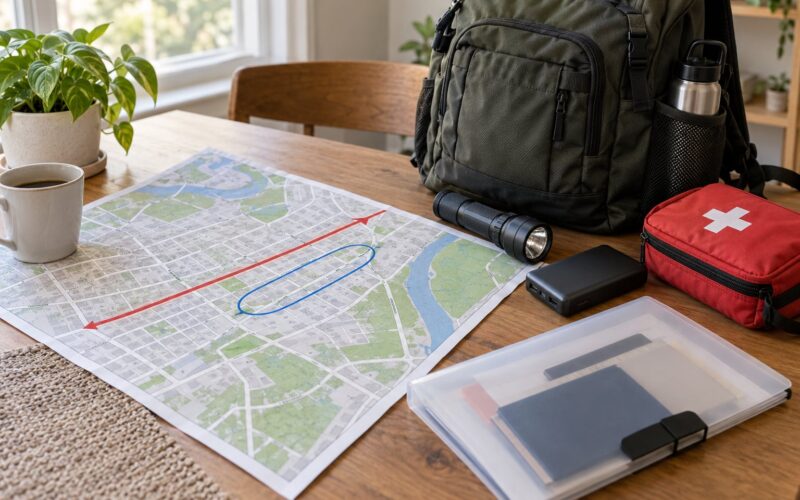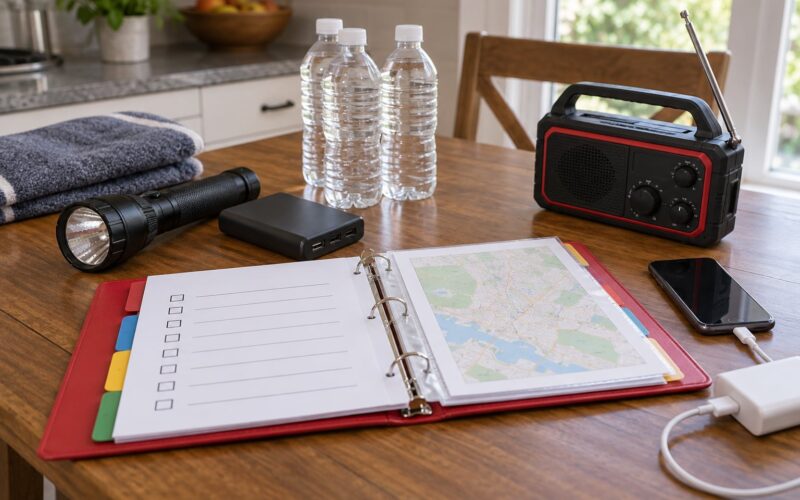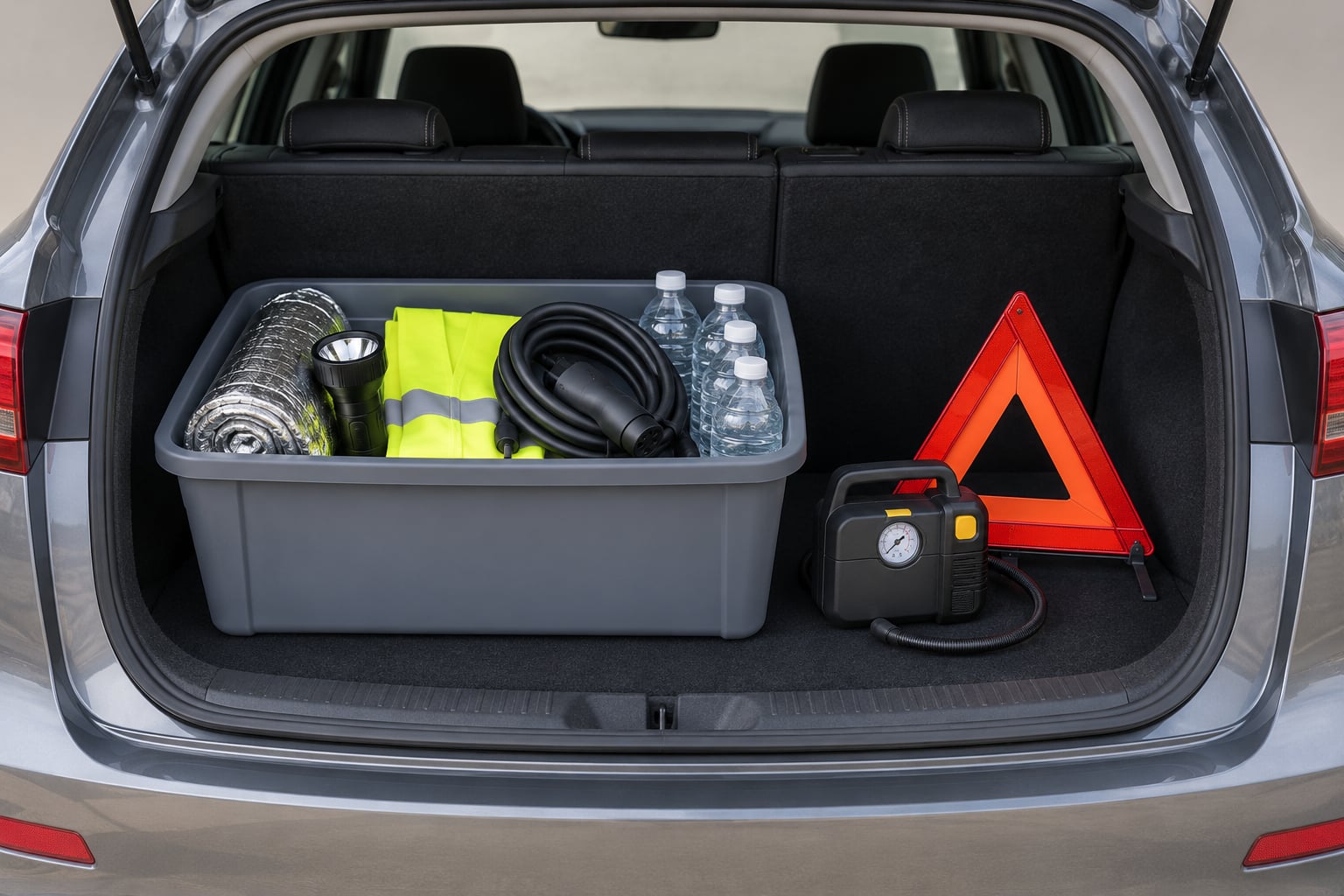
If you want a straight answer: what to keep in your car trunk for emergencies is a bag or bin holding first-aid supplies, water, a flashlight with spare batteries, a jump pack or jumper cables, tire repair tools, a reflective vest, nonperishable food, a weather blanket, a multi-tool, and copies of your documents.
That list covers the situations drivers actually run into: a flat at dusk, a dead battery in a parking lot, a highway closure that stretches to three hours, a fender bender on an icy road. Most breakdowns happen somewhere inconvenient, usually far from a populated area and often at the exact hour when response times stretch.
The kit buys you the minutes you need to stay warm, visible, hydrated, and uninjured until help arrives. Here is the full breakdown, item by item, plus where to store each thing and when to replace it.
Table of Contents
- What to Keep in Your Car Trunk for Emergencies at a Glance
- 1. A Properly Stocked First-Aid Kit
- How to Check Your Car First-Aid Kit
- 2. Water and Electrolyte Drinks
- 3. A Tire Inflator and Basic Tire Tools
- 4. Jumper Cables or a Portable Jump Starter
- 5. A Flashlight and Spare Batteries
- 6. A Reflective Warning Triangle or Road Flares
- 7. Warm Clothing and a Weather-Ready Blanket
- 8. A Multi-Tool, Work Gloves, and Duct Tape
- 9. Emergency Food and Nonperishable Snacks
- 10. Copies of Documents, Cash, and a Charging Cable
- Frequently Asked Questions
- What are some essential items to always have in my car?
- What items should I stockpile for an emergency?
- What is the best auto safety kit for essentials?
- What are 10 items you need for an emergency kit?
- A Simple Car Emergency Kit Setup
What to Keep in Your Car Trunk for Emergencies at a Glance
This is the short version. Scan it, pack it, then read the sections below for the reasoning.
- First-aid kit — cuts, burns, minor injuries, personal medications. Store in the cabin where you can reach it without leaving the vehicle.
- Water bottles — heat, breakdowns, long delays. Store sealed bottles in the trunk.
- Portable tire inflator — reinflate a low or nearly flat tire before it becomes a tow. Trunk.
- Tire plug kit, tire-pressure gauge, spare tire, jack and lug wrench — the actual repair. Trunk, near the spare.
- Jump pack or jumper cables — the most common roadside failure. Trunk or under a seat.
- Flashlight plus spare batteries, or a headlamp — for night breakdowns and tunnels. Cabin and trunk.
- Reflective warning triangle, road flares, and a high-visibility vest — visibility to passing traffic. Trunk, top of the pile.
- Emergency blanket, extra layers, gloves, rain shell — staying warm while you wait. Trunk.
- Multi-tool, work gloves, duct tape, tow strap, a few spare fuses — small roadside jobs and temporary fixes. Trunk.
- Nonperishable food, a charging cable, a power bank, cash and document copies — delays, dead phones, crashes. Trunk.
One more that costs you nothing: make sure your roadside assistance membership number and a paper copy of your insurance card are in that same bin. A tow truck cannot help you if you cannot tell them who you are.
1. A Properly Stocked First-Aid Kit
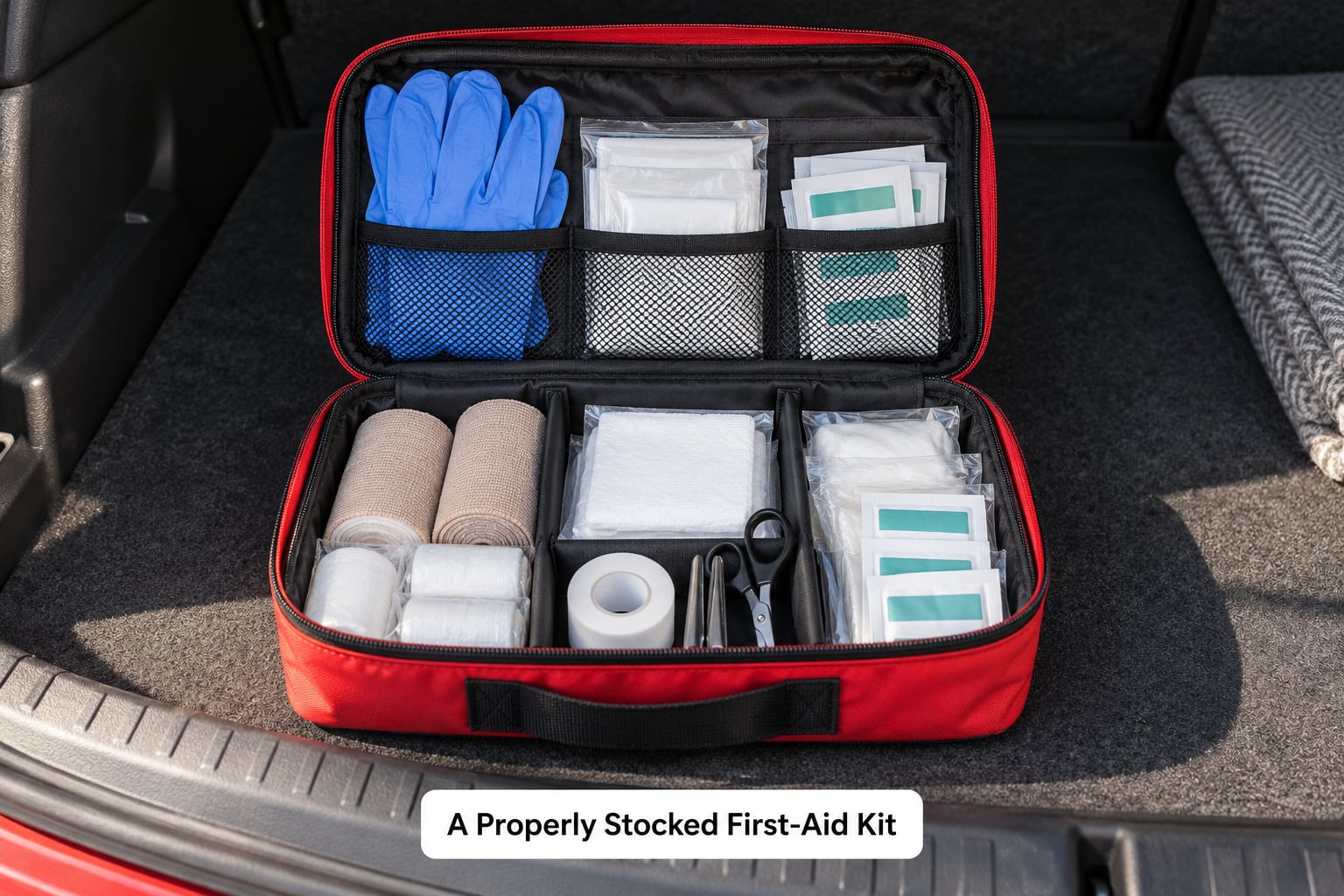
A car first-aid kit should hold adhesive bandages in a few sizes, sterile gauze pads, medical tape, elastic wrap, disposable gloves, antiseptic wipes, and any personal medication you or a passenger relies on.
Gloves matter more than people expect. Most blood in a roadside or kitchen injury comes from someone trying to help, and gloves take thirty seconds to put on. A small packet of pain relievers and an antihistamine cover a surprising share of ordinary complaints.
Add a small flashlight or a glow stick inside the kit itself, because you will not be able to find your main one in the dark with numb hands.
How to Check Your Car First-Aid Kit
Set a recurring reminder twice a year, ideally when you change the clocks or do your seasonal tire rotation. Pull the kit out, lay it on the kitchen table, and go through it item by item.
Throw out anything past its expiration date, anything that leaked, and any sterile dressing that lost its wrapper. Restock what you used last time. Then think about what changed: a new prescription, a child with a peanut allergy, a passenger who needs a specific medication.
One caution on medication. Cars get very hot in summer, and heat degrades most drugs faster than a printed date suggests. Store medicines in a small insulated pouch, keep them out of direct sun, and replace anything that has spent a summer in a hot vehicle. When in doubt, ask a pharmacist or your doctor what is safe to keep in the car at all.
2. Water and Electrolyte Drinks
Sealed water bottles are the single most useful thing in the trunk, and the easiest to forget to replace. Store them upright in a plastic bin or a waterproof dry bag so a leaking bottle does not take your first-aid kit with it.
Four one-liter bottles per car is a reasonable baseline for a family vehicle. If you drive long stretches through desert heat or remote highways, double it.
Electrolyte or sports drinks earn their place during prolonged exertion, hot weather, or a long wait in traffic, where plain water alone leaves you feeling flat. They do not replace plain water, so pack both and do not skip the water because you have the sweet stuff.
3. A Tire Inflator and Basic Tire Tools
A flat or dangerously low tire is the most common reason drivers end up on a shoulder. A small 12-volt portable inflator plugs into your accessory outlet or cigarette lighter and takes about ten minutes to bring a tire back up to pressure.
Pair it with a pencil-style tire-pressure gauge so you can check pressure before you leave on every long trip, not just after a problem. A digital gauge that reads both PSI and bar is more useful if you have ever seen a tire specification written in either unit.
The plug kit fixes small punctures in the tread area. It will not fix a blowout, a sidewall tear, or a puncture in the shoulder of the tire. For those, you need the spare, the jack, and the lug wrench that came with the vehicle.
Check that your spare is actually in the trunk, that it holds air, and that you have the correct lug wrench for your car. Some manufacturers ship a plastic tool that is easy to lose. Test the whole change once, in daylight, in a driveway, before you need it in the dark. Follow your owner’s manual for the procedure and the torque on the wheel nuts.
4. Jumper Cables or a Portable Jump Starter
There are two ways to solve a dead battery, and the honest answer is that carrying both is better than arguing about which one is sufficient.
Traditional jumper cables need a second vehicle, which is exactly what you may not have when you are parked alone in a lot at 11 p.m. Their advantages are that they never need charging and they do not have a battery that can fail on its own.
A portable jump starter needs no second car, which makes it the more useful of the two in a parking lot or on a residential street. You do need to keep it charged, and that is where people get burned: a lithium pack that sat at 20 percent for eight months is the one that fails to start your car.
Recharge it every two or three months and test it in the driveway occasionally. Store it somewhere temperature-moderate if you can. Forum drivers worry about lithium packs cooking off in a hot trunk, and while that is rare, storing the unit in the passenger compartment in summer and the trunk in winter is a simple precaution. Keep the manual. Hooking a battery up in the wrong order can fry the jump starter and damage your electronics.
Whatever you carry, keep it where you can reach it in seconds. A jump pack at the bottom of a packed trunk under a stroller has failed you once already.
5. A Flashlight and Spare Batteries
A bright flashlight matters at night, in a tunnel, in a storm, and any time you are checking a tire or looking under a hood with the car broken down. Handheld means you can point it; a headlamp means your hands stay free, which is the difference between changing a tire in the rain and not.
Carry spare batteries of the correct size, and pack a spare set inside the trunk bin rather than in the glove compartment. Batteries sitting loose in a hot car for years lose charge fast, and a flashlight with dead batteries is a rock.
A rechargeable light that you top up with a USB cable every few months solves the dead-battery problem, but keep one throwaway light as backup anyway.
6. A Reflective Warning Triangle or Road Flares
Warning devices buy visibility when you are stopped and cannot be seen. A reflective warning triangle is the legal standard in most US states, and it is the one to carry if you drive regularly.
Road flares add active light that works at night, which is when visibility matters most. Use them only in a legal, safe spot, never near dry grass, a fuel tank, or anything that burns, and never where approaching traffic cannot pull away. Many states limit flare use and require a fire extinguisher within reach.
Pair them with a high-visibility reflective vest. Most states require you to wear one when you are working on a roadway, and it does more for your safety than anything else in this list. Hang the vest on the interior rear-view mirror so you cannot forget it.
7. Warm Clothing and a Weather-Ready Blanket
A roadside stop in February is a different emergency from a roadside stop in July. Cold exposure causes more trouble than heat exposure in most climates, and it creeps up on you: shivering stops before hypothermia starts, and by then you cannot zip your own coat.
Keep a wool or fleece blanket or a compact sleeping bag in the trunk year-round. It is bulky, and that is fine because it is the item most likely to keep you warm in a car with a dead battery in January.
Add lightweight layers that fit in a dry bag: a wind-resistant shell, a warm hat, gloves with grip palms, and a change of socks. Gloves also protect your hands when you are rigging a tow strap or handling a jack on wet pavement. An emergency mylar blanket weighs almost nothing, but it does not replace a real blanket.
Match the kit to your climate and your passenger count. A two-person commuter in Arizona needs water and a shade source instead of a snow shovel and traction aid. A family of five in Minnesota needs both sets.
8. A Multi-Tool, Work Gloves, and Duct Tape
These are the small items that separate a nuisance from a real problem. A multi-tool with a knife, a screwdriver, and a bottle opener handles package cutting, a stripped screw, and a hundred minor roadside tasks that would otherwise mean walking to a store.
Work gloves protect your hands on a jack, a wheel wrench, and anything sharp under the car. Duct tape is the least glamorous item here and one of the most used. It has temporarily closed a cracked plastic reservoir, held a torn weather stripping in place, and kept a bundle of cables together in a pinch.
Be honest with yourself about where convenience ends and real mechanical work begins. Replacing a wiper blade, topping off coolant at the reservoir, or tightening a loose hose clamp is driver-level maintenance. Anything involving jack stands under the car, fuel system work, or brake components belongs in a shop. If you are unsure, the owner’s manual and a qualified mechanic are the right references.
Mechanics on forum threads also carry an extra quart of engine oil and coolant, a ratchet with deep sockets, an OBD-II code reader that tells you what the check-engine light actually means, and a handful of spare fuses. Those are reasonable additions if you are comfortable with them, and reasonable to skip if you are not.
9. Emergency Food and Nonperishable Snacks
Stock the trunk with shelf-stable, individually wrapped food that needs no preparation: nuts, protein or granola bars, dried fruit, crackers, and a few energy-dense options. Nobody wants to make a sandwich on a highway shoulder.
Pack for the people who ride with you. A toddler who tolerates crackers at home will not tolerate them two hours into a delay. A dog in the back seat needs the same consideration, and the same warning: never give human medication to a pet.
This is also the item people let go stale. Write the date on the box with a sharpie when you pack it, and set the same twice-yearly reminder you use for the first-aid kit to swap it out. Food in a hot car goes bad faster than the printed date implies, so if it looks or smells off, replace it regardless of the label.
10. Copies of Documents, Cash, and a Charging Cable
A small waterproof document pouch takes almost no room and carries the pieces you cannot replace at the roadside: a photocopy of your driver’s license, your insurance card, registration, a list of emergency contacts, and a written note about any medications or allergies a paramedic should know.
These copies do not replace real identification or a current policy. They exist because after a collision the originals may be destroyed, wet, or still locked in the car.
Carry some cash in small bills. Card readers fail without a signal, and some parking garages and rural fuel pumps will not take a phone at all. Add two charging cables, one for the car’s USB port and one long enough to reach the back seat, plus a power bank charged to full. A dead phone is the difference between calling for help and walking a mile in the dark.
Download offline maps before you leave, set up location sharing with a family member, and screenshot your roadside assistance number. Digital prep costs nothing and it is the part almost everyone skips.
Frequently Asked Questions
What are some essential items to always have in my car?
Start with the four that get used most: a first-aid kit, sealed water, a flashlight with spare batteries, and a way to jump a dead battery. Add a tire inflator and gauge, a reflective vest, a blanket, nonperishable food, and a multi-tool for anything beyond a minor problem. Keep it all in one labeled bin so you can grab the whole kit in one move.
What items should I stockpile for an emergency?
The stockpile items are the ones that expire: water, food, batteries, first-aid medications, and any prescriptions. Keep them sealed, label them with the packing date, and swap them on a twice-yearly schedule tied to your tire rotation. In a hot car, replace food and water sooner than the printed date suggests, and check what a pharmacist says about storing medicine in a vehicle.
What is the best auto safety kit for essentials?
There is no single best kit, but the best-value setup is a pre-built roadside kit covering the mechanical items, plus your own added medical and weather supplies. Buy a kit for the tires, jack, and triangle, then add a jump pack, first-aid kit, water, food, vest, blanket, and power bank. That avoids paying twice for gear you already own.
What are 10 items you need for an emergency kit?
If you pack only one bag, take these ten: a first-aid kit, water, a portable tire inflator with a gauge, a jump pack or cables, a flashlight with spare batteries, a reflective vest and warning triangle, an emergency blanket, a multi-tool with work gloves and duct tape, nonperishable food, and copies of your documents with cash and a charging cable.
A Simple Car Emergency Kit Setup
Here is the order I would build it in, if you are starting from an empty trunk this weekend.
First, the non-negotiable five: water, a first-aid kit, a flashlight with spare batteries, a reflective vest and warning device, and a way to handle a flat or a dead battery. Those cover the situations where waiting for help is uncomfortable or dangerous.
Second, put it all in one labeled bin or soft bag. A single container you can lift in one hand is worth more than three small ones scattered around the cargo area. Keep the heavy, bulky things low and flat in the trunk, and keep the items you might need within seconds — first aid, flashlight, vest, jump pack — in a second smaller bag you can grab without unloading the trunk.
Third, schedule the check. Twice a year, same day as your tire rotation: check water and food dates, test the flashlight, charge the jump pack, and replace anything used.
Last, resist the pile. A trunk full of gear you never touch gets ignored, and the items on it slowly expire. A smaller kit you actually maintain beats a bigger one every time.
While you wait, stay safe. Turn on your hazard lights, move as far from traffic as you safely can, stay with the vehicle if it is on a shoulder rather than standing on it, and note your location marker and direction of travel so a tow driver or the police can find you. Then make one call and wait for help that is already on the way.