
Preparing for a move on a budget works best when you shrink the load before you shrink the truck. Start eight weeks out, pull three written quotes, source your own boxes, pack them yourself, book a midweek date outside the May-to-September rush, and hold back 5 to 10 percent for whatever shows up anyway. Almost every budget disaster traces back to moving more than you need or signing a low estimate without reading the add-on language.
The good news is that the biggest lever is free. Decluttering before you price anything reduces the volume you are charged for, and volume is exactly what local carriers price on. Everything else on this page is about spending what you have to spend more deliberately.
Table of Contents
- What You Need Before You Book Anything
- Step-by-Step: How to Prepare for a Move on a Budget
- 1. Set a Moving Budget and a Firm Spending Limit
- 2. Compare Moving Costs Before You Book Anything
- 3. Find Free or Low-Cost Moving Supplies
- 4. Cut Transportation and Lodging Costs
- 5. Pack and Prepare for Fewer Damages
- 6. Plan Deposits, Address Changes, and the Final Bill
- Common Mistakes That Blow Up Moving Budgets
- Frequently Asked Questions
- How much should I budget for a move?
- Is renting a moving truck cheaper than hiring movers?
- How far in advance should I book a mover or truck?
- What moving costs are commonly forgotten?
- How do I pack a moving box safely?
- What do I do if I cannot afford to move out?
What You Need Before You Book Anything
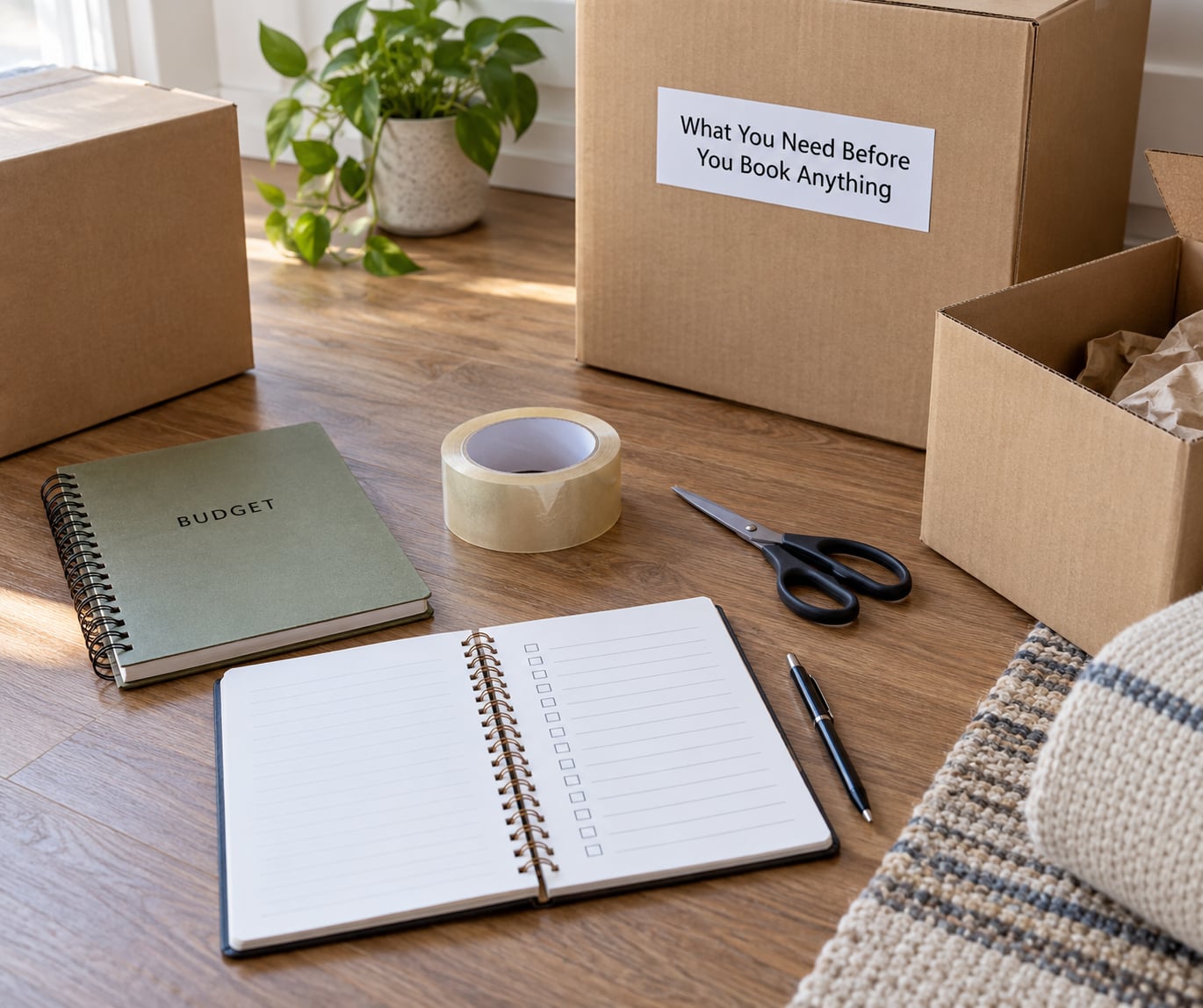
Preparation here means paper and information, not equipment. Gather these before you request a single quote, because each one changes what you ask for.
- Your lease or closing documents. Notice requirements, deposit amounts, and any early termination or sale conditions that affect your date.
- A room-by-room inventory. Count furniture pieces and estimate box volume per room. Movers price local moves largely on volume, so this becomes your own quote check.
- Three written moving estimates. Written, itemized, and comparable. A phone quote is not something you can hold anyone to.
- Your current utility and service accounts. Account numbers for electric, gas, water, internet, trash, and any bundled home services.
- Packing materials you already own. Moving blankets, tape, markers, scissors, a utility knife, zip ties, and any suitcases or laundry baskets.
- A tracking spreadsheet or notebook. One column for estimated cost, one for quoted cost, one for paid cost, one for the date. This is how the savings become real.
A simple folder of printed documents beats a notes app when the phone dies. That has happened to more than one household on moving day.
Step-by-Step: How to Prepare for a Move on a Budget
1. Set a Moving Budget and a Firm Spending Limit
Start with a ceiling, not an estimate. Write down the most you are willing to spend, then work backward to see whether the plan fits inside it. People who set the limit after getting quotes almost always approve a number they did not choose.
Split your budget into fixed and flexible costs. Fixed costs are the ones you cannot avoid: the mover or truck, deposits, fuel, and utility setup or connection fees. Flexible costs are the ones you influence: packing supplies, meals during the move, cleaning help, overnight lodging, and how much stuff you bring with you.
Reserve 5 to 10 percent of the total as contingency money, and keep it out of the categories above. Not a contingency line is why so many moves finish over budget; movers add charges, damage gets discovered, and one more box of supplies always shows up.
A workable proportional split for a move that includes a rental truck or a small hired crew: roughly 40 to 50 percent for transport, 5 to 10 percent for packing materials, 10 percent for travel and meals, and the remaining 30 to 45 percent for everything else, including your reserve. Adjust by distance rather than by wishful thinking. A local move inside one metro area costs a fraction of an interstate move of the same household, and cross-country runs cost multiples of both.
2. Compare Moving Costs Before You Book Anything
Get at least three written quotes and compare them line by line, not by the number at the bottom. Low offers in this industry are common and they are usually low for a reason you will only discover later.
Read the estimate type first. A binding estimate caps the price at the quoted amount for the listed services and weight. A non-binding estimate is an estimate: carriers routinely add charges after loading, commonly at a set rate per pound beyond what was listed. For a budget move, binding terms are worth a lot of peace of mind.
Then hunt for the add-ons, because that is where the final number comes from:
- Stairs, long carries, elevators, and extra stops
- Fuel surcharges, which are assessed per mile and change with fuel prices
- Packing and unpacking services if you use them at all
- Furniture disassembly and reassembly
- Storage-in-transit, which runs by the week while your belongings sit in a warehouse
Ask about deposits separately from the delivery price. A small deposit that looks reasonable is sometimes paired with a much larger balance due on delivery day, and people get caught out because they compared deposits instead of totals.
Check the liability coverage next. Carriers offer a low per-pound minimum set by federal rules for interstate shipments, which would replace a ten-year-old television with a fraction of its value, or full-value protection at a higher rate. If you have anything you would actually replace, buy the coverage. This is the one place most budget advice tells you not to cut corners. State rules differ, so ask what your state requires.
Finally, check cancellation terms, request an itemized bill rather than a lump sum, and confirm the company is registered and carries its required authority. Cheap movers are not automatically uninsured, and an uninsured carrier is a risk you are not being paid to take.
3. Find Free or Low-Cost Moving Supplies
New boxes are the most commonly wasted money in a budget move, and free ones are genuinely available if you ask. Grocery stores, warehouse clubs, and chain retailers often have flattened surplus cartons behind the stockroom, especially in the days after a restock. Phrasing matters. People report the best luck asking whether extra boxes are available rather than requesting a donation.
Ask friends and neighbors too. Anyone who recently moved or works in retail usually has a stack. Online groups and neighborhood marketplaces move quickly for free. Some charities will come and collect donated items from your home, which removes an entire trip from your budget.
For containers, use what you already own. Laundry baskets, pillowcases, suitcases, dresser drawers left in place, and sturdy plastic totes all work. Trash bags handle soft goods like bedding and clothing well, and they crush flat against the wall of the truck to reclaim space.
Know what must never go in an improvised or loose packing job. Keep heavy items such as books, tools, and canned goods in small boxes rather than big ones, because carriers and workers hit weight limits. Do not pack anything leaking, frozen, or perishable unless the move is short and you use an insulated container. Leave propane cylinders, fireworks, matches, and any flammable or pressurized container behind entirely. Ink-heavy newspaper can rub off onto furniture and clothing, so cover or skip it around light-colored items.
4. Cut Transportation and Lodging Costs
Compare three models. A full-service crew costs the most and the least in stress. A rental truck puts the labor on you and friends. The hybrid, which is the most popular budget approach, is one rental truck plus borrowed help for the heavy lifting. That last model is the one people in moving communities recommend most often for long distances, and it works because you only need hands for a few hours.
When comparing rental companies, get actual quotes rather than relying on reputation. People on frugality forums consistently report that budget truck brands represent the cheapest option and that one large national brand is called out most often as the priciest, but rates vary by location and date enough that a same-week quote is the only number worth acting on.
Read the mileage and fuel rules closely. Some companies include a set number of miles and charge a steep per-mile rate beyond that, which turns a short local rental into an expensive one if you drive further than expected. Fill the tank before returning the vehicle, since refueling charges run above the pump price and the same trick applies to moving companies that supply fuel.
Lodging is where budgets quietly break. Moving in the same day, or arriving the night before at a friend or family member’s, removes an entire hotel cost. If you must stay, book early and treat the room as part of the transport budget rather than an afterthought. Meals work the same way: plan and eat them instead of grabbing food on the go, which people on these forums consistently name as one of the biggest untracked savings in a move.
5. Pack and Prepare for Fewer Damages
Rushed packing causes damage, and damage causes charges and arguments, which is why skipping the packing stage to save a day usually costs more. Budget packing is slower, not sloppier.
Use your own linens as padding. Towels, sheets, sweaters, and coats wrap glassware, dishes, and picture frames well, and you already own them. Wrap each piece separately, fill empty spaces inside containers so nothing shifts, and tape the bottom seam of every box twice. Heavy items belong in the bottom of the box, and fill the top with soft goods so the contents do not shift when it is tipped.
Label by room and by contents, not by box number. “Kitchen, plates, fragile, this side up” tells a tired mover at 5 p.m. what he is holding. Keep one box per room unpacked with the first-night items you will actually need, including tools, toiletries, chargers, sheets, and a change of clothes.
Build an inventory sheet as you pack. A numbered list per box plus a photo of each framed or fragile item gives you documentation if something breaks, and interstate carriers generally allow a short window after delivery to file a claim for loss or damage. Do not assume the clock is long. For a move where you have appliances, mirrors, or large furniture, decide in advance whether those items ride with you.
Carry irreplaceable items yourself. Glasses, laptops, medications, documents, keys, jewelry, and sentimental objects should never go on the truck if you have any way to avoid it. This is the cheapest insurance in the entire process.
6. Plan Deposits, Address Changes, and the Final Bill
Most budget guides stop at loading the truck, and that is exactly where the unbudgeted charges live. Several line items need a calendar rather than a box.
Utilities and services. Contact each provider to schedule the transfer, and give notice where the provider requires it, commonly a few days before shutoff. Confirm the final meter reading on move-out day with a photo. Request service at the new place in advance where possible, because same-day connections sometimes carry a fee or a wait.
Mail and address changes. File a change-of-address request with the postal service around a month before you move, and update subscriptions, banks, employers, insurance, and voter registration separately. Each of those sends mail to the old address until you tell it otherwise.
Deposits and cleaning. Know your new security deposit and first month of rent before the old lease ends, and photograph the empty home at move-out so damage is not charged to you later. If you rent, schedule a cleaning or plan for one, because many landlords run a professional cleaning after you leave and deduct it from the deposit if the home does not pass inspection.
The final bill. Review the statement from your mover line by line against the written estimate, and dispute anything unfamiliar promptly rather than after the invoice is closed. Then run a post-move sweep about a month out: check that every account transferred, that the old meter is closed, and that nothing is still being billed to the previous address. A few hours of that work is the cheapest cost control in the whole plan.
Common Mistakes That Blow Up Moving Budgets
- Booking late. Trucks and crews get scarce, and the last options left are the most expensive. Collect quotes at least four to six weeks out for a local move and earlier for anything interstate.
- Signing a low estimate without reading it. A low number usually reflects fewer services, a non-binding estimate, or a lower liability cap. Compare what is included, not the total.
- Moving everything you own. You are charged by volume or weight, so every donated or sold item is money not spent. Declutter hard before you price, not after.
- Buying supplies at full price on moving day. New boxes from a gas station convenience counter are the most expensive boxes in the move. Ask retailers for surplus cartons early, and use what you own.
- Skipping the inventory and the photos. Without documentation, a claim becomes an argument. Photograph fragile items and label every box by room.
- Forgetting the small fees. Fuel surcharge, stairs, long carry, extra stops, binding-estimate protection, storage-in-transit, and utility connection fees add up. Ask for an itemized quote and an itemized final bill.
- Cutting corners on the wrong things. Skipping a truck or crew can wreck your body and your furniture. Moving blankets, straps, and liability coverage for items you would replace are worth the money.
Frequently Asked Questions
How much should I budget for a move?
Build the total from five buckets instead of guessing a single figure: transport, packing materials, travel and meals, deposits and setup fees at the new place, and a contingency reserve. Local moves cost a fraction of interstate ones, and cost per household varies with volume and distance. Set your ceiling first, then fill the buckets under it.
Is renting a moving truck cheaper than hiring movers?
Almost always, once you count your own time and help. A rental truck plus two or three friends for a few hours usually costs a fraction of a hired crew for the same move. The tradeoffs are real though: you carry everything, you need to buy or find packing materials, and injuries or damage fall on you. Quote both before deciding.
How far in advance should I book a mover or truck?
Four to six weeks for a local move and eight weeks or more for anything interstate or across the country. Peak demand runs roughly from May through September, so a midweek date outside that window gives you the widest choice and the best rates. Delaying also shrinks your vehicle options, which matters most if your household needs more than one truck.
What moving costs are commonly forgotten?
Fuel surcharges assessed per mile, stairs and long carries, extra stops, binding-estimate protection, storage-in-transit, utility connection and transfer fees, cleaning after the old lease, the security deposit at the new place, address-change costs, and meals during a long move. Ask for an itemized estimate and an itemized final bill, then compare the two.
How do I pack a moving box safely?
Wrap each item separately, fill the empty space inside so nothing shifts, put heavy items at the bottom, and fill the top with soft goods. Seal the bottom seam with two passes of tape and label the box by room and contents. Keep daily-use items out of boxes and in one open container per room so you are not digging on moving night.
What do I do if I cannot afford to move out?
Move the date first if you can, then cut the cost, then borrow, in that order. Ask your landlord about a month-to-month extension or a later start date, rent a truck for one day and do the work with borrowed help, get three written quotes before assuming the price is fixed, and decline services you can do yourself. Talk to your landlord early, before the notice deadline.
If you do one thing tonight, write your number down. Set a firm ceiling for the move, then request three written quotes in the same sitting so you can compare them side by side rather than one at a time. While you wait, walk the house with a phone and count what you could sell, donate, or leave behind. That inventory is what turns the ceiling into a plan, and it costs nothing to build.